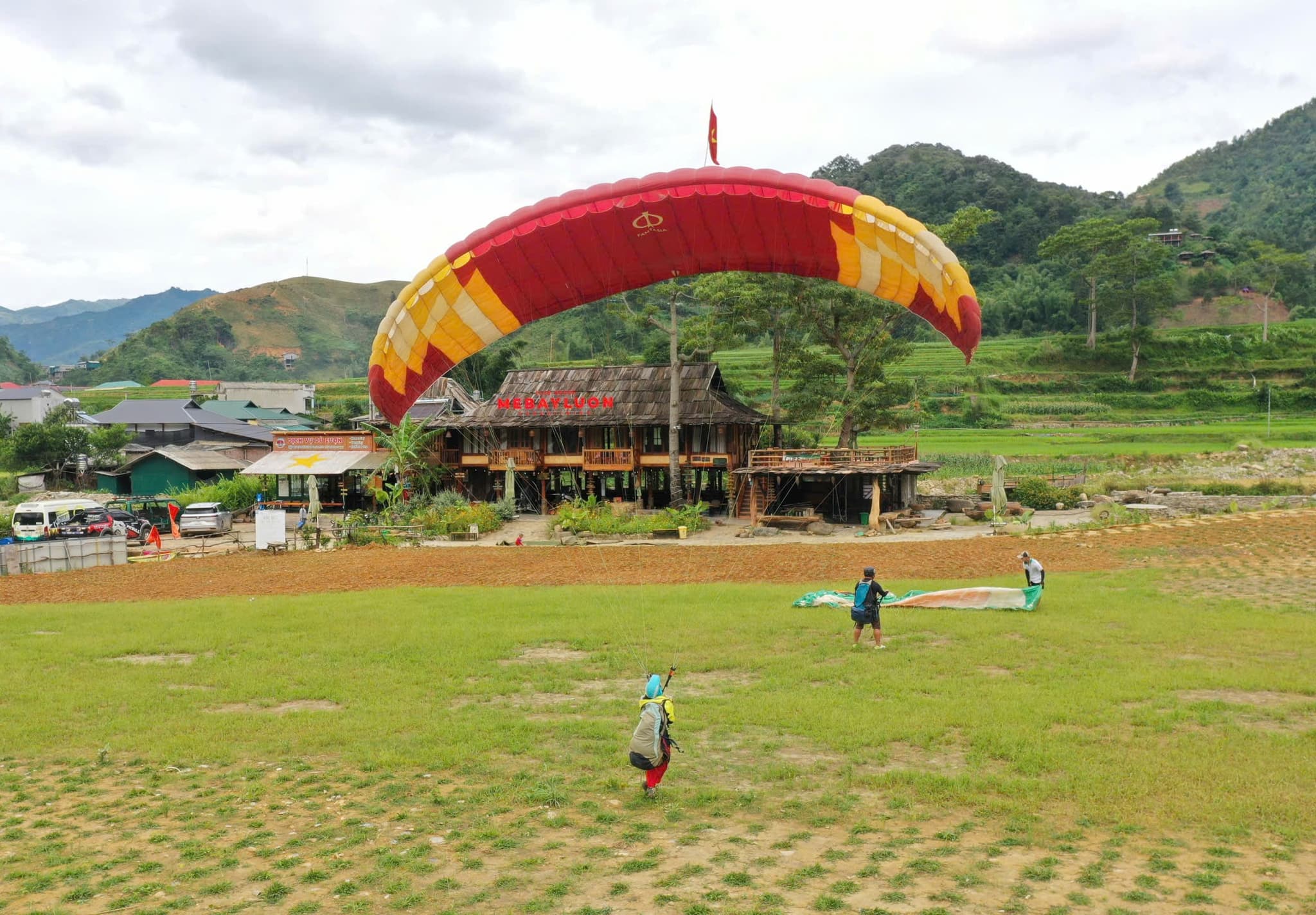
This course takes you from never having touched a wing to launching, flying and landing on your own under instructor supervision. The programme follows the IPPI standard syllabus. It is skills training and does not issue a licence — see the licence section below. Intensive does not mean abridged. The practice hours and number of flights stay at standard; what is compressed is the waiting time between sessions, because you stay at the flying site and can fly in every good window.
The two skill standards you will reach
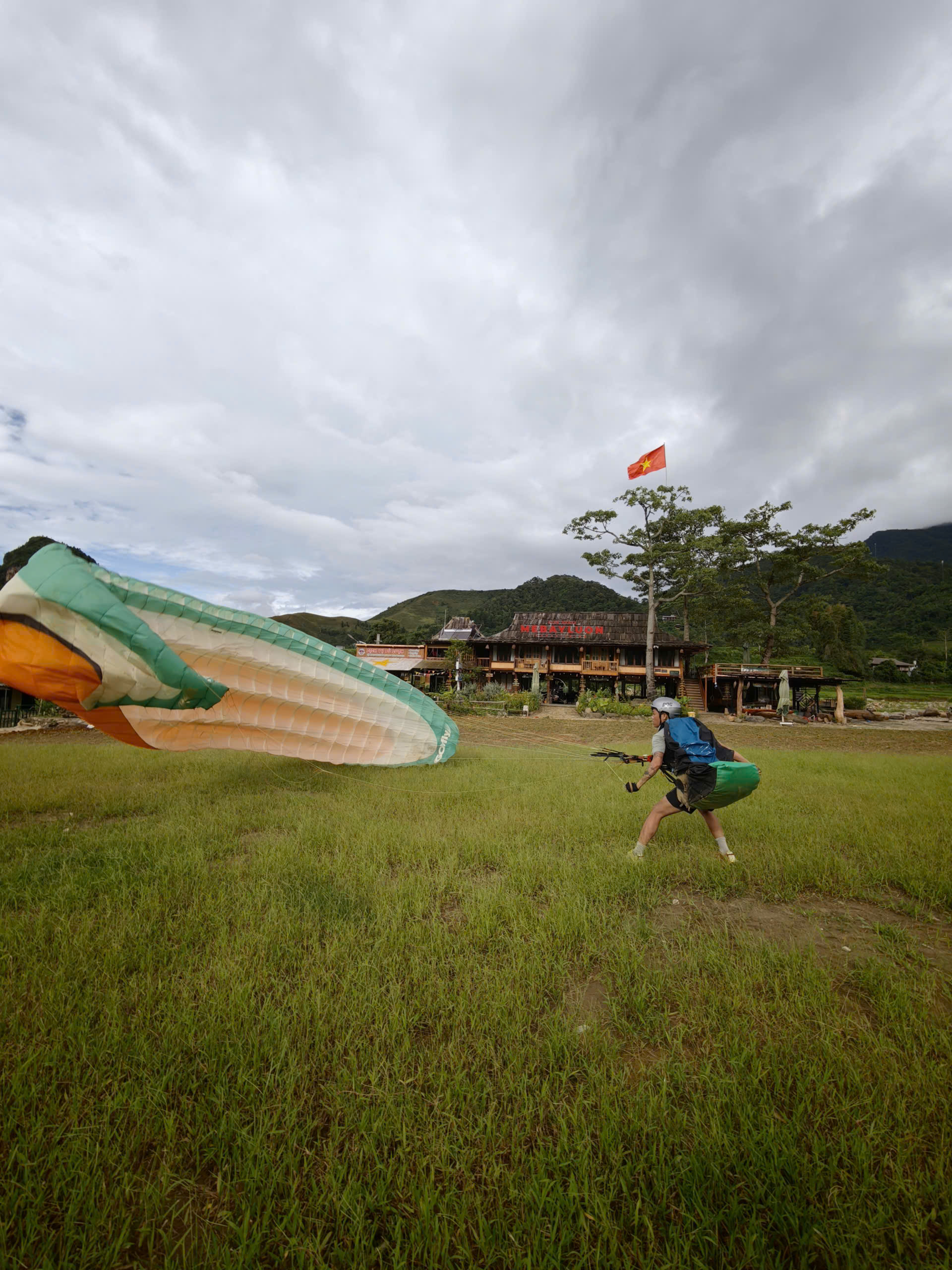
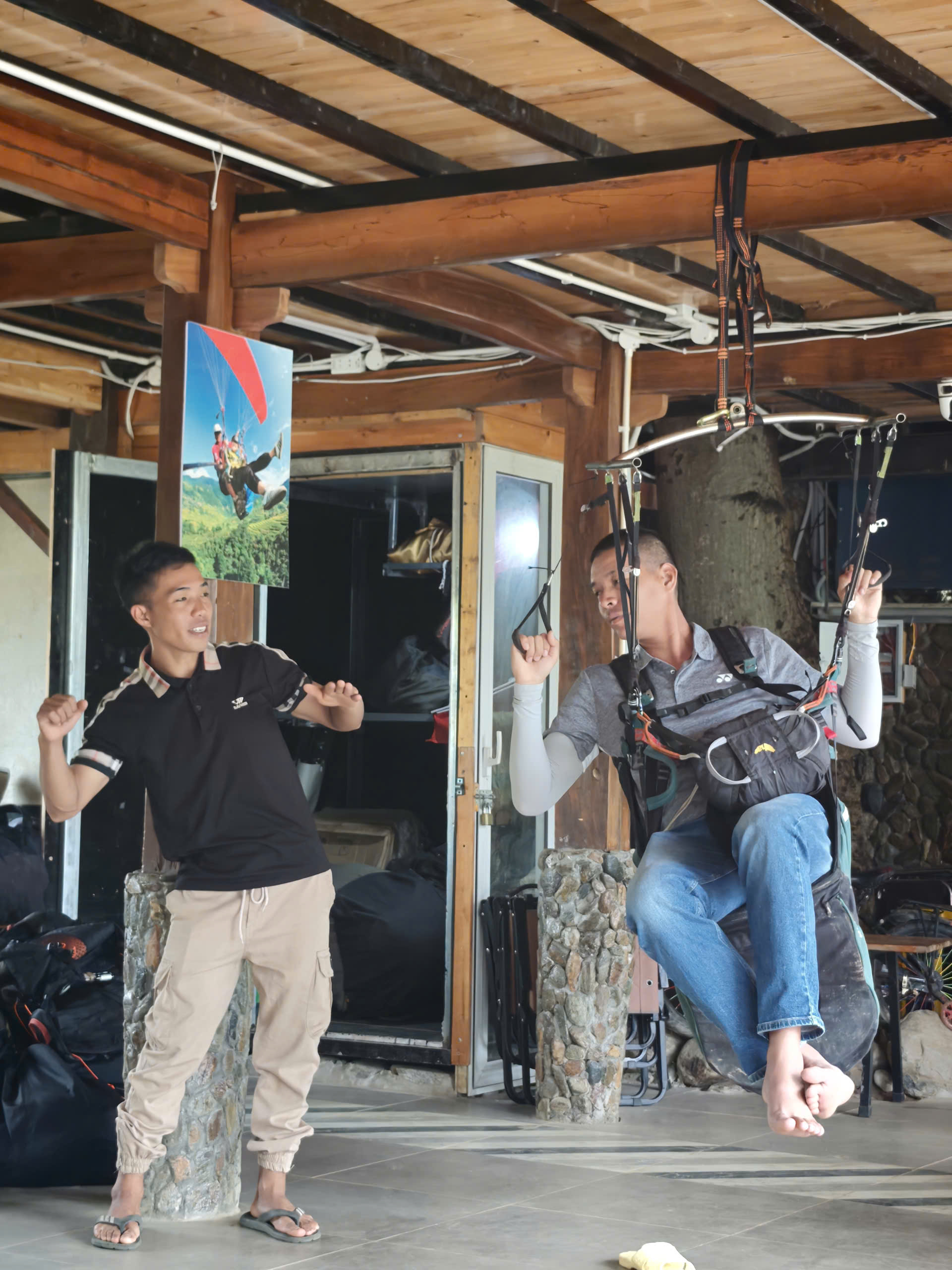
P1 standard. The first level in the IPPI syllabus. You cover the theory foundation: basic meteorology, flight mechanics, air law and collision avoidance rules, equipment use and care, condition analysis, mental state. In practice: ground handling, the B.E.S.A.F.E pre-flight check, the five phases of launch, low flights and the first supervised solo flights with radio guidance. P2 standard. The next level, corresponding to a minimum of 10 flights. You go deeper: how the day develops, the causes of collapses and stalls, the glider speed range, drift correction in crosswind, and one complete landing approach technique. You are also introduced to active piloting, 360° turns and big ears — skills you will master at IPPI levels 3–4. Reaching the P2 standard means you have the skills to fly solo under instructor supervision with radio contact.
Schedule and workload
• Duration: 7 consecutive days • Theory: 60 minutes per session, before going to the field • Practice: 30 hours on the ground and in the air • Low flights: 10–15, working on launch, control and landing close to the ground • High (solo) flights: 5–10, flying from the main launch down to the landing field Paragliding depends on weather. On a bad day the session moves to theory and ground handling — no day is wasted.
Do I get a licence?
The 7-day course teaches skills to the IPPI standard syllabus and is enough for you to fly solo about 5–10 times. But P1–P2 is still a student level, not a pilot level, so the course does not issue a licence. If you want a licence, train for another 1–2 months to complete your skills — above all landing on your own — and then go straight to the P3 exam, without sitting P1 or P2. Organising an exam is fairly expensive and not needed at P1–P2 level, so the 7-day course focuses entirely on knowledge and skills.
Fees and what is included
15,000,000 VND per student Included: • Accommodation at the flying site for the whole course • All training equipment • All flying equipment: wing, harness, helmet, reserve, radio • Direct instruction and radio supervision • One free tandem flight for the student Not included: meals, drinks, travel to the site. Group of two: 14,000,000 VND per person.
Requirements
Normal health, no heart, blood-pressure or epileptic conditions. Enough fitness to run several dozen metres carrying an equipment pack. No fear of heights severe enough to prevent following instructions. Under-18s need parental or guardian consent. No prior experience needed. Most of our students start from zero.
Location and accommodation
The course runs at the Khau Pha Pass flying site in Mu Cang Chai — launch at 1,268 m, landing in the Lim Mong – Lim Thai terraced fields. Students stay at the Mebayluon Clubhouse beside the landing field for the whole course, included in the fee. Staying on site is why the course can be compressed: when conditions are good you fly, with no travel time lost.
About the Khau Pha flying site →
Course dates
The course is taught one to one — each student has their own instructor, and the pace follows your progress rather than a class average. The course runs 7 consecutive days. On a bad day the session moves to theory and ground handling. Start dates are flexible and arranged around the student, not fixed intakes. Contact us in advance to confirm dates and reserve a room at the Clubhouse.
What you get after the course
The course does not end on the last day. Mebayluon students receive: • Free ongoing flying support — come back to the site and we will support your flights at no charge • Equipment guidance after the course — advice on choosing a wing, harness and reserve suited to your level, weight and flying style, instead of buying on guesswork This is the part few courses mention: the most dangerous period for a pilot is not while training, but during the first flights after leaving the school. We stay with you through that period.
Enrol now · contact +84 964 073 555 →
Not ready to train yet? Start with a tandem flight — see [paragliding in Mu Cang Chai prices](https://www.mebayluon.com/blog/du-luon-mu-cang-chai).