Paragliding accuracy is the paragliding competition format that is easiest for spectators to follow: pilots launch from a hill (or are towed up by a winch) and land precisely on a disc whose centre is the size of a coin (2 cm across), the target. Each landing is scored in centimetres from the edge of that disc. After all the rounds, the lowest total wins.
This article explains the current international rules: FAI Sporting Code, Section 7C – Paragliding Accuracy, 2026 edition (in force since 1 June 2026) and the Paragliding Accuracy Judging Code 2026, both issued by the FAI Hang Gliding and Paragliding Commission (CIVL). A few general rules come from Section 7 – Common, 2026 edition. Section 7C is written mainly for Category 1 events, and every event also publishes its own Local Regulations, so read those carefully before you compete.
Accuracy competitions in Vietnam
Vietnam hosts quite a few accuracy competitions every year. The National Championship is held at least once a year and is organised by the Vietnam Sports Administration (Ministry of Culture, Sports and Tourism). Clubs, local authorities and companies also run events and competitions, such as the Hanoi Paragliding Association, the Ho Chi Minh City Sports Federation, and private companies like Vien Nam Tourism and Sports JSC.
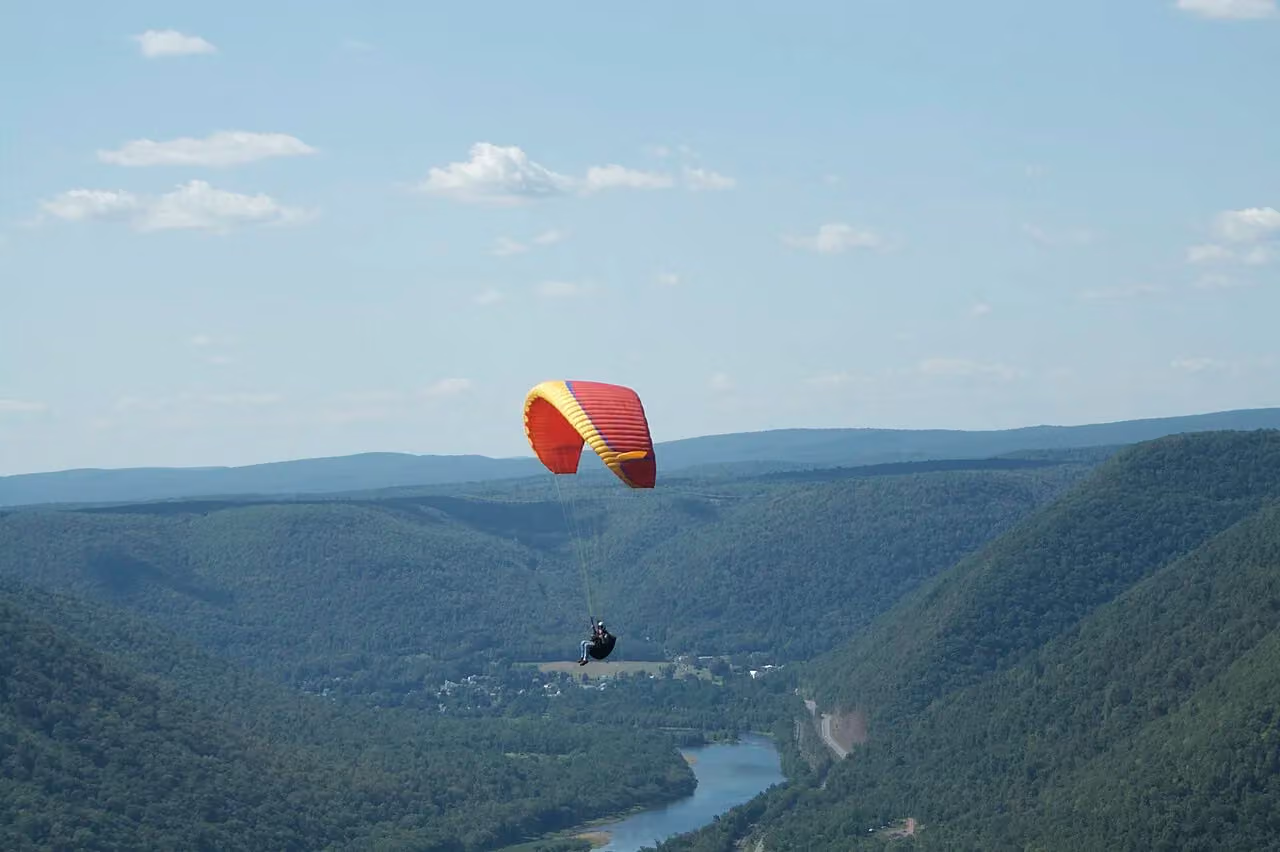
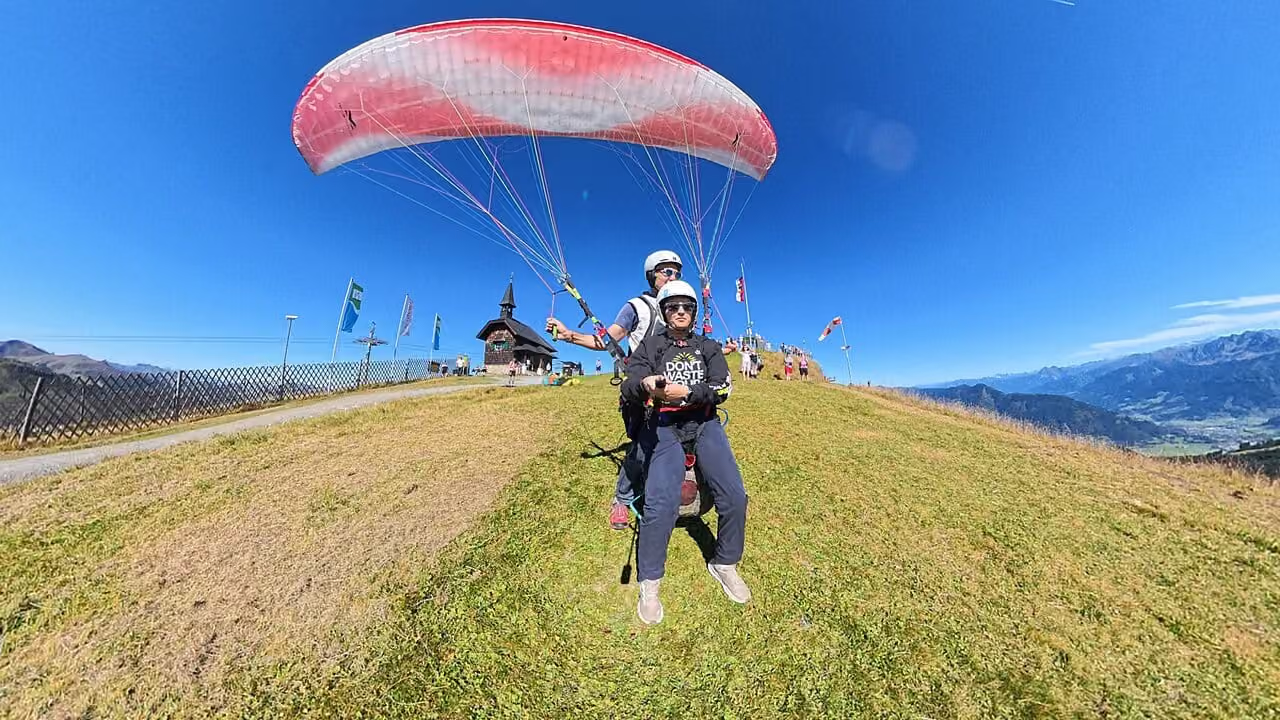
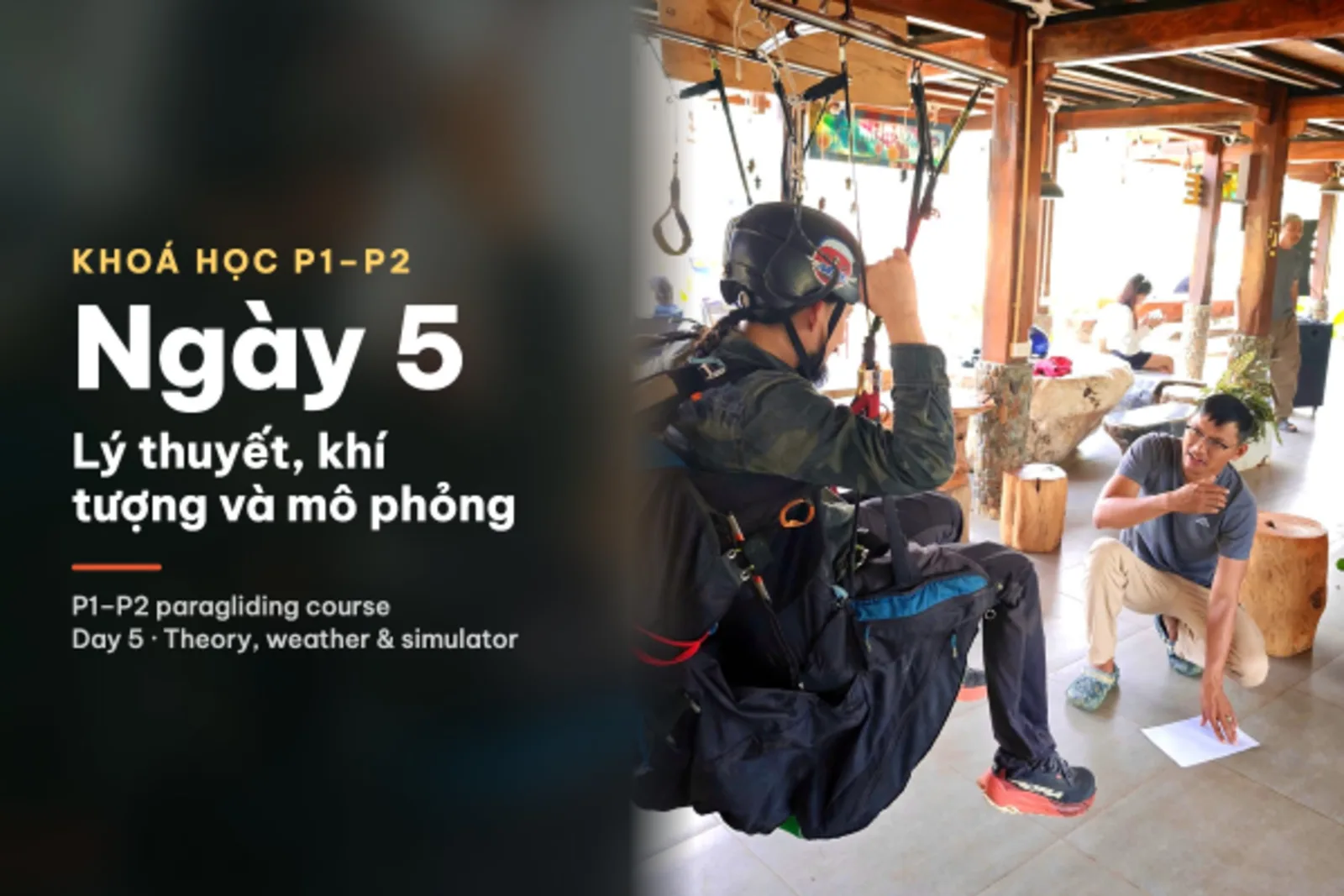
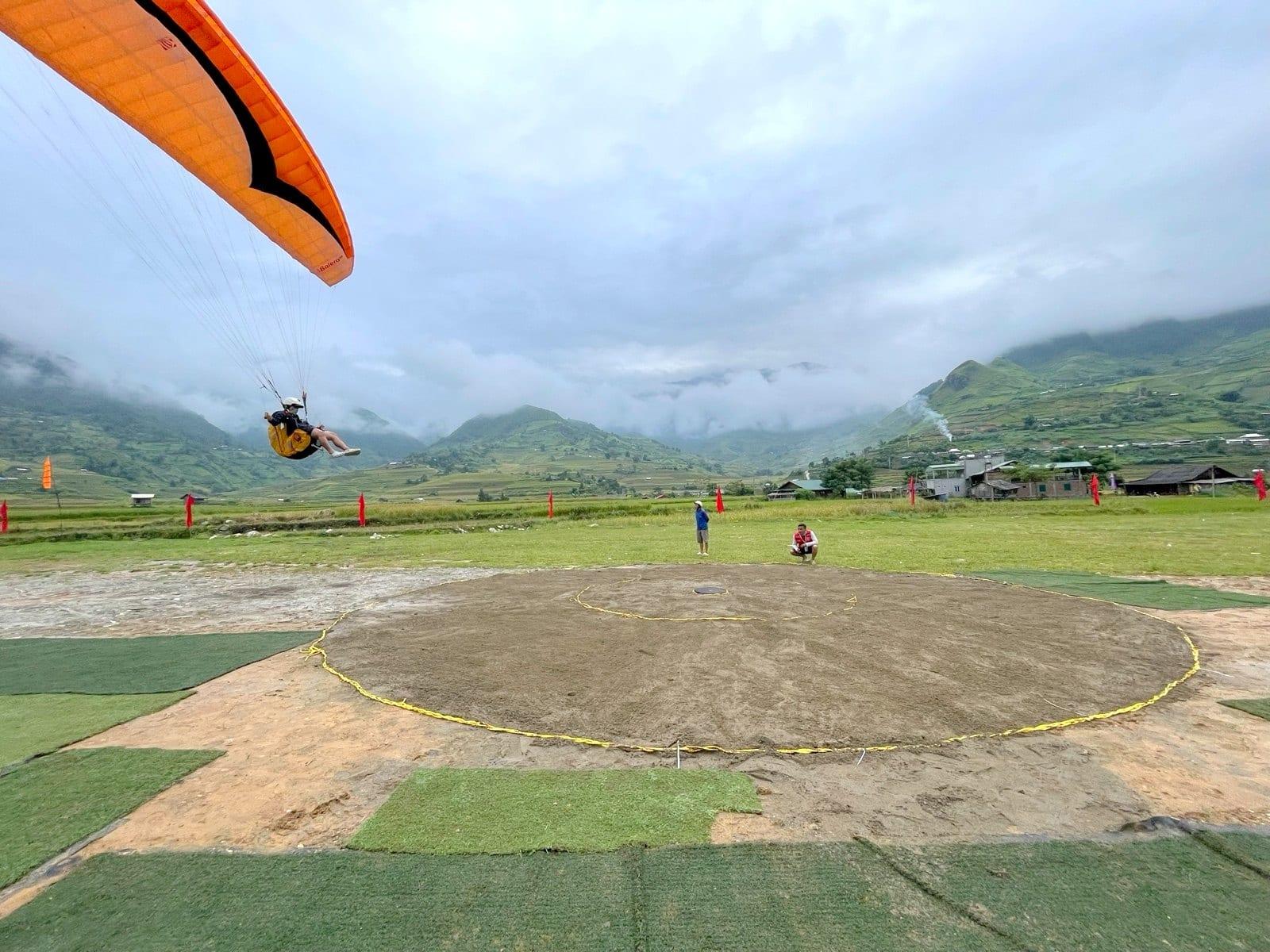
Events take place from north to south: Hanoi, Da Nang, Tri Ton (An Giang), Ly Son island (Quang Ngai), the Khau Pha pass (Mu Cang Chai, Lao Cai) and more. Each event has its own regulations on the number of rounds, target radius, classes and entry conditions. The photos in this article were taken at the Mebayluon Paragliding Accuracy Open Cup, Mu Cang Chai, 15–17 September 2023, with take-off on the Khau Pha pass.
Category 1 and Category 2: what is the difference?
FAI sorts international events into two levels. Category 1 means the World and Continental Championships and the World Air Games. Category 2 covers the other international events recognised by CIVL: Opens, World Cups, national championships open to foreign pilots and so on. Category 2 rules "shall be based as far as appropriate" on the Category 1 rules, and the parts marked as mandatory for Category 2 apply in full. Everything else is set by each event's Local Regulations.
| Item | Category 1 (World, Continental) | Category 2 (Opens, World Cups…) |
|---|---|---|
| Target radius | 2 m | Should be: pad only, 1, 2, 5 or 10 m (set in the Local Regulations) |
| Rounds for a valid event | At least 3, at most 12 | At least 1, at most 12 |
| Knock-out (cutting the field) | Not allowed | Allowed if announced in advance; everyone flies the first 6 rounds |
| Number of pilots | Set in the Local Regulations | At least 8, at most 150 |
| FAI Sporting Licence | Required | Required |
| Ranking needed to enter | Top 700 (World) / top 900 (Continental) of the WPRS world ranking | Not required |
| Minimum judging team | 8 judges from 3 nations | 5 judges (4 with fewer than 50 pilots) |
The electronic pad (AMD): size and how it works
The centre of the target is an Automatic Measuring Device (AMD), usually called the electronic pad. Pilots aim for the dead-centre disc in the middle of the pad.
- The dead-centre disc is 2 cm in diameter (1 cm radius), in a contrasting colour. The same disc size must be used for the whole event.
- Automatic scoring zone: the pad must measure at least 15 cm out from the edge of the disc in every direction, in 1 cm steps. So the zone the pad scores by itself is at least 32 cm across (the 2 cm disc plus 15 cm on each side).
- How it works: the pad records a score when the pilot's foot presses on it at the first contact. Touching the disc scores 0 cm; touching 5 cm from its edge scores 5 cm. The pad is reset between landings.
- Set-up: the pad sits on a solid base plate, fixed, as flat as possible and level with the target. The Chief Judge approves the pad; the Event Judge checks it works properly and takes a faulty pad out of service.
- When the pad fails to record: if it is faulty, was not reset, or the foot did not press hard enough, judges may measure by hand provided they can do so consistently and with certainty. If the judges cannot agree on a score, the pilot may be given a re-flight.
- Replacing the pad: in Category 1 the event must start with a new or factory-refurbished pad, changed at the end of the round after every 500 landings on it, or sooner if it might be unreliable.
- Beyond the pad: target judges mark the first point of contact and measure to the edge of the disc. Organisers should lay a larger control mat around the pad to show the first point of contact. A video measuring system may be accepted by the Chief Judge, but it does not replace the pad.
- When the target is closed for safety, the pad is covered. Footwear is also regulated so it cannot damage the pad (see the equipment section below).
The target, the target area and wind measurement
| Circle (from the disc edge) | Meaning |
|---|---|
| 2 cm dead-centre disc | A touch scores 0 cm, the best result |
| Pad zone, at least 15 cm | The pad records the score to the centimetre |
| 1 m and 2 m lines | Visual aids for pilots in the air, not used for scoring |
| Target radius: 2 m (Category 1) | Landings inside are measured; outside earns the maximum score |
| 10 m circle | The landing must be on the feet, with no fall, inside this circle |
| Restricted area: at least 10 m beyond the target edge | Officials on duty only |
- Target surface: flat and level with the field (not raised, not sunken), made of grass, sand or mats so the judges can see the landing point. Grass should be mown to about 50 mm. The Chief Judge approves the surface.
- Target location: it must be possible to land from any direction. For hill launches, the guideline is a horizontal distance from take-off to target of no more than 5 times the height difference (a maximum glide ratio of 5:1). The target may be moved between rounds but not during one; the launch point can be moved at any time if the wind changes.
- Windsock: bright and two-coloured, at least 2.5 m long, at least 5 m above the ground, flying horizontally at 6 m/s. At least four streamers, each at least 1.5 m long, one in each quadrant about 15 m from the pad, show the direction of winds below 1 m/s.
- Anemometer: close to the target, sensor at least 5 m high, clear of trees and buildings. The wind speed must be visible at the landing area. If the automatic system fails, judges may switch to another electronic or mechanical instrument.
Who can compete and how to register
- Licence: an IPPI Stage 4 (ParaPro 4) card or an equivalent national licence. If a country issues no licences, its national airsport body (the FAI member, called the NAC) is responsible for sending only skilled pilots. The Meet Director may ground a pilot without sufficient skill, and fees are not refunded.
- Experience: good take-offs in nil wind and in strong wind; if the event uses winch launches, pilots should be able to show tow experience.
- FAI Sporting Licence: required for every competitor in both Category 1 and Category 2 events, registered online and valid for the whole event.
- Ranking (Category 1 only): in the 24 months before the reference date (3 months before the start), a place in the top 700 of the WPRS world accuracy ranking for a World Championship, or the top 900 for a Continental one.
- Exemptions: only in exceptional cases. The NAC sends the application, with the pilot's international competition record, to the CIVL President at least 60 days before the event; a three-person Screening Committee decides with safety in mind. A pilot who has flown a Category 1 event on an exemption must meet the normal criteria next time.
- At registration pilots show ID, their licence (if their country issues one), proof of glider and equipment airworthiness, insurance and, if needed, proof of tow experience; they sign a liability waiver, a certified-glider statement and the entry form.
Teams, places and team leaders
At championships (Category 1), pilots compete in national teams entered by their NAC. Team size is set in the Local Regulations; in a mixed event each team includes at least one man and one woman. A nation may enter more pilots than the team size: the extra pilots compete only as individuals. The team line-up must be declared to the Meet Director before the pilots' briefing of the first round at the latest; once the first round has started, no pilot can be changed.
- Allocating places (Category 1): the Local Regulations set the maximum number of pilots for the event and per nation. Places go to nations one at a time, from the top of the WPRS nation ranking (taken 3 months before the event) to the bottom, then round again while places remain. Allocation runs between three and two months before the event. From 14 days before the start, a missing pilot can only be replaced by one from the same nation.
- Women's places: in a mixed World Championship each nation has at least one place reserved for a woman, allocated before the men's places and never filled by a man. The top five women in the world ranking (from five different nations) may enter if not selected for their national team, with their NAC's approval.
- Reigning World and Continental Champions (men and women) may enter to defend their title even if not selected, with their NAC's approval, but do not score for the team. The host nation may enter as many pilots as the top nation, but in mixed events may not enter men in place of women. Champions' discretionary entries must be requested before the first allocation round.
- Team leader: at championships every nation must have one, and a competing pilot may take the role. The team leader represents all the nation's pilots, liaises with the organisers, makes sure pilots understand the rules and do not fly when ill, may withdraw a team member from the event, and should preferably be the one who files objections and complaints.
How a round works
Accuracy is flown in rounds: in each round every pilot gets the chance of one valid flight, in a fixed order. A round only counts once every pilot has a score or a penalty for it. If it is interrupted, it resumes from where it stopped. Meet Directors are encouraged to run as many flights per day as possible and may start a round they cannot finish that day.
- Pre-flights: at the start of each competition day at least one pre-flier (not a competitor, on a wing similar to most competitors') flies first and tries to land on the target, to show it can be reached and conditions are safe. After a long stand-down with a big change in conditions, a pre-flier launches first again.
- Launch interval: normally 1.5 minutes between pilots, adjustable by the Launch Marshal, who calls pilots forward, opens and closes the take-off and makes sure the published order is followed.
- Flying order in Category 1: each team leader numbers the national pilots 1, 2, 3…; nations are drawn at random. All the number 1s fly first, then the number 2s, and so on.
- Flying order in Category 2: the suggested method is by WPRS ranking, lowest-ranked first (alphabetical when equal); the top 10 fly last and draw their numbers from 1 to 10. Organisers may choose another method, such as a random draw.
- Reverse order (Category 1): from round 2 the Meet Director may call a round in reverse order of the standings if it is announced in time. The final round (round 12, or a round declared in advance as the last) is flown in reverse order, so the leader launches last. If it cannot be completed, the previous round becomes the final round. Category 2 events follow their Local Regulations.
- Launching in turn: pilots launch in their published order unless the Launch Marshal or Meet Director allows otherwise (for a re-flight, for example). A pilot not ready when called, or launching without permission, is liable to a maximum score for the round.
- Suspending: the Meet Director may suspend launching when conditions become unsuitable or unsafe; the round normally resumes from where it stopped. A Safety Committee monitors flying operations and reports to the Meet Director when conditions on launch, en route or at the target become unsafe. It should include the Meet Director or deputy, the Launch Marshal or deputy, a senior judge and at least two experienced competing pilots (no more than one from the host nation).
- Test flying on competition days: when the Meet Director allows test flights, pilots must not make a target approach.
In the air and on the final approach
- Fly straight to the field: pilots follow the course given at the briefing and do not delay, while keeping enough height for a considered approach. Pilots should get a fair attempt: from a hill launch they should be able to reach the target area directly; on a tow, the pilot must release where the target area can be reached directly.
- Height separation: pilots separate themselves by height so everyone has a clear approach. Overtaking at low height above the target is forbidden and may earn a maximum score or be treated as dangerous flying.
- No coaching: guiding a pilot to the target by radio or any other means is prohibited.
- Final approach: it starts when the pilot has turned to face the target and, in the Event Judge's view, is committed with no major change of direction planned. During it the pilot is entitled to an unobstructed view of the target.
- Target closed: when it is unsafe, launching stops, an official at the target waves a red flag and the pad is covered. Pilots in the air must fly away from the target.
- Wind limit: 6 m/s at most, measured at the target during the last 30 seconds of the flight and the 5 seconds after touchdown. The Local Regulations may raise it to 7 m/s if the site is safe. Upper winds and take-off winds do not count, except for safety. If the wind keeps exceeding the limit over consecutive flights, the Meet Director should consider halting the competition.
- Out-landings: a pilot who lands outside the target area must report to the judges as soon as possible, or may lose any claim to a re-flight. Pilots must also respect the restricted airspace given in the Local Regulations or briefings.
How the judging team works
Judges are FAI Officials and must be impartial and know the rules thoroughly. In Category 1 all judges must speak English; in a Category 2 event where more than half the pilots are foreign, at least the Chief and Event Judges must, otherwise an English interpreter must be available at all times. Judges wear high-visibility clothing; in Category 1 it carries the FAI/CIVL logo and JUDGE on the back.
| Event | Minimum judging team |
|---|---|
| Category 1 | 8: a Chief Judge, an Event Judge, 3 target judges, 3 reserves. From at least 3 nations; the Chief Judge not from the host nation; Chief and Event Judges of different nationalities. |
| Test event for Category 1 | 7 (2 reserves), from at least 2 nations; Chief and Event Judges of different nationalities |
| Category 2 | 5: a Chief Judge, an Event Judge, 2 target judges, 1 reserve. From 2 nations if half or more of the pilots are foreign. If fewer than 50 pilots are expected, the Chief and Event Judge may be the same person. |
- Chief Judge: leads the judging team; approves the pad and target area; receives and decides initial complaints; decides on video reviews; stops the competition after conferring with the Event Judge, Meet Director and Safety Director if any of them considers conditions are becoming dangerous; signs score sheets with date and time.
- Event Judge: sets out and checks the target area, makes sure the pad works, positions the target judges; watches pilot separation and routes; assesses flights to decide re-flights, including cases where the pilot was too low.
- Target judges: watch every contact of the pilot and equipment with the ground to decide whether the landing is scored or a fall; decide which foot touched first (left, right or both); mark and measure contacts between the pad and the edge of the target. At least one judge watches for falls, at least one watches which foot lands first, and only one calls the score.
- Calling the score: the pilot number and score are called digit by digit. A dead centre for pilot 57: "Pilot number five, seven… score zero, zero, zero"; 5 cm for pilot 115: "one, one, five… zero, zero, five". The Recorder (if used) repeats it and writes it on the paper log; the Scorer enters it in the scoring software.
- Video: organisers must film every landing with a fixed camera and a tracking camera, low and close to the target to show the first point of contact. Video is extra evidence for the judges and the Jury; there is no obligation to show it to the pilot. If a video measuring system is used, the Chief Judge should appoint a Video Measurement Judge to run it.
- Wind Speed Monitor: reads the wind speed during the 30 seconds before each landing and, if it exceeds the limit, logs it and tells the Event Judge. May not be needed if the pad has an automatic wind recording system.
How scoring works
The score is the distance in centimetres from the first point of ground contact to the edge of the dead-centre disc, rounded up to the nearest centimetre. A foot on the disc scores 0 cm, the best possible result. Landing outside the target earns the maximum score, equal to the radius of the scoring area: 200 cm with the 2 m target of Category 1.
- Point of contact: judges identify which part of the foot touched first: heel, side or toe. With a flat-footed landing or two points touching at once, the furthest point counts. With both feet together, the furthest point of the furthest footprint is measured.
- End of the flight: the flight ends when any part of the pilot, the equipment (harness included; speed bar, stirrup and tow yoke excluded) or the wing first touches the ground, including the target, pad or mat, or when the pilot has left the 10 m circle.
- Fall: the landing must be on the feet, within 10 m. If any part of the body other than the feet, or any equipment (other than the speed system, stirrup or tow yoke), touches the ground before the wing, or before the pilot has left the 10 m circle, it is a fall and scores the maximum, as for a landing outside the target.
- Obstacles are not the ground: touching a tree, windsock pole or anemometer is not ground contact; the pilot may continue to the target without a fall penalty.
| Situation | Round score (Category 1) |
|---|---|
| Foot on the 2 cm disc | 0 cm |
| Touchdown 7 cm from the disc edge (recorded by the pad) | 7 cm |
| Touchdown 1.3 m from the disc edge (measured by the judges) | 130 cm |
| Landing outside the 2 m target | Maximum: 200 cm |
| Fall inside the 10 m circle | Maximum |
| Did not fly (DNF), disqualified for the round (DSQ) | Maximum |
Under Section 7C (Category 2 events follow their Local Regulations), events use CIVL-approved scoring software linked to live scoring, preferably online, and also displayed for spectators at the landing field. After each round the scores are posted on the notice board marked Provisional, with date and time; once the complaint period has passed without challenge they become Official, signed by the Chief Judge.
Individual and team scores, and rankings
- Individual score: the sum of all rounds. In Category 1, once 5 or more valid rounds have been flown, each pilot's single worst round is dropped; Category 2 follows its Local Regulations. Every registered pilot should fly at least once to remain a scoring competitor.
- Team score at World Championships: for each round, the sum of the best three pilots of the team in that round. A team with fewer than three pilots gets a maximum score for each missing place.
- Team score at Continental Championships: the best Y pilots count, Y being set in the Local Regulations, usually (X+1)/2 rounded up where X is the maximum team size. With teams of five, the best three count.
- Team scores never drop a worst round.
- Other rankings: women, juniors (26 or younger, counted by year of birth) and, in Category 2 only and if the organiser uses it, Masters aged 55 or more on the first official competition day. They simply list those pilots from the overall ranking with the same scores. Only the overall ranking counts for the WPRS world ranking.
- Medals at championships (Category 1): gold, silver and bronze for the top three pilots, and for the team leaders and members of the top three teams; diplomas for the top ten pilots.
When do scores not count?
- Unfinished round: a round's scores only count once every pilot has a score or a penalty for it.
- Official practice round at a championship (after the mandatory safety briefing, before the first scored round): flown under competition conditions but not counted.
- Each pilot's worst round is dropped once a Category 1 event has 5 or more valid rounds (individual ranking only).
- A flight that earns a re-flight: the original score is cancelled; only the re-flight counts.
- Pilots cut by a knock-out in Category 2: they are marked DNQ and fly no further rounds in the overall ranking.
- A pilot disqualified from the event is no longer counted as a competitor in the scoring.
- Event not valid: a Category 1 event with fewer than 3 rounds is not valid; a World Championship without 4 nations and 8 pilots in total (Continental: 3 nations, 8 pilots) awards no title.
When is a re-flight allowed?
A re-flight can only be requested after a disputed flight, by telling the Chief Judge or Event Judge at the target within 15 minutes of landing. The judges may take up to 15 more minutes to consult the judging team and, if they decide, review video. If a re-flight is granted, the disputed score is cancelled, the reason is announced to pilots and public, and the re-flight takes place as soon as possible in the current or next round. If it is refused and the pilot does not accept the score, this counts as a complaint. These are the accepted reasons:
- Wind above the limit during the 30 seconds before and 5 seconds after touchdown: the pilot is automatically offered a re-flight and must choose at once between keeping the score or flying again.
- Target obscured during the final approach, change of plan for safety, or a clear outside distraction: the pilot must signal clearly that they are flying away and must not try to land on the target. If distracted while too low to fly away safely, the pilot must still signal.
- The judges cannot agree on a score, including when the pad does not work.
- A technical problem or abnormal conditions (a dust devil, a broken brake line, a big collapse) not caused by a poor pre-flight check, at the judges' discretion.
- Too low for a fair final approach: the pilot cannot reach the area downwind of the target from which to face it into wind, or cannot make even a small S-turn there. The pilot signals and lands outside the target. No re-flight if the pilot did not fly straight to that area or lost height outside it.
- A failed take-off, or a safety problem after take-off that leads to a landing at take-off or away from the target: the pilot may re-launch for that round.
- Stopping to help an injured pilot: a pilot who lands or cuts the flight short to help an injured pilot must not be disadvantaged; the Meet Director considers all circumstances before deciding on a re-flight.
Missing or inconclusive organiser video is not a reason for a re-flight; the pilot must then rely on witness statements.
Faults, penalties and disqualification
The Meet Director penalises any breach of the FAI rules or Local Regulations, from a warning through a maximum score for the round to disqualification, published in writing on the notice board. Repeat offences may be penalised more heavily. The Chief Judge may issue warnings for dangerous flying and unsporting behaviour at the target. The specific penalties in Section 7C:
| Offence | 1st | 2nd | 3rd |
|---|---|---|---|
| Dangerous or aggressive flying (may include aerobatic-style flying) | Warning | Maximum score for the round | Disqualification |
| Pilot coached to the target by radio or other aid | Maximum score for the round | Disqualification | — |
| Abusing officials, bringing the sport into disrepute | Warning | Disqualification | — |
- Did not fly (DNF): maximum score for the round. Withdrawn through illness or accident (ABS): maximum for every remaining round. Disqualified for a round (DSQ): maximum for that round.
- Not ready when called, launching without permission, or overtaking low over the target: liable to a maximum score for the round.
- Unable to launch safely: a pilot who cannot launch safely in conditions within the limits may be stood down or withdrawn by the Meet Director, after consulting the FAI Steward (in Category 2, the Launch Marshal and/or Chief Judge).
- Officials do not compete: in Category 1, nobody may be both a meet official (Meet Director, Safety Director, organiser…) and a national team member (pilot, team leader). In Category 2, the Meet Director, Safety Director and every member of the judging team may not be a competing pilot or team leader; other officials may compete if an assistant can cover their duties.
Required equipment
- Wing: only EN, LTF or CCC certified wings, flown within the certificate and manufacturer's limits; aerobatics are banned. The same wing must be used throughout; major damage must be reported to the Meet Director at once and replacement parts must match the original specifications. A wing may only be replaced after damage, loss or theft beyond the pilot's control, with the Meet Director's permission, by an identical or similar model.
- Inspections: organisers, preferably the Safety Director, shall carry out airworthiness checks during the event and may inspect wing, harness, reserve, helmet, tow release, footwear and so on at any time, grounding any item that fails.
- Harness with back protection, tested together to LTF09 or EN 1651 (2017 or later). Helmet certified to EN 966, EN 1077-A/B, ASTM 2040 or Snell RS-98, worn at all times in flight. A serviceable reserve parachute, with the pilot within its maximum certified weight.
- Radio: organisers should require a radio able to receive and transmit on the safety frequency; dual-band radios must have both channels locked on it. Voice-activated (VOX) microphones are banned. Using a radio, phone or any other means to coach a pilot to the target is strictly forbidden, except for safety.
- Footwear: suitable for a safe take-off and landing. Any modification to the footwear must be rubber or an equivalent material (no metal, ceramic or hard plastic), no harder than 70 Shore A (about a car tyre), leave no marks on the pad, be at least 15 mm wide, protrude no more than 6 mm, with edges rounded to at least 2 mm (dome-shaped studs at least 8 mm radius).
How many rounds and pilots, and is there a cut?
- Rounds: at most 12 scored rounds; the Local Regulations must say if fewer are planned. A Category 1 event needs at least 3 rounds to be valid, a Category 2 event 1.
- Pilots: in Category 1 the number is set in the Local Regulations; a World title needs at least 4 nations with 8 pilots in total (Continental: 3 nations, 8 pilots). A Category 2 event needs at least 8 and at most 150 pilots, and must set aside at least 25% of the places for foreign pilots (places still free after their registration deadline may be filled by the organiser).
- No cut in Category 1: every pilot flies every round. An optional final round in reverse order of ranking is allowed, as long as nobody is removed from the results.
- Knock-out in Category 2: only if written in the Local Regulations and announced on the registration website before registration opens. Everyone flies the first 6 rounds; the Local Regulations say how many pilots are cut and when. Those who do not go through are marked DNQ. After the knock-out in round 6, at least the top 6 women, juniors and Masters keep flying for their own rankings (their overall position is frozen), and only the top 6 teams continue in the team competition.
- Championship duration (Category 1): at most 14 days including the opening and closing ceremonies, with at least 2 practice days just before the opening and an unscored practice round (which may be dropped if bad weather cancels it). After four consecutive flying days, and once at least six rounds are complete, the Meet Director may declare a rest day or half day (not the last day), announced by the evening before at the latest.
What happens in a tie?
- Individuals: if two or more pilots are tied for one of the top three places, they fly an extra tie-break flight. If weather or time does not allow it, the pilot with more 0 cm scores wins; if still level, compare the 1 cm scores, then 2 cm, and so on.
- Teams: if teams are tied in the top three, all their members fly once more (the launch window closing time is announced at that morning's team leader briefing), or one nominated pilot per team if time is short. If that is impossible, count the 0 cm scores of the pilots who scored for the team in each round, then 1 cm, 2 cm…; if still level, those of the whole team.
Objections, complaints and protests
- Objection: at any time, preferably by the team leader, spoken to the Chief Judge, who may accept it or not; if not, a complaint may follow.
- Complaint: in writing, in English, to the Chief Judge (to the Meet Director for non-judging matters). With online results, the intention to complain must be notified within 15 minutes of the pilot's score being published, and the Meet Director sets a deadline for submitting it. Without online results the deadline is 1 hour after the provisional results; results posted more than 1 hour after sunset and before 6 a.m. can be challenged until 8 a.m. For the last round the deadline is 1 hour. In Category 2, complaints are sent by email to the address given in the Local Regulations.
- Protest: if unhappy with the complaint decision, submit it in writing, in English (preferably on the protest form), to the Meet Director within 1 hour of being told the outcome, with the fee set in the Local Regulations, refunded if the protest is upheld. The Meet Director records the time and passes it straight to the Jury President. In Category 2, protests are ruled on by a Protest Committee of at least three members.
- These deadlines apply unless the Local Regulations say otherwise. Organisers keep video and other evidence for at least 90 days after the event, or until an appeal is settled. For Category 2 events, appeals go first to the organising nation's NAC.
- Scores not challenged in time become official.
If you are starting from scratch, the training path and licences are explained in learning to paraglide as a beginner. The core skill behind accuracy is the approach and landing; see paragliding landing technique.
Frequently asked questions
How big is the accuracy disc?
The dead-centre disc is 2 cm across, in the middle of an electronic pad. The pad scores automatically to at least 15 cm around the disc edge, so the self-scoring zone is at least 32 cm wide. Beyond that, judges measure out to the 2 m target edge (Category 1).
Does the lowest or highest score win?
The lowest wins. Scores are centimetres from the disc, so the smallest total after all rounds takes the title, both individually and by team.
Does touching the disc with a hand or falling onto it score 0 cm?
No. The landing must be on the feet. If a hand, knee, bottom or the harness touches the ground before the wing, or before leaving the 10 m circle, it is a fall and scores the maximum.
Can pilots use a radio?
Yes. Organisers should require a radio locked on the event's safety frequency. But a pilot who is coached to the target gets a maximum score the first time and is disqualified the second time.
How many rounds does an accuracy event have?
Up to 12 rounds. A World or Continental Championship needs at least 3 to be valid; a Category 2 event needs only 1. In Category 1, from five valid rounds on, each pilot's worst round is dropped.
Sources: FAI Sporting Code Section 7C – Paragliding Accuracy, 2026 edition (in force 1 June 2026); Paragliding Accuracy Judging Code 2026; Section 7 – Common, 2026 edition; published on fai.org. This is an explanation for reference; in case of difference, the FAI English text and each event's Local Regulations prevail.