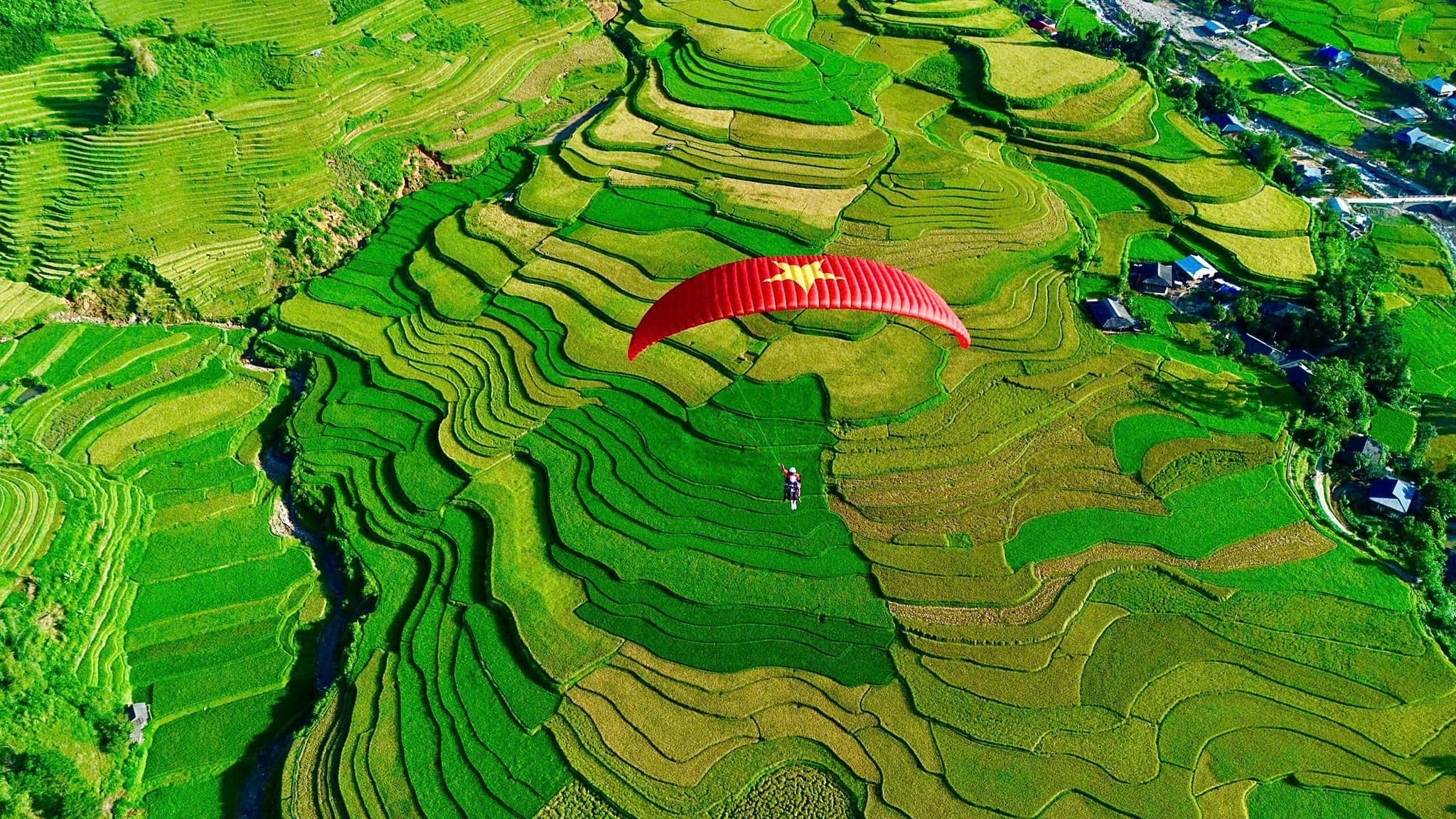
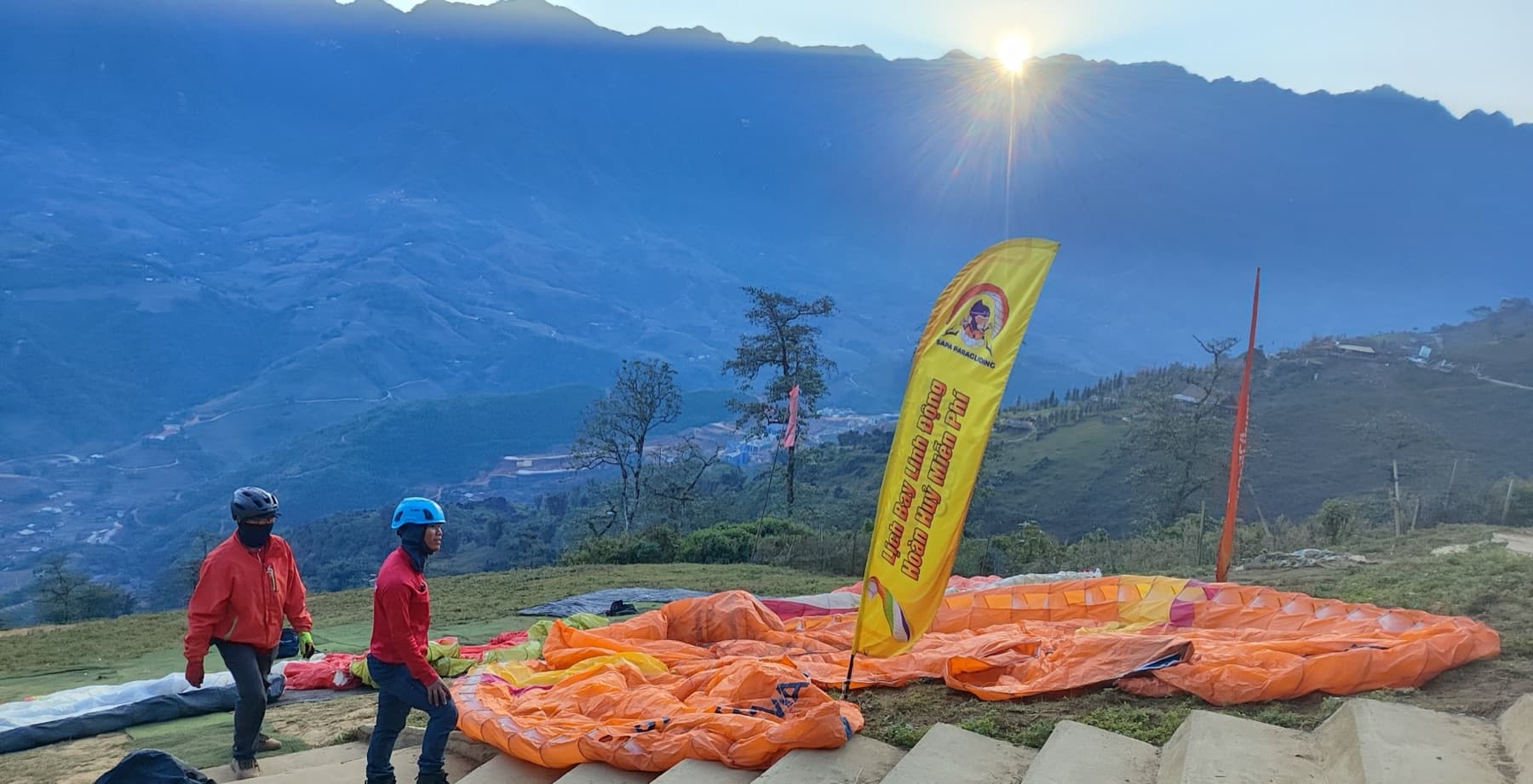
Sapa is not a strong-wind site, but it is a demanding one. The take-off sits at about 1,500 m AMSL, right at the level where moisture from Muong Hoa Valley condenses into cloud, so cloud and fog decide first and wind decides second. The valley below is narrow and long, like a tube: the air in it circulates fast and keeps changing direction, and the thermals are small, harsh and break up low. This is a site briefing for solo pilots flying Sapa for the first time: site numbers, the flight team's wind rules, how to read fog and cloud, the valley's wind and thermals, seasons, hazards, and what to do before you drive up.
Sapa is for solo pilots at P4 level and above only. New pilots and low-airtime pilots should not fly here. The valley wind changes direction very quickly, thermals are harsh and broken, the landing takes technique, and there are no easy backup fields around. If you are not yet at P4, build experience at wider, gentler sites first.
This is written for pilots with solo experience, not for tandem guests. If you want a tandem flight with a pilot, read paragliding in Sapa – Muong Hoa Valley. The format follows our Khau Pha Pass flying guide, the site on the same north-west route that many pilots combine with Sapa.
The Muong Hoa flying area: numbers to remember
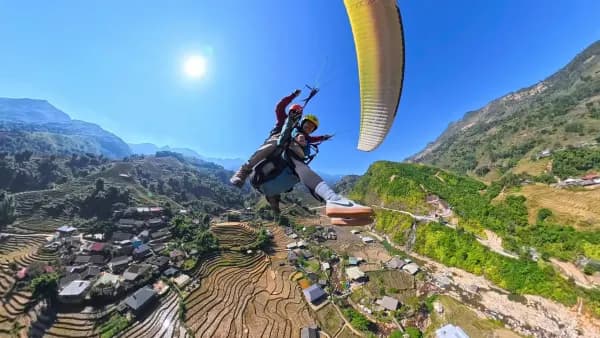
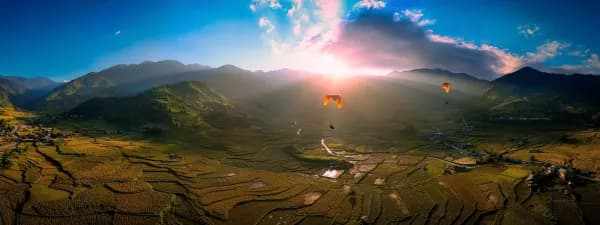
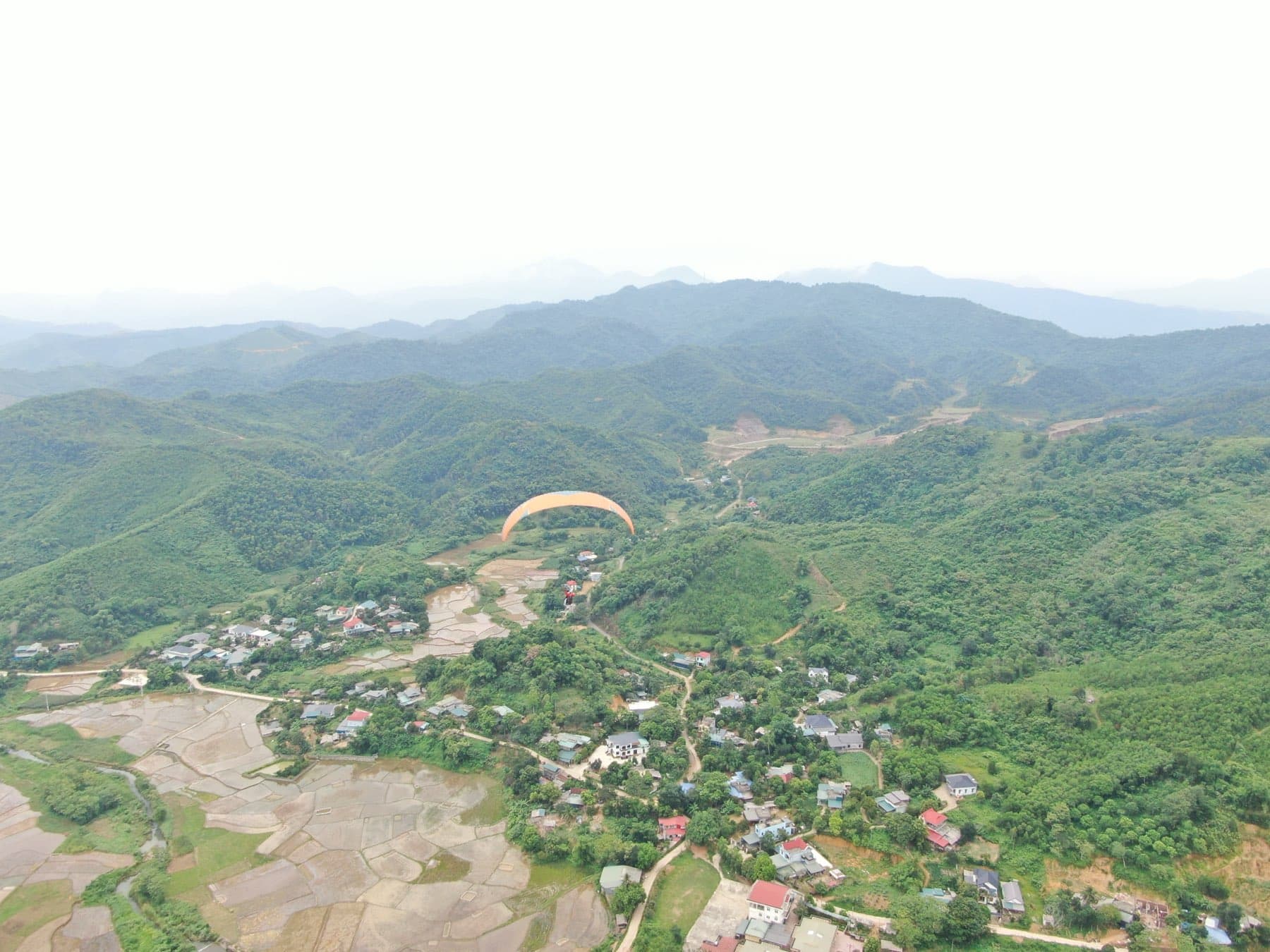
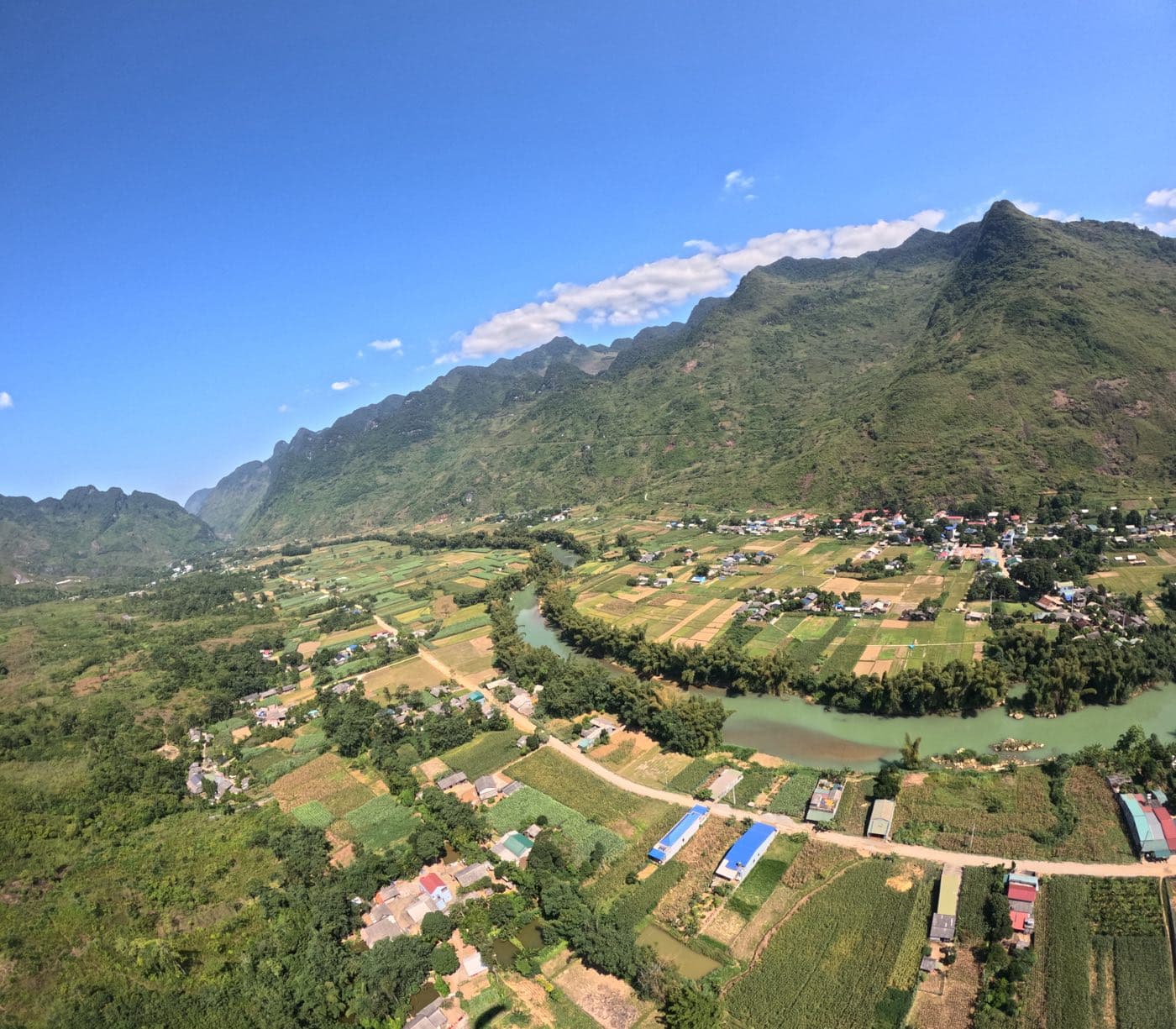
The take-off is on a mountainside in the Hang Da village area, facing straight out over Muong Hoa Valley, about a 10-minute drive from Sapa town centre. The landing is at Lao Chai village on the valley floor, about 1,000 m AMSL. Height difference: about 500 m. On an overcast day with no thermals the flight is a single glide down of roughly 10–15 minutes. Above and on both sides rises the Hoang Lien Son range; Fansipan peaks at 3,143 m. In other words, you launch halfway up a deep valley, not from a summit.
| Item | Value | Notes |
|---|---|---|
| Who for | Solo pilots at P4 level and above | Not recommended for new pilots |
| Take-off | about 1,500 m AMSL | Mountainside in the Hang Da village area, facing Muong Hoa Valley; forecast point 22.3364° N – 103.8438° E |
| Landing | about 1,000 m AMSL | Lao Chai village, valley floor |
| Height difference | about 500 m | If you cannot work the slope, the flight is a single glide down of roughly 10–15 minutes |
| Surface wind rule | N, NE, E, W > 6 m/s: no flying | Below 6 m/s is flyable; 4 m/s gusting 12 is normal in the mountains, only gusts above 16 m/s are worth watching |
| Upper wind (+500 m) | W, E, N: think twice from 8 m/s, no flying above 12 m/s | Flow presses down the slope, launch gets rough even while the meter on the ground reads calm |
| Morning fog | usually clears around 9–11 am | In the afternoon cloud at mountain-face level can cover the take-off again |
| Thermals | small, harsh, turbulent, break up low | On a normal day only enough to scratch the sunny slope and hold height; no cross-country potential |
On the map: take-off and Lao Chai landing. The Sapa flight team notes that the exact launch and landing spots of the day can change with wind direction, so ask again when you get in touch. The team has not published an official favourable wind sector for this site: the current rule is only the four direction-based speed limits in the table above. Do not work out a "good direction" from the map yourself; ask the local pilots how the wind is coming in that day.
Rule number one: at Sapa, cloud grounds you before wind does
What postpones flying at Sapa more than anything is fog and low cloud. Early in the morning, especially after a rainy night or during a monsoon surge, fog covers the take-off; as the sun heats the slope it burns off, usually around 9–11 am. In the afternoon, cloud forming at mountain-face level can cover the take-off again. So the flying window at Sapa is often a gap between two cloud layers, not the whole day.
Sapa's speciality is the sea of clouds: the valley brims with cloud while the take-off above sits in sunshine. Stunning for photos, but do not launch: you must see the Lao Chai landing and a clear way down, and the cloud base must be above take-off. Typical signs: a calm night, high humidity after rain, a morning cloud base below the take-off. On the Sapa team's forecast page the cloud base is given relative to take-off: under 150 m means cloud is on the site.
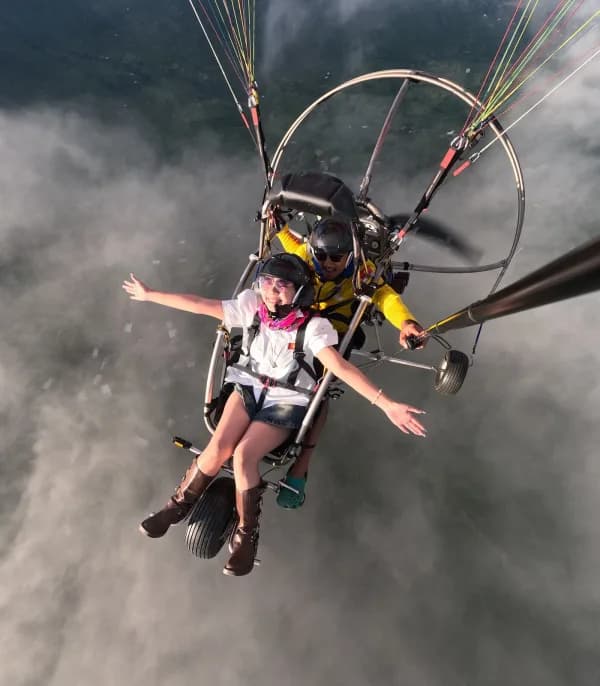
Flying above the sea of clouds: we do not recommend it. The view is beautiful but the risk is extreme: to get down you have to punch through the cloud layer, and inside cloud it is very easy to lose your bearings. Sapa has seen many incidents in cloud, including two wings in the same cloud that could not see each other and could not find the way out. The pilots involved could only describe it as "a feeling that is… hard to put into words".
- Fog signs: temperature–dew point spread under 1–2 °C, humidity above 95%, thick low cloud.
- Fog lingers with wind under 2 m/s and no sun; it clears fast with 2–4 m/s and sunshine.
- North-east monsoon (November–March): drizzle and fog can last for days. In summer fog is mostly a morning affair after a rainy night and usually clears by midday.
- Launch rule: landing in sight, cloud base above take-off, a clear way down. Missing any of the three, wait.
Cloud suck and cloud at mountain-face level
On many Sapa days the cloud base sits level with, or below, the surrounding ridges. A good thermal under such a cloud lifts you fast, and entering cloud close to terrain means losing both visibility and your distance from the mountain. The textbooks make two points: a mid-level wing's minimum sink is only about 1 m/s, not enough to escape cloud suck when the thermal climbs at 5 m/s or more, so know your rapid-descent techniques in advance; and when the base is below the peaks, stay on the valley side of the cloud, leave the lift early and do not climb right up to the base. If you can still see the cloud edge at about 45°, you have a way out; once that angle is gone, it is too late.
Wind in a narrow valley
The Sapa site suits light to moderate wind. The flight team's rule is short: main wind (mean wind, not gusts) from the north, north-east, east or west stronger than 6 m/s means no flying, which is exactly what we call a strong mean wind at take-off level; lighter is flyable. Light north or north-east wind is still fine. Gusts alone do not decide: 4 m/s gusting 12 is normal in the mountains, and only gusts above 16 m/s are worth watching. But in the mountains direction matters as much as speed: the same 5 m/s blowing onto the slope makes a great day, while blowing over the back of the ridge it gives turbulence and rotor right at the launch edge.
A valley like a long tube
The Sapa valley is very narrow and long, like a tube. The longer the tube, the faster the air inside circulates. As a result, wind on the valley floor circulates and changes direction very quickly: the take-off and landing windsocks can point two different ways, and the wind at the landing can swing while you are on approach. That is why the Sapa flight team always checks the landing wind before launching, not just the take-off windsock.
Landing at Sapa takes technique. Enter the landing pattern with height in hand, keep watching the landing windsock all the way to final, and be ready to change your approach when the wind swings. Never plan to fight a strong headwind back to the landing, and pick a backup option on your flight line before you leave the slope. Refresh landing technique: choosing the field, the approach and the flare.
Tailwind, crosswind and upper wind
A tailwind at take-off (wind coming over the back) means no launch, whatever the speed: the air has crossed the ridge and is rolling down right at the launch edge. A light crosswind is launchable if you are practised at crosswind launches (training programmes set a maximum of about 45° with a weak cross component); strong and crossed, wait. The thing most easily missed at Sapa is upper wind: because take-off is already at 1,500 m, the 850 hPa level (~1,500 m) is the wind at launch height and 700 hPa (~3,000 m) is the wind above your head. When these levels blow hard from the west, east or north, the flow presses down the slope, making the launch rough and prone to blow-back while the meter on the ground reads calm. See also avoiding being blown back over the ridge and flying in turbulence and lee zones.
| Situation | Signs | Decision |
|---|---|---|
| Light to moderate wind onto the slope, fog cleared | Steady take-off windsock, landing in sight, cloud base above take-off | Flyable; keep watching the landing wind, the valley wind changes direction very quickly |
| Strong mean wind from N, NE, E or W | Mean wind at take-off level above 6 m/s | No flying (site rule) |
| Hot, dry west wind (common March–May) | West wind spilling over the Hoang Lien Son range, stronger with height, gusty | Rotor and turbulence; west wind above 6 m/s means no flying, and a light west wind on launch still needs an upper-wind check |
| Strong upper wind from W, E or N | +500 m above take-off: 8–12 m/s; shear on the wind-by-height chart | Think hard from 8 m/s; no flying above 12 m/s |
| Tailwind at take-off | Windsock pointing the wrong way, rolling air at the launch edge | No launch |
| Sea of clouds or cloud on the site | Landing not visible; cloud base under 150 m above take-off | Wait for it to clear; never launch 'through' cloud or fly up above the sea of clouds |
| Towering afternoon cumulus | Fast-growing towering cumulus, showers or thunderstorms in the forecast | Land early or do not launch |
Thermals at Sapa: small, harsh and breaking up low
Because the valley is a long tube with fast-moving air, thermals cannot pool in it long enough to rise high. Sapa thermals are usually harsh, turbulent, small, and they break apart low down. Only some small side gullies hold small thermals; following them a pilot can hold height and, with luck, climb a little. Most thermals are harsh and narrow, with no cross-country or long-flight potential.
On a normal day, the way to fly Sapa is to stay close along the mountain face, scraping lift off the sunny, hot slope to hold height; leave the mountain and you come down fast. Only on a few days, when thermals gather at altitude and the whole region convects strongly, can you climb thousands of metres. Flying close to terrain in harsh thermals demands solid active flying: keep a safe margin from the slope and always have a way out towards the valley. Read the day's thermal top on the Skew-T — see reading a Skew-T for paragliding.
Flying seasons
| Months | Wind and weather | Notes for pilots |
|---|---|---|
| Mar–May | Lots of hot, dry west wind spilling over the Hoang Lien Son range and dropping down; the higher you go, the stronger the west wind | Rotor, gusts, turbulence, dry and strong. The hardest period |
| Jun–Aug | Rainy season, mostly south and south-east wind | Good flying conditions; thunderstorms still happen, land once cumulus starts towering |
| Sep–Nov | Autumn, mostly good wind | Good season |
| Aug–Dec | South and south-east wind, dry golden sunshine | The most stable wind direction of the year |
| Dec–Mar | Cloud season: low cloud, cold, fog every day | Fog sometimes covers the whole take-off; pick days when the sky opens. Do not fly up above the sea of clouds |
Two practical details: the take-off is about 2–3 °C colder than Sapa town, and the sun drops behind the mountains earlier than in the lowlands. Bring an extra layer and do not plan a late flight on a lowland sunset time.
Hazards specific to Muong Hoa Valley
- Rotor and lee zones. A tailwind creates rotor right at the launch edge. From March to May, west wind spills over the Hoang Lien Son range into the valley, bringing rotor, gusts and turbulence that get stronger with height. In a narrow valley the lee slope opposite is also turbulence and sink; do not go looking for lift on a slope that is in the lee.
- Harsh thermals close to terrain. On a normal day you have to fly close to the mountain face to stay up, in small, broken thermals. This is why Sapa is for P4 pilots and above only.
- High terrain all around. You launch halfway up a massif that rises above 3,000 m. Strong upper wind presses down the slopes; do not fly behind the ridge and do not trust the ground anemometer when the upper wind is strong.
- Cloud on the site, flying in cloud. The cloud base at Sapa can drop to take-off level within tens of minutes. Always keep your way down into the valley in sight, and never put yourself in a position where you must descend through cloud.
- Villages, roads and power lines. The valley floor is inhabited: Lao Chai and Ta Van villages, metal-roofed houses among the fields, roads between villages. We have no power-line map of the valley to publish; treat every road and every group of houses as possibly having lines, cross them with safe height, and ask the local team about the approach to the landing.
- Fast-changing weather. The valley wind changes direction very quickly; summer brings thunderstorms, and the gust front ahead of a storm can arrive well before the rain. Once towering cumulus builds, land.
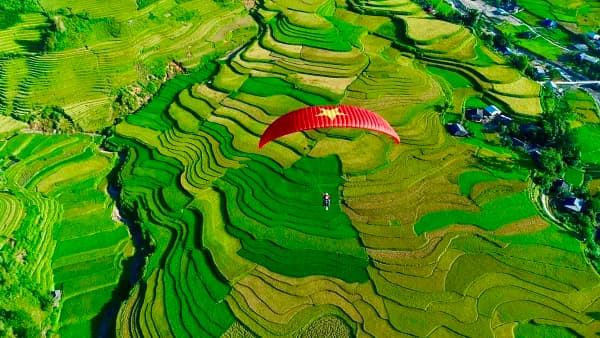
Rice terraces are not good places to land. Each paddy is narrow and ends in a terrace bank: landing on terraces, it is very easy to slide off the field and hit the bank. In the water-pouring season the paddies are flooded, and from July to harvest they are the villagers' crop. Only land in a paddy when you truly have no choice; before launch, ask the flight team which backup spots to use on your flight line. If you do land out, find the owner, apologise for any damaged rice and tell the flight team.
Before you drive up
- Are you at P4 level or above? Sapa is for solo pilots from P4 only. New or low-airtime pilots: do not make Sapa your first north-west site.
- Contact the site operator before you come. The Muong Hoa site is operated by Sapa Paragliding, which holds a flight permit from the Operations Department of the General Staff, Ministry of National Defence (permit no. 17996/TC-QC). Tell them your dates, ask about the day's flying schedule and which launch and landing are in use, and fly within the local team's arrangements. For background on flight permissions, read airspace for paragliding pilots.
- Use the right forecast. Mebayluon's flying weather page includes Sapa; the Sapa team's 15-day forecast uses the exact take-off coordinates and has fog, cloud base, upper wind, a wind-by-height chart and a Skew-T, coloured against the site rules. From day 7 onwards use it to pick a day, not to fix an hour. Refresh what pilots should check in a forecast.
- Get to launch early and wait. Watch the fog lift, check the cloud base against take-off, and ask about the landing wind (through the team or someone at the landing) before you clip in. Two windsocks telling two different stories is normal in a narrow valley.
- Radio. Bring a radio and agree on a frequency with the local team when you arrive; we do not publish a frequency here.
- Ask the local pilots the questions cross-country books recommend: what the take-off thermals are like, how strong and how deep the valley breeze gets, where the unexpected lee zones are, whether there are restricted areas not on the map, and which line to fly.
- Equipment. Warm layers (take-off can be below 10 °C in winter), speed bar connected, reserve within its repack interval, helmet and gloves. Do not bring a new wing to a new site: too many new things at once is a recipe for an accident.
The Muong Hoa – Sapa site page collects our other articles about this site. For same-day information (flying or not, which launch and landing are in use), ask the Sapa flight team directly.
Summary for pilots flying Sapa for the first time
- For solo pilots at P4 level and above only. Not recommended for new pilots.
- Take-off about 1,500 m AMSL, Lao Chai landing about 1,000 m AMSL, about 500 m height difference, a valley narrow and long like a tube.
- Cloud decides first: launch only with the landing in sight, cloud base above take-off and a clear way down. Do not fly up above the sea of clouds.
- N, NE, E or W wind above 6 m/s: no flying. Upper wind from W, E or N: think twice from 8 m/s, no flying above 12 m/s. Tailwind: no launch.
- Thermals are small, harsh and break up low: on a normal day you scrape the sunny slope to stay up, and leaving the mountain means coming down fast; do not expect cross-country.
- The valley wind changes direction very quickly: check the landing wind before launch and enter the landing pattern with height in hand. Terraces are not landing fields: you easily slide off the paddy and hit the bank.
- Seasons: March–May hot dry west wind and rotor; June–August rainy season, south/south-east wind, good conditions; September–November mostly good wind; August–December the most stable wind direction of the year; December–March cloud season with daily fog.
- Contact the Sapa flight team before you come; ask about the day's launch, landing, landing wind and approach.
A new site plus a lowering cloud base is two unknowns. At Sapa, wait until there is only one.
— Mebayluon Paragliding
Sources: Mebayluon's first-hand flying experience at Sapa (valley wind, thermals, seasons, landing, flying in cloud); the Sapa flight team's site rules, wind thresholds and weather notes (the same rule set as Mebayluon's operations system); the cloud-suck section summarised from the thermal-flying textbooks Mebayluon uses in training.