📊 The Correct Class
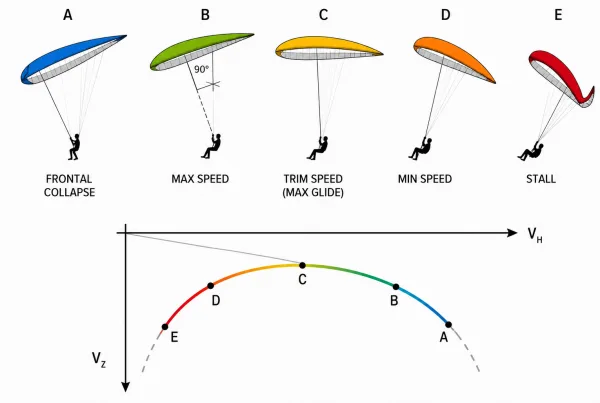
Before you go ahead with buying your gear, you need to have a clear idea of what exactly you’re looking for based on what you hope to get out of the sport. This will determine the class of wing you should be aiming for. Currently, the most widely used classification for paraglider wing classes is the European certification program – EN 926. According to it, wings are divided into four main classes: A, B, C, and D. Passive Safety: The lower the class of the paraglider, the higher its level of passive safety. Lower-class wings are more forgiving of pilot errors and are more stable. Flight Performance: Due to the aerodynamic nature of paragliders, improving a wing’s flight performance (speed, glide ratio) typically comes at the cost of some stability. ⚠️ Important Note: A wing’s class only reflects its passive safety – not necessarily its flight performance. According to the certification, it’s entirely possible to have a higher-class wing that performs worse than a lower-class one. Choosing the right wing class should be based on two main factors: What level you want to reach and How much time you can devote to it.
- Up to 50 hours: Leisure activity and enjoyment. Not chasing peak performance; minimizing risk ➜ Class EN-A or Low B
- 50 - 100 hours: Encountering varied conditions, with the skills to handle them. Motivated to chase distance and airtime achievements ➜ Class High B
- 100 - 150 hours: Paragliding takes up a significant part of your free time. Possess advanced handling skills ➜ Class EN-C
- Over 150 hours: Paragliding is more than a hobby. You spend enough time in the air to manage high-performance wings safely, have completed advanced SIV courses and fly in competitions ➜ Class EN-D or CCC
💡 Subclasses (Low B and High B): These unofficial intermediate classes are based on certification test results. The more B-level test scores a wing receives, the closer it is to class C, making it a High B. A Low B is usually a wing that would otherwise be considered A class but received a few B scores, making it very forgiving. 👍 Golden Rule: Be honest with yourself about how much time you’ll realistically dedicate to paragliding. Your first wing should fall within the high passive-safety classes (Class A or Low B). Never jump classes without an additional SIV course. A paraglider and a pilot are like two interlocking gears—if they’re not well matched, the entire system won’t operate optimally.
🦅 Your flying style
Unless you’re passionate about hike & fly or truly want to minimize weight, in most cases, standard (non-lightweight) wings offer better performance than their lightweight counterparts. Lifespan: Lightweight wings generally have a shorter lifespan due to the materials used. Purpose: If you choose a lightweight wing, consider whether you want it for cross-country flying or simply for descending quickly from the mountains. Wings with smaller surfaces tend to be more stable but sink faster—making them more suitable for mountain hike & fly rather than long-distance flying.
🏷️ Brands and wing models
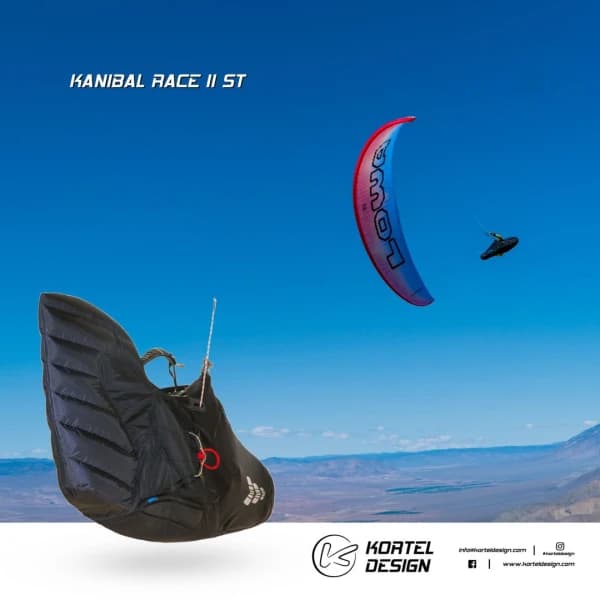
When choosing your first wing, you’ll find the market flooded with options, each one claiming to be the best. For your first wing, always choose one certified according to EN or LTF standards. Reputation: Focus on large, established manufacturers known for quality materials, build integrity, and proper certification. Trusted wing brands for beginners include: Advance, Ozone, Nova, Niviuk, UP, Skywalk, Mac Para, Swing, Gin. Reputable manufacturers specializing in harnesses and reserves: Charly, Woody Valley, Sup Air, Companion, Kortel Design. Don’t fall for trends or marketing gimmicks suggesting a class B wing flies like a class C. Stick with well-established beginner-friendly brands and models that have proven themselves over time.
💺 The harness
Harnesses are not classified by safety levels like paragliders. Instead, they are categorized by purpose—beginner, lightweight, competition, etc. Beginners Harness: Choose a model that offers high stability and passive safety.
Back protector: Avoid models with no back protector or only very small ones. As a beginner pilot, you will make mistakes during launch and landing—it’s better to have some form of protection than none at all.
Avoid Aerodynamic Competition Harnesses: These pod harnesses often have a lower suspension point and can be overly sensitive for beginners. The aerodynamic gain is negligible when paired with an A or B class wing. Seat Board: Models with a seat board are generally easier to get used to and offer better control over weight-shifting, though they are slightly heavier.
🪂 The reserve parachute
📏 Size is critical
Size Requirements: The primary requirement is its size. It is strongly recommended that the parachute covers your all-up weight + 20%. Avoid choosing a smaller parachute just to save weight or money. Heavily loaded parachutes descend faster, increasing injury risk. Oversized parachutes can lead to instability and slower deployment. Lightweight or Not?: The reserve parachute is the only part of your gear you hope never to use. Investing in a lightweight model reduces total gear weight without compromising safety. The only downside is the higher price.
🔺 Reserve shape
Available in round, square, and round-square hybrid designs. Standard round parachutes are the most affordable but offer the least stability. Square models with multiple air inlets (dynamic openings) typically provide better descent stability, lower weight, and slower descent rates.
🎮 Steerable or not?
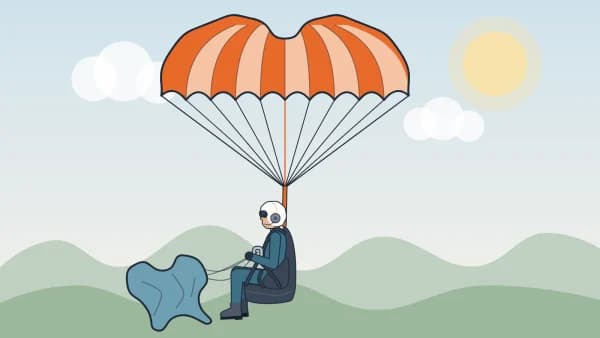
Steerable reserves (Rogallo types) are the top end of the market. Their biggest advantage is that they allow you to steer towards a landing area or avoid obstacles after deployment. The drawbacks are a significantly higher price and more complex repacking methods.
🧰 Maintenance
It is recommended that the reserve parachute be repacked at least once a year. Ensure there are local specialists who know how to repack your specific model, especially if it is a non-standard shape.
🆕 New or second-hand?
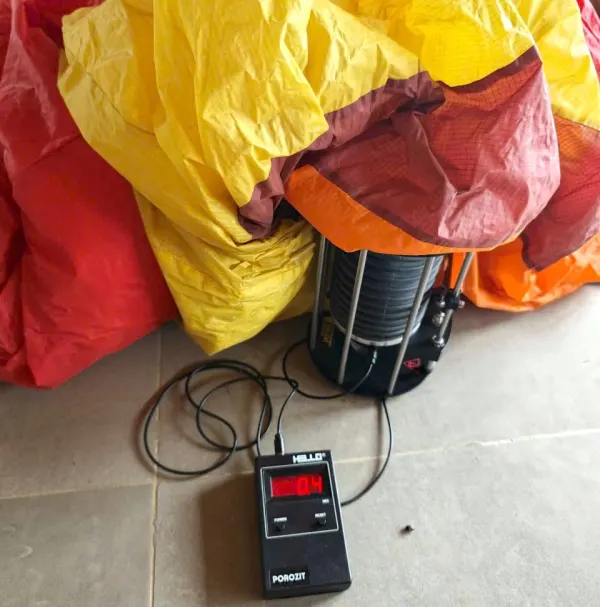
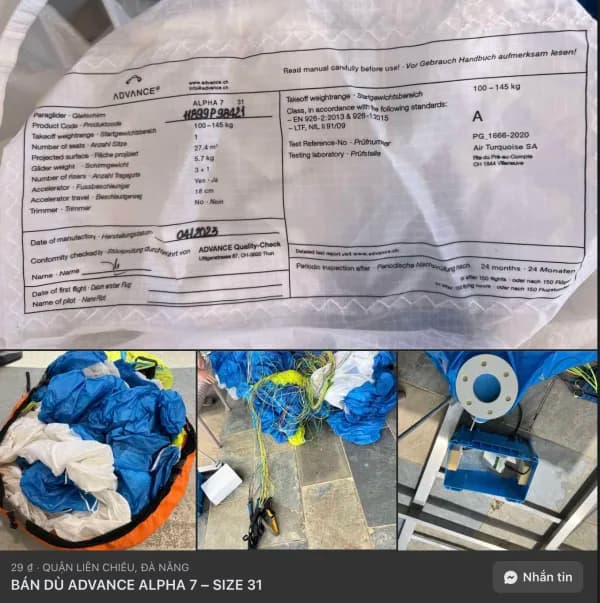
For most beginner pilots, the first major dilemma is whether to purchase new or second-hand equipment. New Equipment: The advantages are clear—a wide selection of brands, models, sizes, colors, and reliable warranty support from official local distributors. The main drawback is the price. A completely new beginner set (wing, harness, reserve) typically ranges between €2500 and €4000. Second-Hand Equipment: Because the cost of new gear can be a significant and often unaffordable investment, opting for second-hand equipment is a highly popular and practical choice for those taking their first steps in the sport. Our advice: have your instructor check the condition of the fabric (porosity test) and the lines before you pay for used gear!