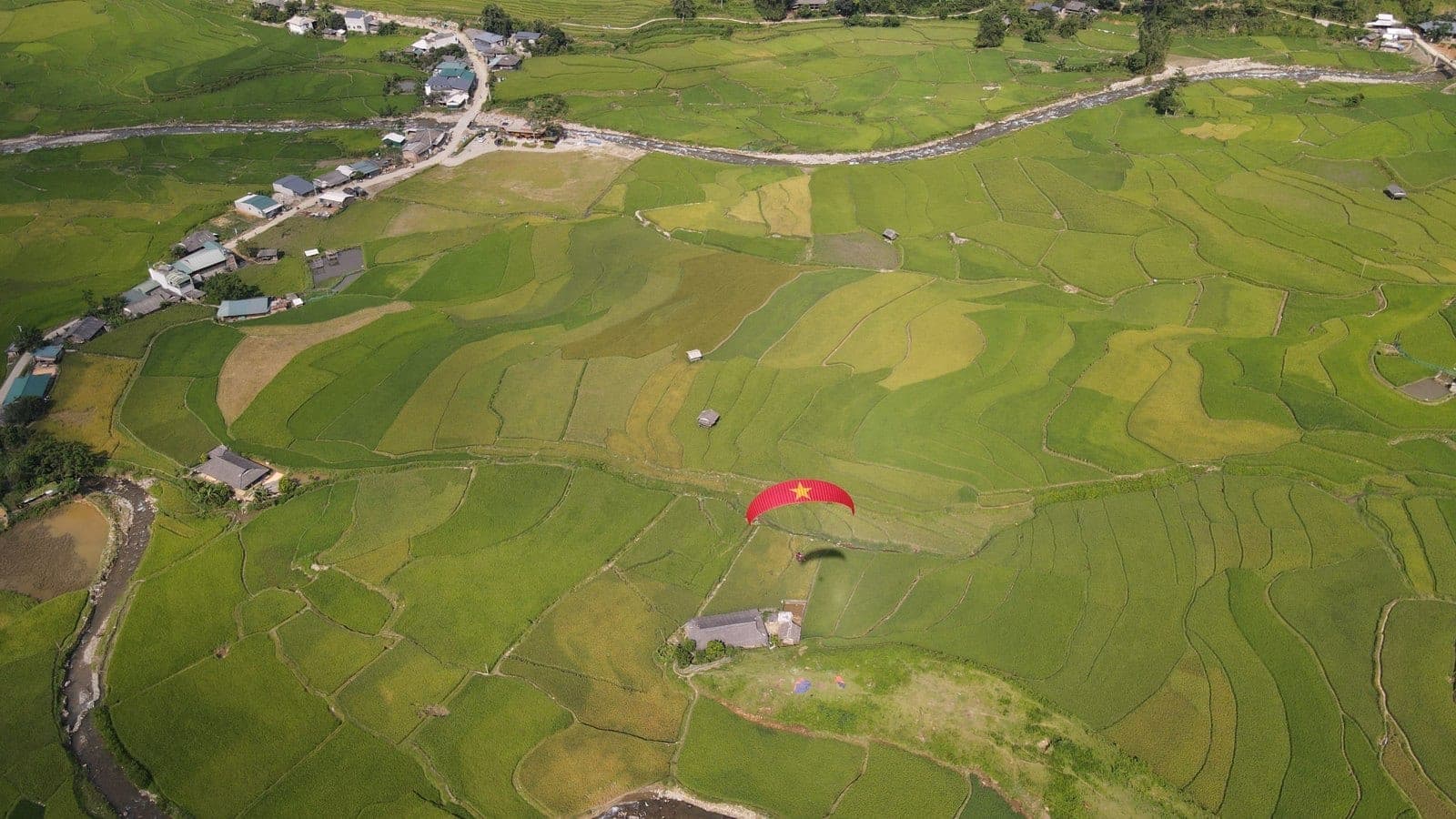
Just over 3 km past Tú Lệ market, National Road 32 (QL32) starts to swing up towards Khau Phạ Pass. Right before that bend, a small turning drops down to the valley floor: this is the road into Lìm Thái village, stop no. 4 on Mebayluon's check-in map.
Where is Lìm Thái village?
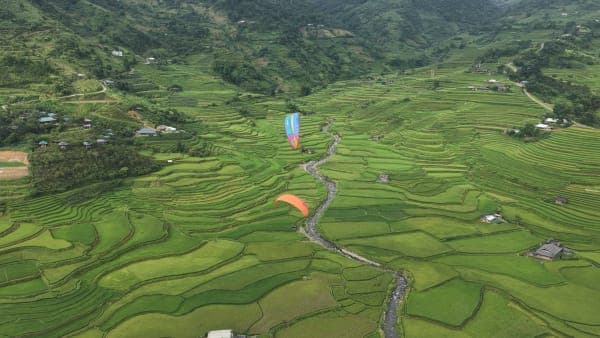
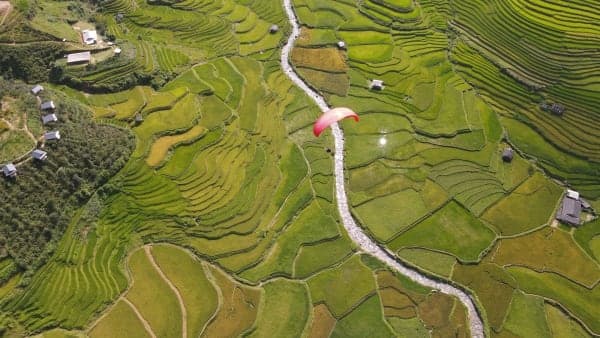
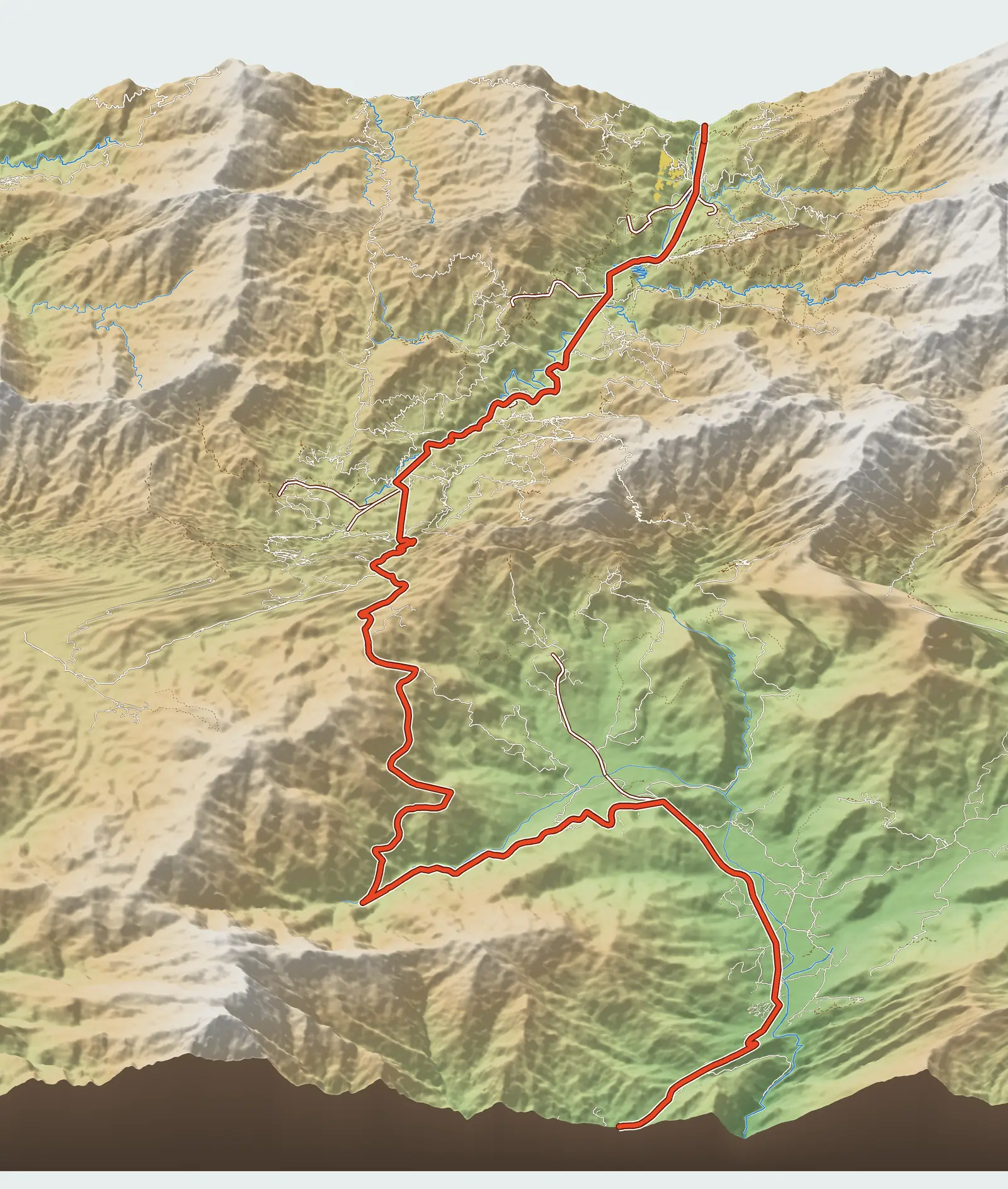
Lìm Thái is a bản (village) of the Thái (Thai ethnic group, not people from Thailand), in the former Cao Phạ commune of Mù Cang Chải. It lies on the floor of the Cao Phạ valley at about 750 m, more than 500 m below the paragliding take-off on the pass. On the map, the whole valley looks like a long basin: the main road loops along the southern slope to climb the pass, while the village, the stream and the fields all lie below.
Getting there
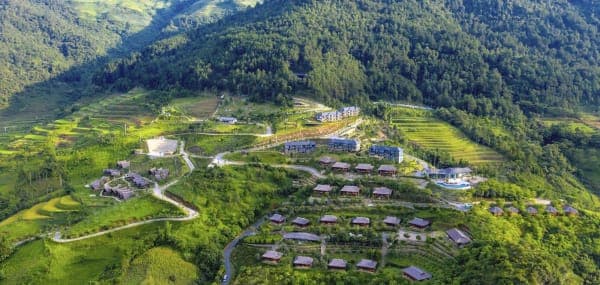
The turn-off is at Km 4.6 from Le Champ, about 3.3 km past Tú Lệ market if you come from Nghĩa Lộ. From the main road it is only about 600 m to the village. The lane is narrow but easy, not as steep as the roads into many other villages in the area; motorbikes and cars can both get in. About 700 m further on are the paragliding landing field and the Mebayluon Clubhouse, and to go up to Lìm Mông village you also have to pass through here.
What to see in Lìm Thái
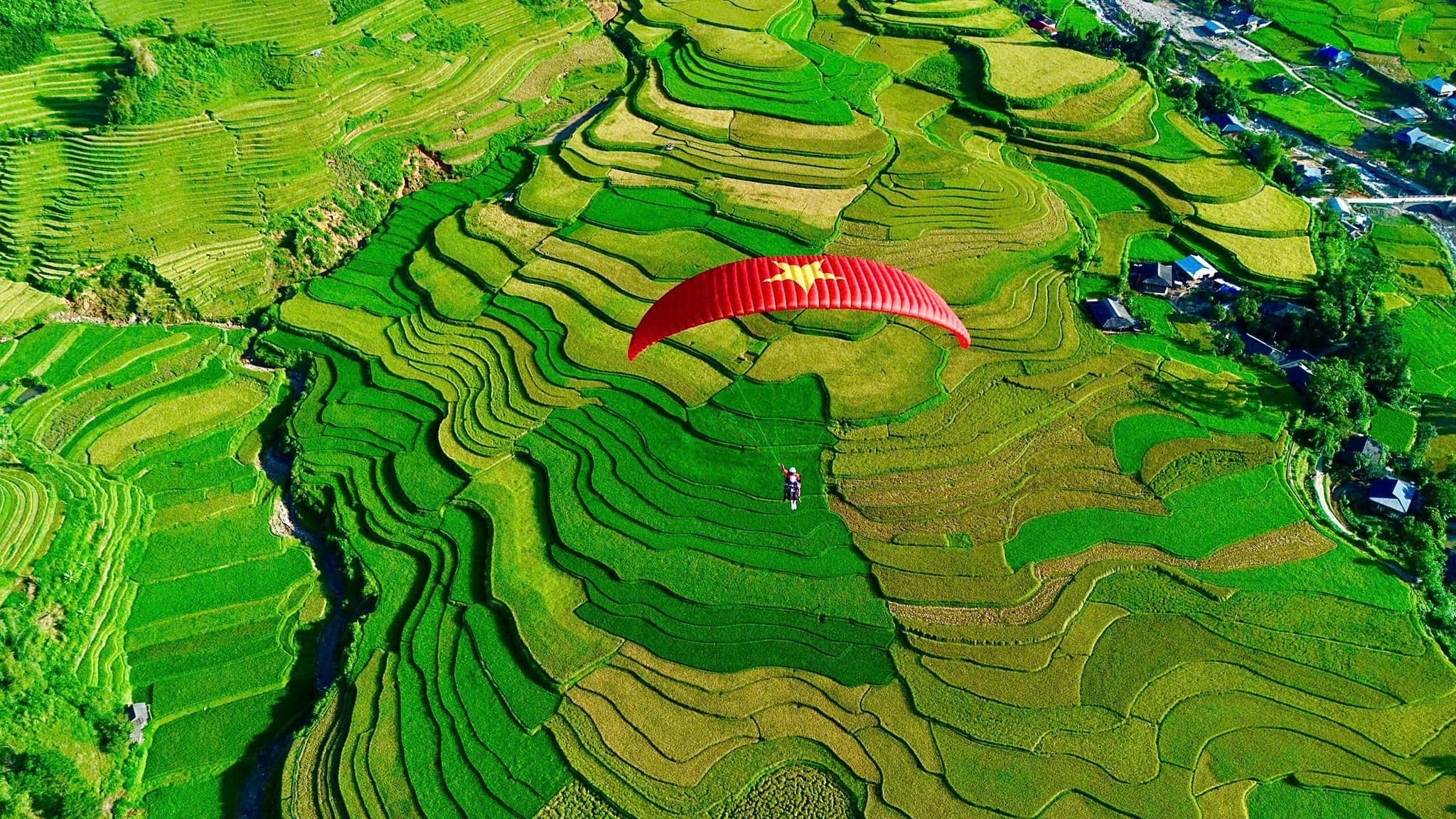
The first thing you notice is how different it is from the Hmong (Mông) villages higher up: stilt houses, flat paddies on the valley floor and a clear stream running through the village. Rice terraces wrap around the village, so a simple walk to the stream or along the paddy dykes gives you plenty of photo angles.
Lìm Thái also has a sight no other village has: paragliders. Every flight that takes off from Khau Phạ Pass glides down into this valley. Stand in the village and look up, and you will see the small wings grow clearer against the mountains before they touch down on the grass field at the end of the village.
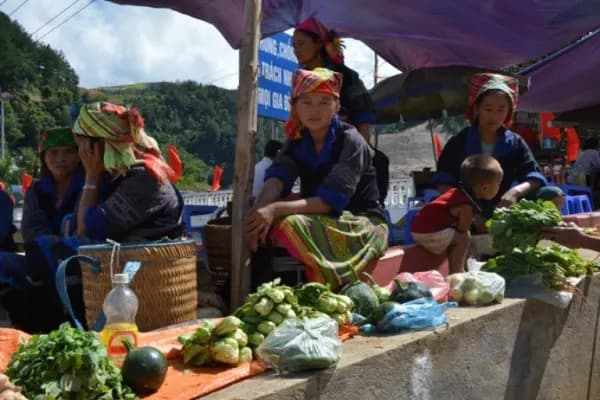
As for food, articles about Lìm Thái often mention grilled stream fish (pa pỉnh tộp), bamboo-tube rice (cơm lam), five-colour sticky rice and black chicken. Some families in the village take in guests for homestays; if you want to be sure of a bed, arrange it in advance.
An afternoon in Ít Thái village: indigo dyeing, weaving, brocade scarves
Right beside the paragliding landing field is another Thái village: Ít Thái. Homestay signs in the village still read "bản Ít Thái, xã Cao Phạ", the commune's name before Cao Phạ was merged into Tú Lệ commune. Ít Thái and Lìm Thái are two neighbouring villages with two separate names, not one village called two ways. The Mebayluon Clubhouse belongs to Lìm Thái village but sits between the three villages of Lìm Thái, Ít Thái and Lìm Mông, so you can walk to Ít Thái from there.
Thái women here still dye with indigo themselves. The cloth is tied in bunches and soaked several times in a vat of indigo; when untied, the bound spots become white flower patterns on a blue-black background. Visitors can ask to try dyeing a scarf with the village grandmothers and mothers, then see the wooden looms set up beneath the stilt houses, where brocade is still woven by hand.
In the village, Quân Pờm Homestay takes guests in a stilt house. Nearby, the household of a veterans' association member from Tà Sung village offers foot soaks and herbal-leaf baths, perfect for unwinding after a day of walking or a flight. To book ahead, just ask at the Mebayluon Clubhouse for directions.
Best seasons and times of day
May–June is the water-pouring season (when the terraces are flooded for planting): the paddies mirror the sky, and early mornings are often misty. From mid-September to early October the rice turns golden, which is also the busiest time. The timing shifts a little each year with the weather, and fields on the valley floor usually ripen before those higher up the slopes. During the day, early morning and late afternoon bring low-angled light that gives the terraces more depth than at midday.
Practical tips
- Drive slowly in the village: the lanes are narrow, with small children and buffalo and cattle about.
- Do not step on freshly built paddy dykes, and do not walk into rice fields in flower to take photos.
- Ask before taking portraits of villagers.
- Stay overnight to see the valley in both the late afternoon and the early morning.
Pairing with a paragliding flight
Lìm Thái is the very valley of the Khau Phạ paragliding site. The neatest way to combine them: go up the pass in the morning to take off, land beside the village, rest at the clubhouse and then take a walk around the village. If some of your group are not flying, they can wait right at the landing field and watch the wings come in. If you need a bed, see accommodation at the Clubhouse.
Previous and next stops on the route
- Previous stop: Lùng Cúng peak.
- Next stop: the paragliding landing field and the Mebayluon Clubhouse, 0.7 km away by the map's distances.
- The whole route: 18 stops, distances, best seasons and a dedicated post for each stop in Mù Cang Chải travel map: 18 stops from Tú Lệ to Khau Phạ.