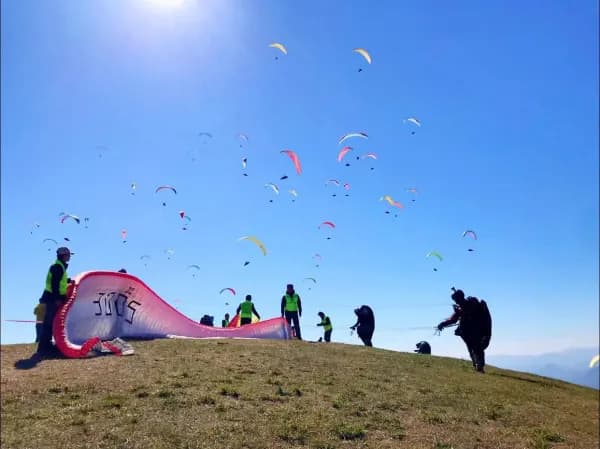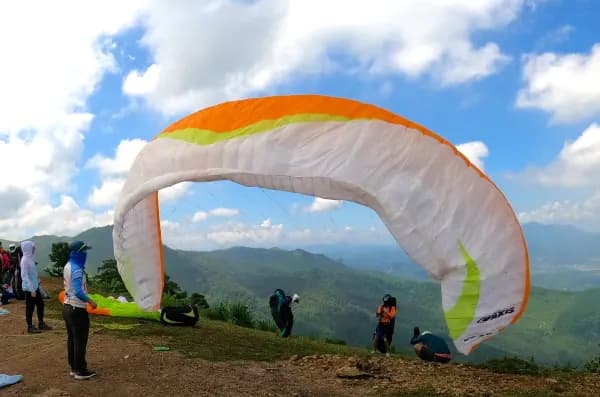
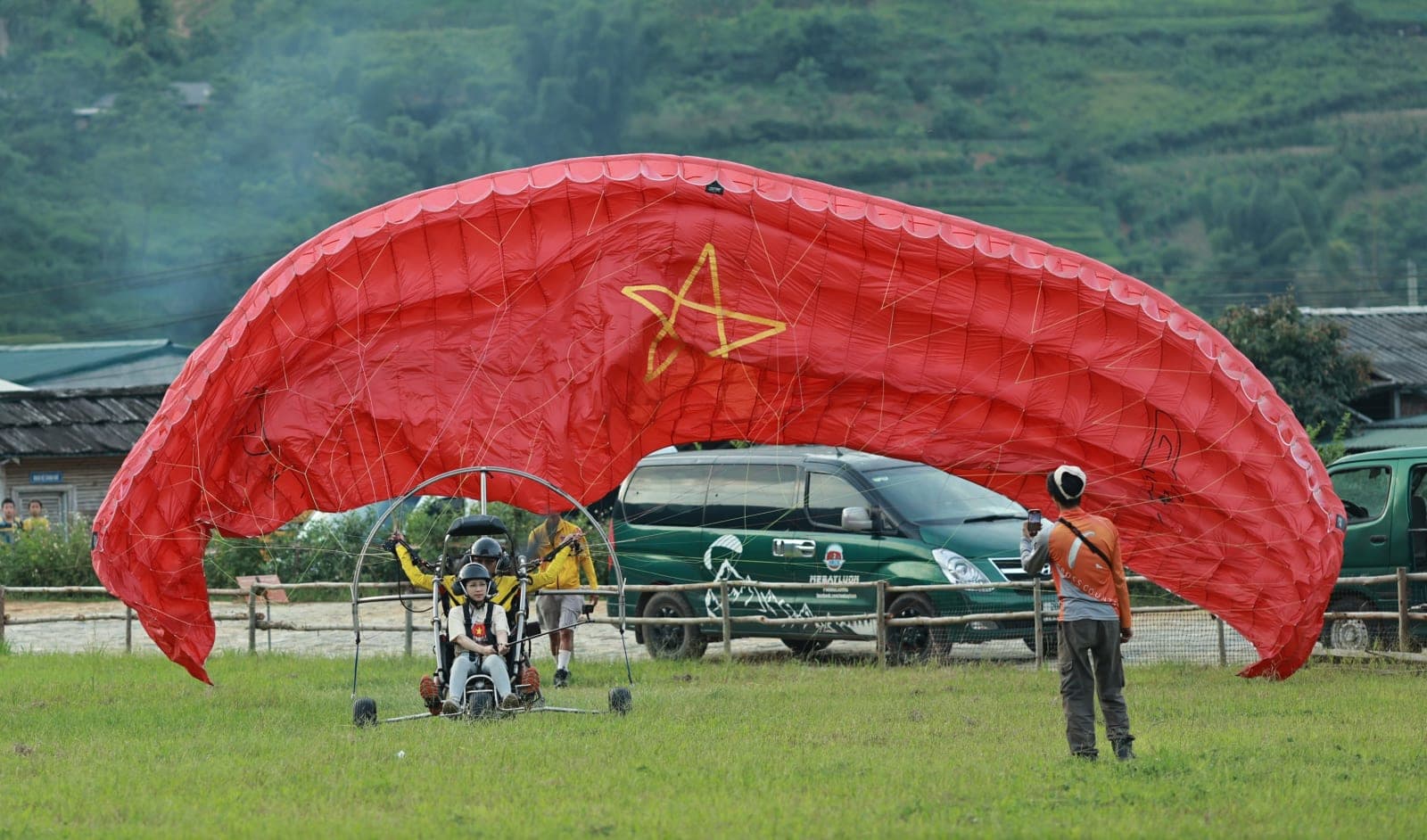
💡 SLIPPING our gravitational bonds and leaving launch is always a special moment. There’s no feeling like it, no matter how routine it becomes over time. It’s only great however when it’s done with control, without the need to test how bulletproof the wing’s design is. Launching is a critical phase; it’s where we’re closest to the ground, moving sometimes with speed without the wing properly flying. It’s where pilots can easily come unstuck, especially on unforgiving launches. 🏔️ Gliders’ launch characteristics have improved dramatically, and are one of the reasons why the sport has flourished in recent years. Having said that, visit any launch and watch a cross-section of pilots for long enough, and you’ll witness good and bad launches. What makes one good and one bad? Control. The manner in which the pilot is delivered into the air is key. Style points aren’t important, just a strong, safe technique. Falling on one’s face on to the rocks at Ölüdeniz does nothing for your image or your looks. 🌬️ Alpine flying sites can enjoy light anabatic winds, depending of course on time of year, day and prevailing conditions. Pilots used to soaring sites usually dread these launches. Even light backwinds can plague them, despite strong thermic activity out front, although this usually happens only when launching on snow in late winter or early spring. ⏳ These pilots are usually used to ground handling before deciding when to launch. But alpine launching does not afford the pilot time to stand and admire the wing, choosing when to go. Once started, an alpine launch should be a set of fluid sections, with a controlled flow from one to the next until the decision is made to commit fully. Pull up, control, look, commit. A front stall at the last stage can be either comedy gold or devastating, depending on the terrain. Grass launches usually allow mistakes, though nothing is guaranteed when running downhill at 20-25km/h and falling on one’s face. Falling down a scree slope with half the wing open at these speeds could see loss of more than a little pride. A trip to casualty or the dentist can be on the cards.
Style points aren’t important, just a strong, safe technique
⚠️ Some common mistakes
Forward launches, done because of the lightness of the forward breeze or a complete lack of it, can be daunting to pilots who don’t practise. Here are some of the main reasons that lead to the launch going wrong. ▶ Not checking properly: That lines are free, or even clipping in wrongly. ▶ Charging downhill: From the trailing edge with the lines totally slack – anything can happen. ▶ Too much impulse: At the beginning that goes unchecked and leads to a front stall. ▶ Not standing in the centre: Of the wing, leading to an uneven pull-up. ▶ Dropping the hands: Leading to closure of the leading edge – the glider will not fly. ▶ Bending at the waist: And closing the leading edge, again preventing the glider from flying. ▶ Not looking at the wing: To check for knots in the lines, so taking off with a problem. ▶ Sitting down too early and jumping back: With the glider not flying. As the wing tries to fly the pilot will scrape the ground – not so funny over harsh terrain.
✨ Tips to make it perfect
There are so many different techniques that it would take too long to go over them one by one. So let’s break it down, as usual, to concepts, or simply what are we trying to achieve. ▶ Main objective: We wish to bring the glider up, to check that the profile is clean, to control any tendency to overshoot or roll, and of course to have the option to abort at any time before committing completely. ▶ Sensitivity: Along with the above we need sensitivity, using smaller muscle groups, and a technique that goes with our own biomechanics. ▶ Glider layout is crucial: Pull the glider into a smooth arc on the ground and tension the leading edge slightly. This ensures that the tips don’t inflate first, and gives a smooth and natural centre-to-tips inflation. ▶ Stand in the centre: The pilot must be in the centre of the wing with equal pressure on left and right A-risers. This will help pull the glider forward through the air evenly. We want to avoid a strong pull on either side. This will prevent unwanted yaw followed by potential roll. ▶ Benefits of being centred: If the pilot is centred, he or she won’t need to move under the low side of the wing during the pull-up phase, as there won’t be a low side. He can concentrate on moving forward smoothly and safely. ▶ Hand position: During the pull-up, the hands should be slightly above shoulder height in front of the face, equidistant from the nose, with a little tension between the risers and the carabiners. This will prevent the hands dropping and closing the leading edge. ▶ Similarity: Think about your hand position for reverse launching – it’s the same position, but facing the opposite way. ▶ Body posture: The back should be straight and hips driving forward. Try not to bend at the waist as this will close the leading edge, making it slower to get off the ground. ▶ Impulse: The forward impulse should be smooth with very little slack in the lines. Standing at the trailing edge and running full speed is not advised here. The start phase should be slow and controlled, with a gradual acceleration. ▶ Once overhead: Connect to the trailing edge by applying the amount of brakes you need. Don’t choke it, let it fly! ▶ Visual check: From your upright position it should be very easy to look up to make sure everything is fine. A quick glance is usually enough. With experience, pilots will feel an unfamiliar pull if the lines are not clean on the pull-up, but a visual check is still a good idea. ▶ Personal preference: This is why I prefer a running reverse in all but light backwind conditions, as I personally prefer to see that the lines are clean from the initial pull-up. ▶ Commitment: Only when you’re totally happy that the wing is level, straight, open, flying and knot-free should you lower your shoulders and start a strong run.
🏁 Conclusion
Hacking off the hill with an imminent front stall on a steep launch is very bad for your health, as is trying to fix something that was wonky from the beginning. It’s better to be slow, controlled and ready to stop at any moment until you’re committed. It can mean the difference between a great flight and a frustrating – wow that was too close! – short hop.
🪂 The reverse launch technique