Here is how to read the situation and react to optimize your altitude gain:
🚀 1. When the glider pitches forward
This happens most often on high-end wings. The canopy tends to bite into the lift and surge forward. 🎯 What to do: put that energy to work — apply brake to convert speed into height. 🪞 The mirror rule: mirror what the air does. If the thermal shouts at you (a strong surge), shout back with a decisive brake input. If it only whispers, brake very gently. Get this right and you'll climb immediately.
⚓ 2. When the glider pitches back
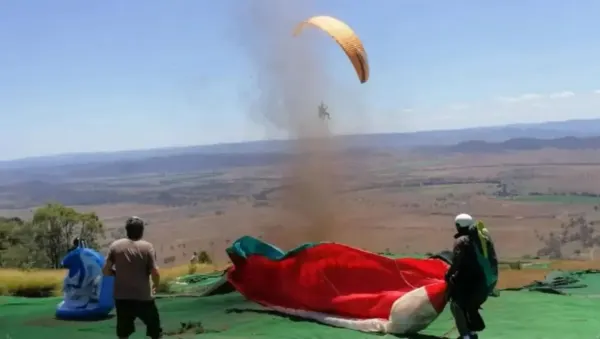
When you hit a sharp-edged wall of air, the wing can fall back behind you. 🧘♂️ What to do: be patient and wait. Don't rush to intervene. The wing will use its stored energy to surge forward again on its own. ⚠️ Warning: never intervene out of rhythm. If you let the wing fall too far back and it then surges too hard forward without timely braking, you'll swing beneath the canopy. At that point you have to brake deeply to damp the oscillation, and you lose height for nothing.
⚖️ The Ultimate Technique: Controlling the "90-Degree Point"
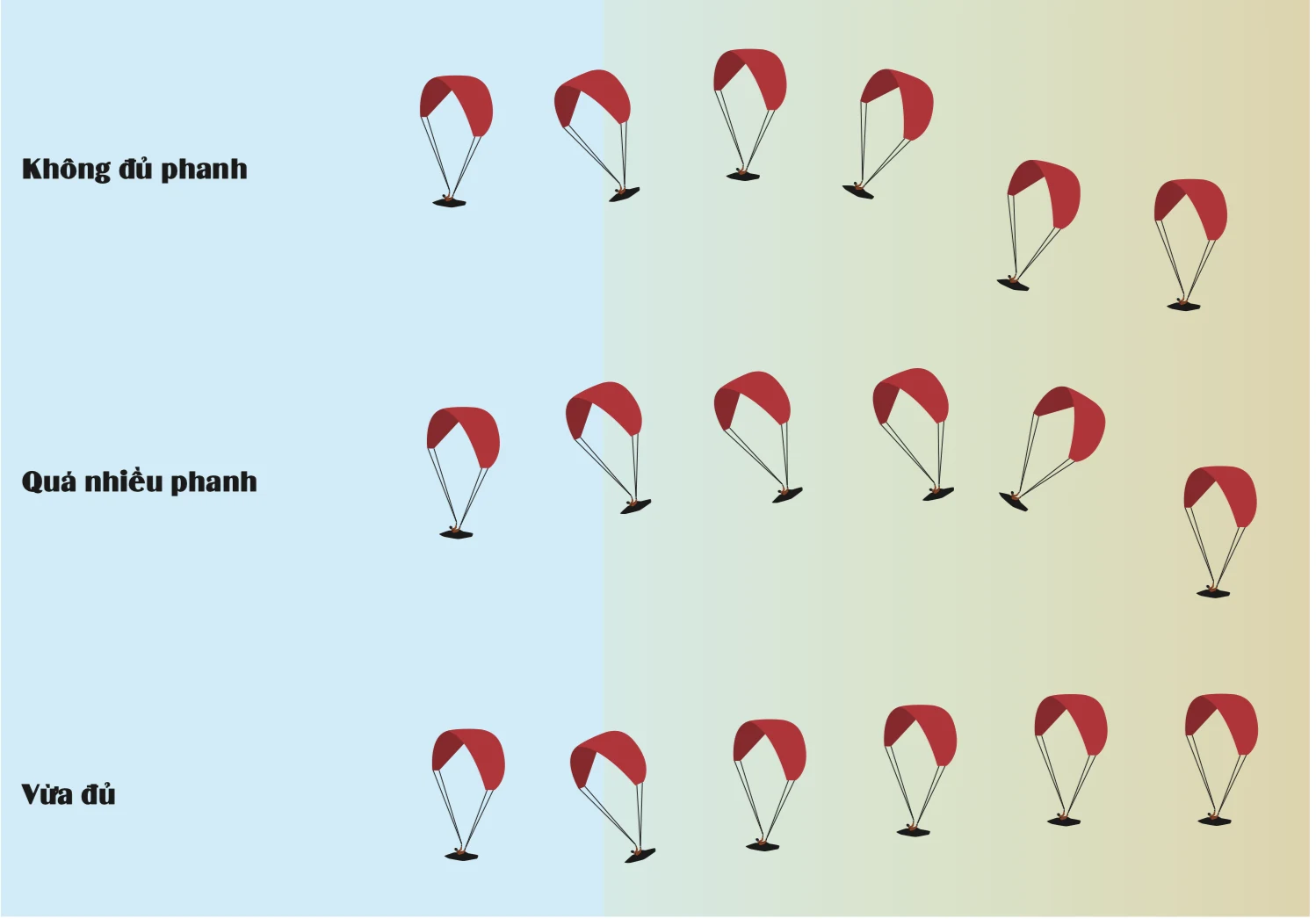
The key to not breaking the golden rule of smoothness lies in the moment the wing surges up to the vertical, directly overhead: ✅ Brake on the beat, for long enough: apply just enough brake and hold it just long enough to stop the wing right above your head. ❌ Too short a stab: you swing out in front of the wing. ❌ Holding too long: the wing is held back and loses momentum. When you release, it dives forward again and the pendulum cycle starts over.
🧠 In short
When you hit a strong thermal, especially when the lift catches one side, this is no longer the moment for slow deliberation. Body balance and a precise braking reflex — in both strength and duration — are what let you slide into the thermal core smoothly. 🦅