Unpowered paragliding relies on thermals and wind; a paramotor trike takes off under its own power and holds altitude. Which one should you pick?
At the Khau Pha Pass flying site (Mu Cang Chai), you will have two experience options: paragliding (non-motorized) and powered paragliding (Paramotor). Depending on your preference, you can choose a peaceful, natural flying experience or a more flexible and controlled flight.
🪂 Unpowered paragliding – flying on the wind alone
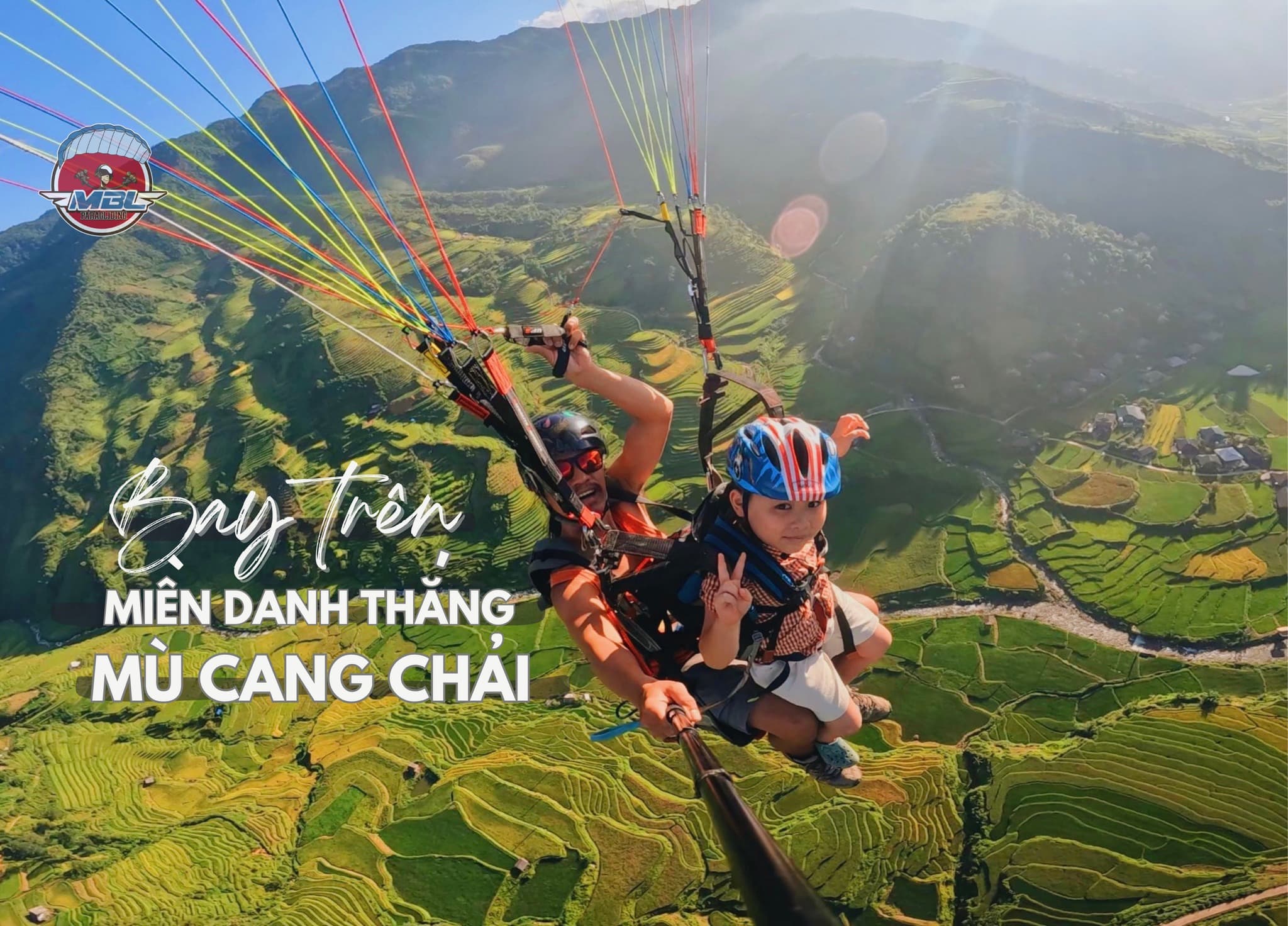
If powered paragliding brings the strength of machinery, then paragliding (PG) is the art of riding the wind to soar. It is the most original and romantic form of flight, where humans and nature become one—turning your dream of flying like a bird into reality amid vast green mountains.
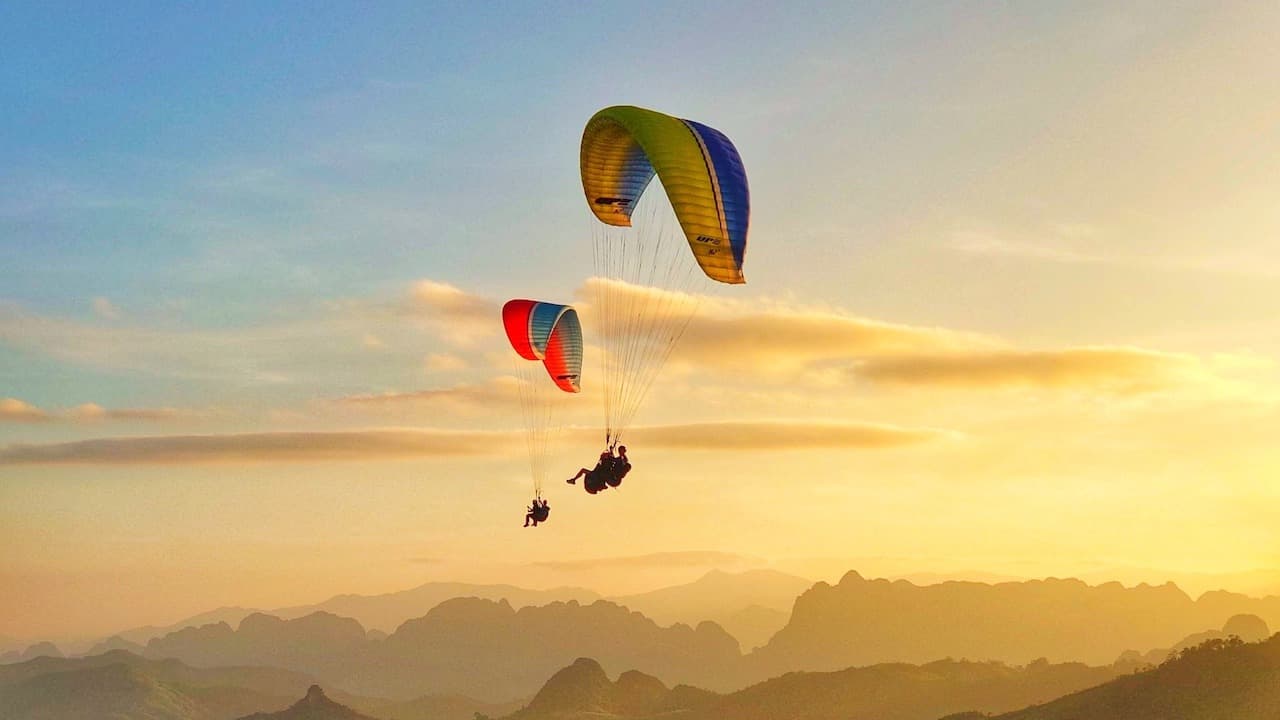
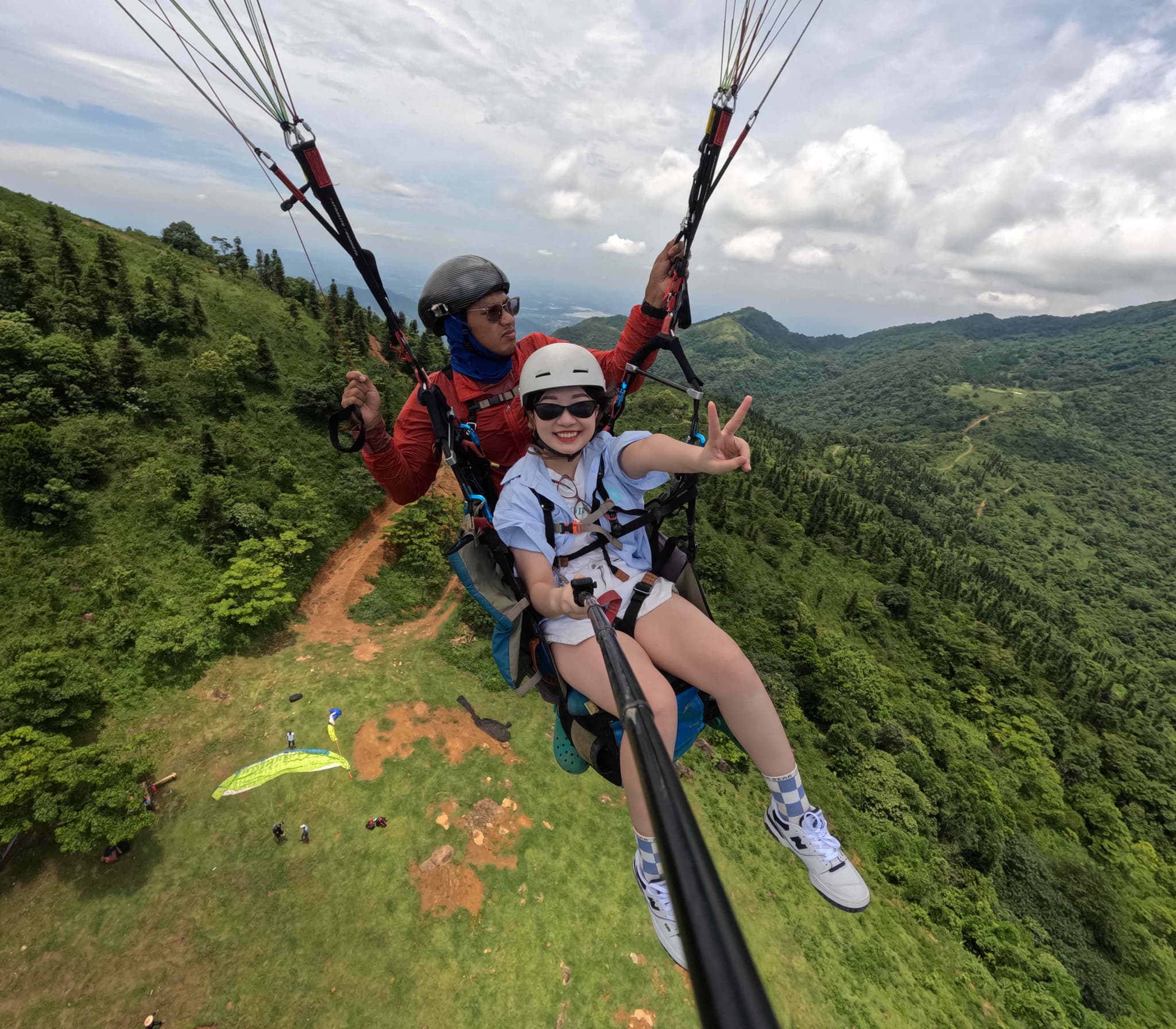
Free-flight paragliding at Khau Pha: flying purely on wind and thermals
1. Operating mechanism: flying powered by nature
Paragliding (non-motorized): This is the purest form of flight. The pilot and passenger take off from a slope (usually a mountain peak). The flight depends entirely on thermals and lift to maintain altitude and flight duration. It feels like becoming a bird of prey gliding in complete silence.
Takeoff: You and the pilot stand on a gentle slope at the top of the mountain. With just a few running steps together to inflate the wing, the wind will gently lift you off the ground. There is no engine sound—only the sound of wind passing by your ears.
Landing: The landing process is very smooth in the valley area. The pilot turns the wing into the wind to reduce speed, allowing you to touch down gently with just a few slow walking steps, or sit down safely upon landing.
2. Outstanding advantages of paragliding (PG)
Absolute silence: This is the most valuable aspect of PG. Without engine noise or smoke, you can enjoy a peaceful space where you may even hear birds singing or voices from villages below the mountains.
True sense of freedom: While flying PG, you can feel every change in the air. “Hunting” thermals to gain altitude creates an extremely exciting sense of conquest that no machine-based flight can replace.
Lightweight and flexible: Paragliding equipment is compact and lightweight, allowing pilots and passengers to access remote, high mountain peaks and pristine landscapes that aircraft cannot reach.
Connection with nature: You are not just an observer—you actively participate in the dance of the sky, riding air currents to explore the majestic beauty of mountains and nature.
3. Suitable participants
Active individuals: Those who enjoy physical movement will feel a strong thrill from running off a mountain slope and experiencing the moment of takeoff.
Romantic souls: Ideal for those seeking peace, wanting to “meditate” in the sky and quietly admire the scenery.
Mountain explorers: Especially suitable for travelers who want to fully admire iconic passes like Khau Pha or the golden terraced rice fields.
4. Experience with Mebayluon Paragliding
At Mebayluon, all paragliding (PG) flights are operated by highly skilled pilots with exceptional “wind-reading” ability and deep passion. We don’t just take you flying—we tell you the story of the sky. From windy mountain peaks to lush valleys, PG with Mebayluon will give you an authentic memory—where you truly become part of the free sky.
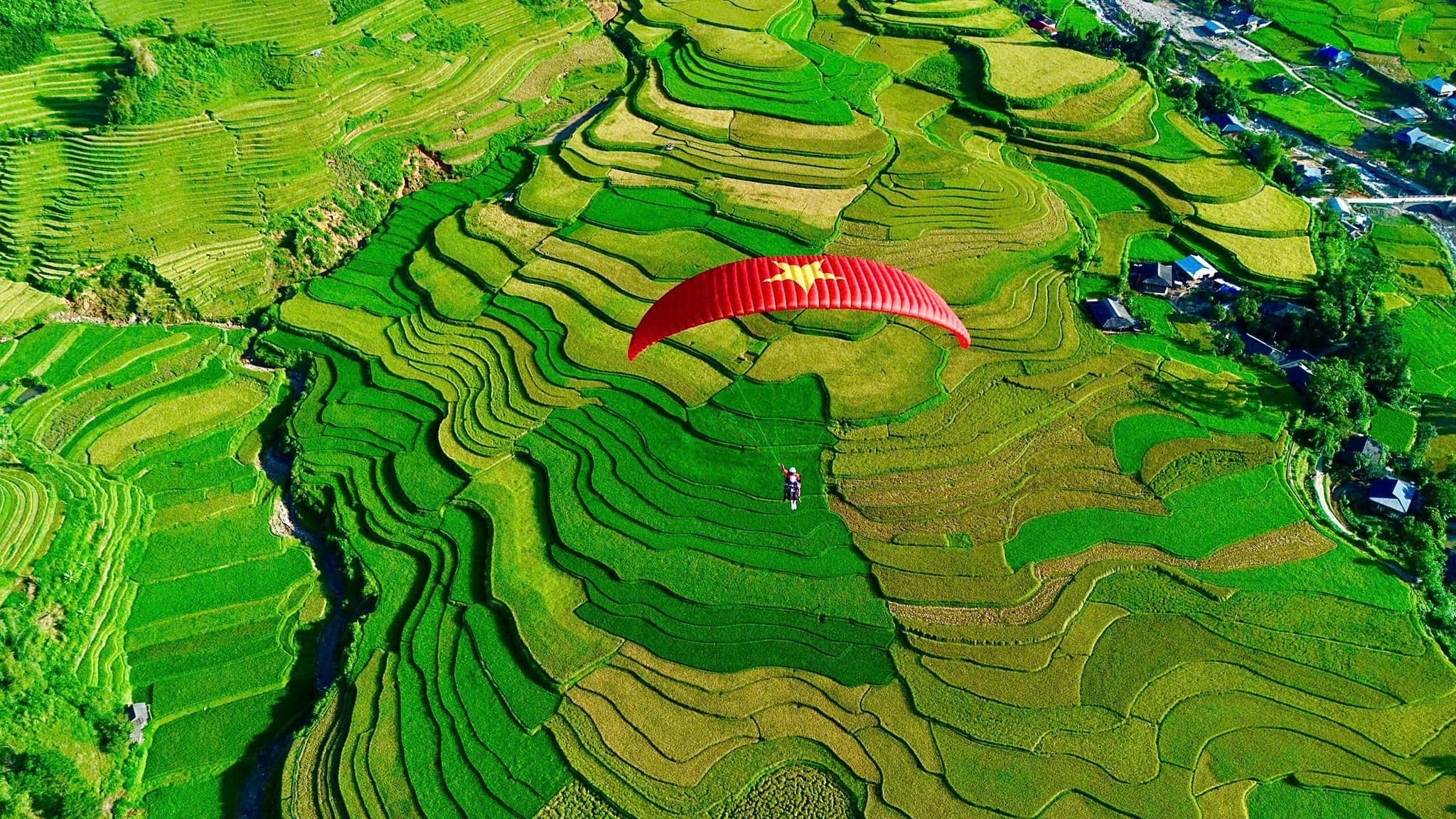
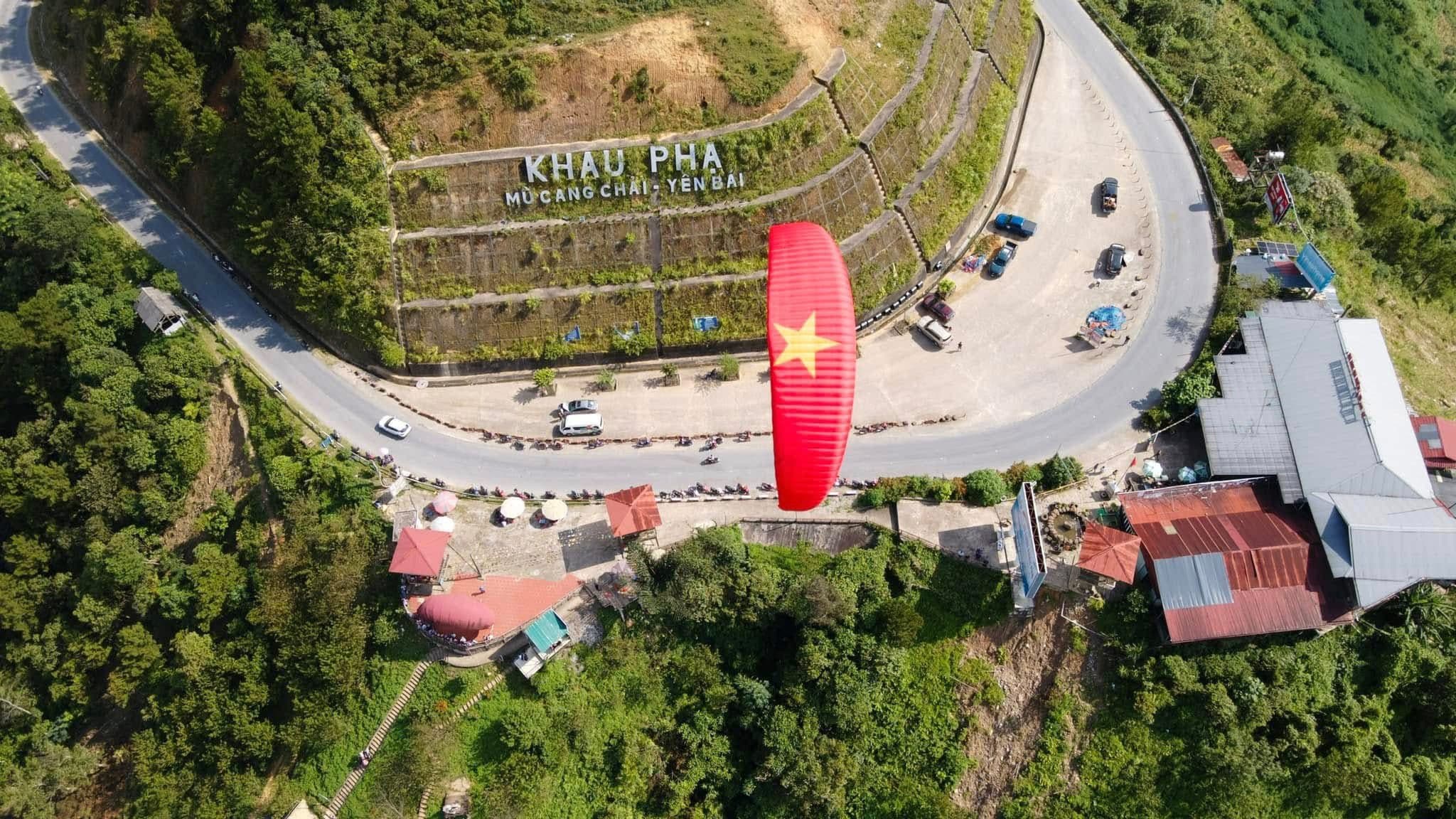
A paraglider over the Mu Cang Chai rice terraces, drone shot
🛺 Paramotor trike – powered, steady and comfortable
PPG Trike at Mebayluon: seated on a three-wheeled cart, taking off and landing on wheels
If traditional powered paragliding requires the pilot and passenger to run during takeoff, then paramotor trike (PPG trike) is a modern upgrade that offers maximum comfort. This is a form of powered paragliding integrated with a wheeled chassis system (a trike), turning your flight into a “flying capsule” experience in the sky.
1. Operating mechanism: taking off like a real aircraft
Instead of wearing a heavy engine on the back and running to take off, with the trike system you and the pilot sit comfortably on a dedicated three-wheel (or four-wheel) cart.
Takeoff: The rear engine generates thrust, and the trike rolls forward on a flat surface. Once it reaches sufficient speed, the canopy above automatically lifts the entire cart and passengers smoothly off the ground.
Landing: The landing process is similar—the trike touches down on its wheels and gradually slows down, completely removing pressure from the passenger’s legs.
2. Outstanding advantages of the trike system
Maximum comfort: You simply sit down, fasten your seatbelt, and enjoy the flight. This is ideal for guests who prefer no physical effort or have limited mobility.
Safety: The specially designed frame has a low center of gravity, making takeoff and landing extremely stable, even in light wind conditions.
Unlimited viewing angle: Seated in a stable position, you can easily use a camera, phone, or GoPro to capture panoramic aerial footage without shaking.
Higher load capacity: The trike system allows stronger engines and larger fuel tanks, enabling longer and more extended flights over various terrains.
3. Suitable participants
Those who prefer comfort: No running, no heavy lifting required.
Family travelers: Suitable for elderly guests and children who want a safe flying experience.
Photographers: Ideal for a stable seated position to capture the best aerial shots.
4. Experience with Mebayluon paragliding
At Mebayluon, we use modern trike systems that are regularly maintained and operated by highly experienced pilots. PPG trike offers you a completely new perspective of flying.
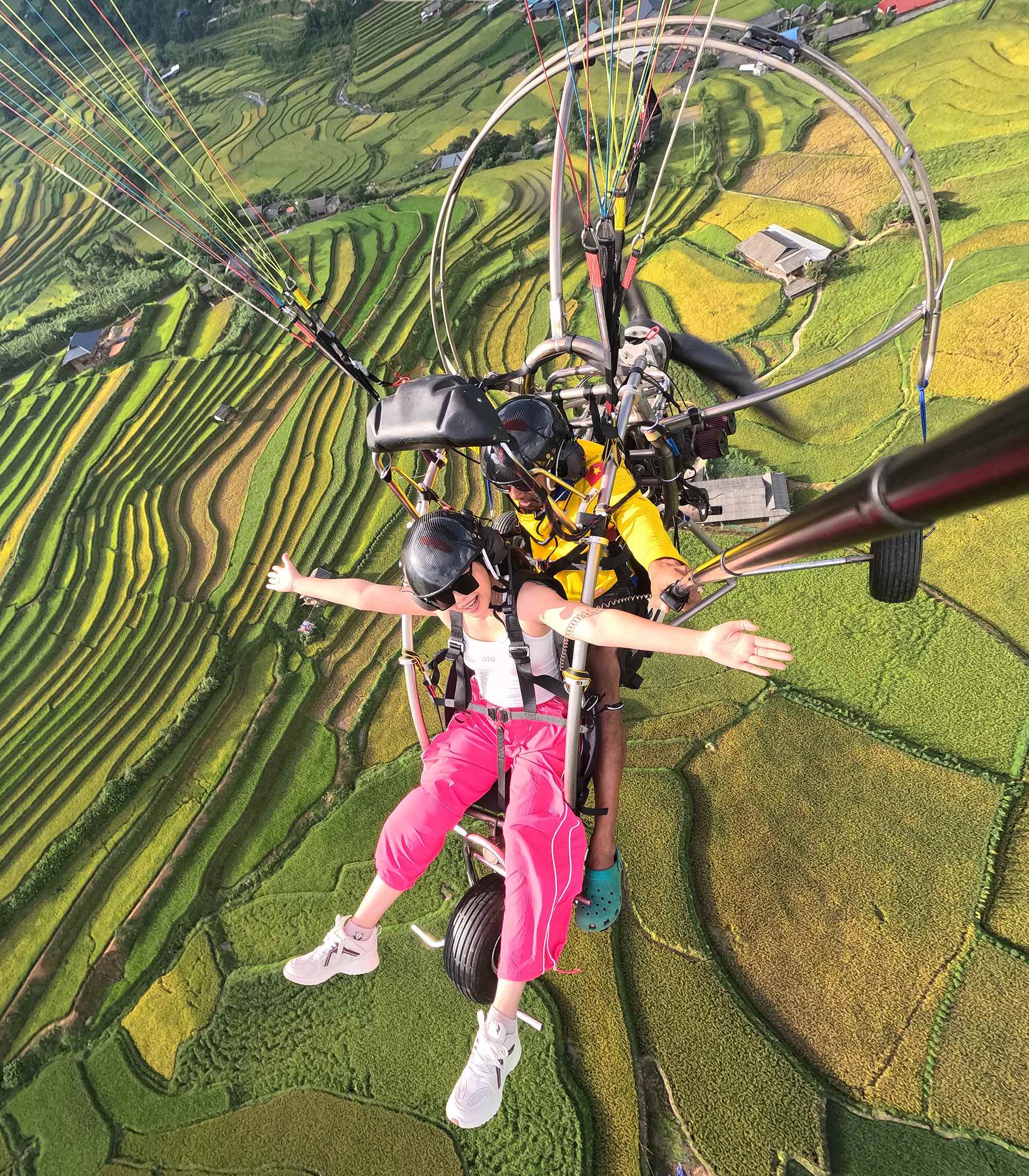
Paratrike flight at Mu Cang Chai
⛰️ Altitude: a paramotor climbs on demand, higher than most people think
Many people assume a paramotor only skims low over the fields. The opposite is true: with an engine, the pilot climbs on demand without waiting for thermals or ridge lift. A PPG can reach very high altitudes, far beyond what a typical free-flight paragliding flight achieves.
With a paraglider (PG), altitude and flight time depend on thermals and wind: on a good day the flight is fantastic, on a weak day it is hard to extend. With a PPG, you decide how high to go, within the permitted airspace, instead of letting the weather decide for you.
The PPG Trike climbs on demand, right above the clouds
🔇 Engine noise: only half the story
Total silence is the most precious thing about free-flight paragliding. But with a PPG the engine is far less of an issue than most people expect: it runs for only about half of the flight, mainly during takeoff and the climb. Once the desired altitude is reached, the pilot can switch it off and glide silently like a traditional paraglider, with nothing but the wind and the view below.
In other words, a PPG flight gives you both: the power of the engine on the way up, and the silence of a paraglider once you are up there.
🛡️ Safety: equivalent overall, with lower-risk takeoffs and landings on the trike
Both use the same wing and flight principles, flown by trained and certified pilots with reserve parachutes, helmets and radios. So the two are equivalent in terms of safety.
At Mebayluon, however, the PPG Trike takes off and lands on a three-wheeled cart, which makes these two phases lower-risk:
✔️ No running takeoff: passengers stay seated for the whole flight, with no running or balancing at launch.
✔️ Landing on wheels instead of feet: virtually no risk of twisted ankles or hard landings, ideal for older guests or anyone with weak knees.
✔️ Takeoff and landing on flat ground, with no dependence on slopes or mountain terrain.
A guest seated on the trike before takeoff: no running launch, no landing on foot
🌅 Best time to fly: PG needs midday thermals, PPG shines at sunrise and sunset
Free-flight paragliding is usually best in the middle of the day, when thermals and wind allow longer flights.
A PPG is the opposite: it is especially beautiful in the early morning (6–9 am) and at sunset (4–6 pm):
Calm, stable air: thermals are weakest at these hours, so the flight is smooth and gentle. A PPG does not need thermals to stay up, so it makes the most of these calm hours.
The best light of the day: morning sun breaking through the mist over the valley, and sunset painting the rice terraces and hills in gold and orange. Ideal for photos and videos.
Cool and comfortable: no harsh midday sun, perfect for older guests and families.
👉 Sunrise and sunset slots fill up early, especially in the golden rice season. Book ahead to secure the best time.
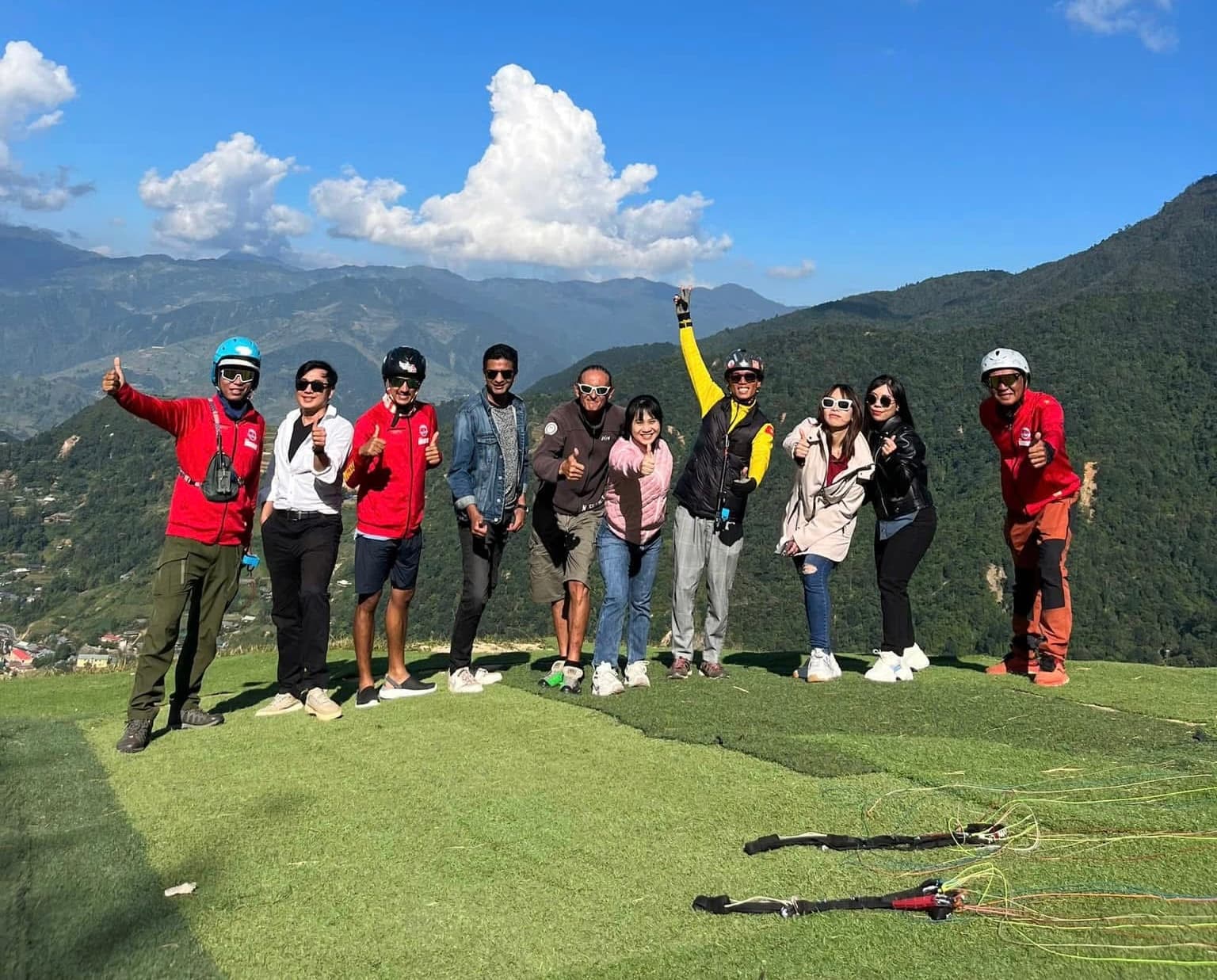
The Khau Pha paragliding launch seen from a drone: free flight needs a mountainside, while the PPG Trike takes off from flat ground
⚖️ Quick comparison: PG vs PPG Trike
Takeoff: PG runs on foot from a mountainside · PPG sits on a trike and takes off from flat ground.
Landing: PG lands on foot · PPG lands on wheels.
Altitude: PG depends on thermals and wind · PPG climbs on demand, very high.
Route: PG stays near rising air · PPG flies far and into every corner of the valley.
Flight time: PG depends on the weather · PPG extends the flight as you wish.
Noise: PG completely silent · PPG engine for about half the flight, then silent gliding.
Best time: PG midday · PPG sunrise 6–9 am and sunset 4–6 pm.
Safety: equivalent · PPG Trike lower-risk at takeoff and landing.
Feel: PG sporty, challenging, one with nature · PPG exploration, sightseeing, relaxed.
🤔 Which one should you choose?
🪂 Choose Paragliding (PG): If you desire a quiet, smooth flight, taking off directly on foot with a running start. Experience the exhilarating sensation of launching from a mountain slope—a truly authentic and sporty feeling.
🚀 Choose Powered Paragliding Trike (PPG Trike): If you want to fly higher, longer, and further. Reach incredible spots that regular paragliders cannot access, touch the clouds, capture stunning aerial photos, enjoy magical sunset flights, and experience the ultimate thrill of a sports aircraft.