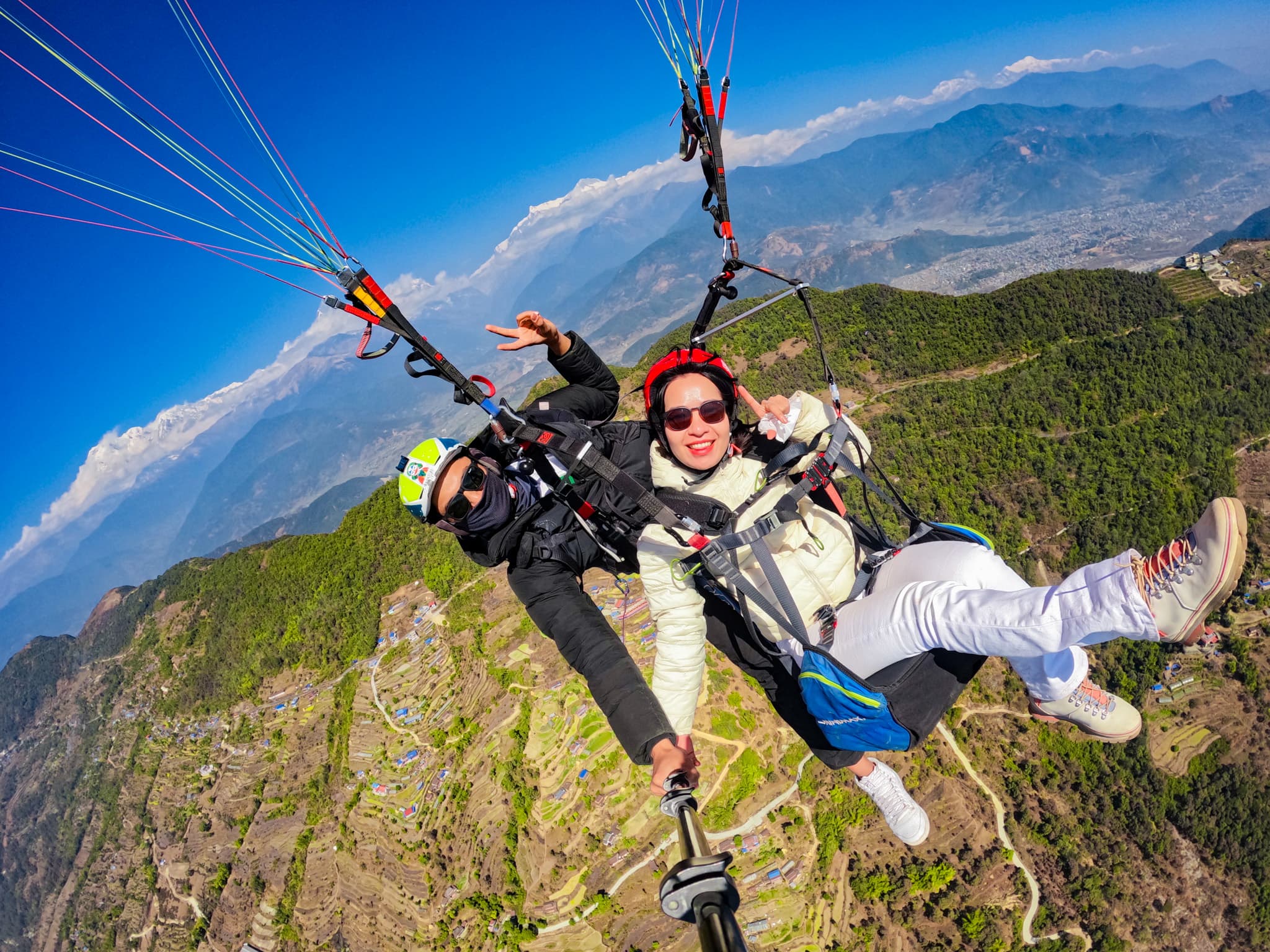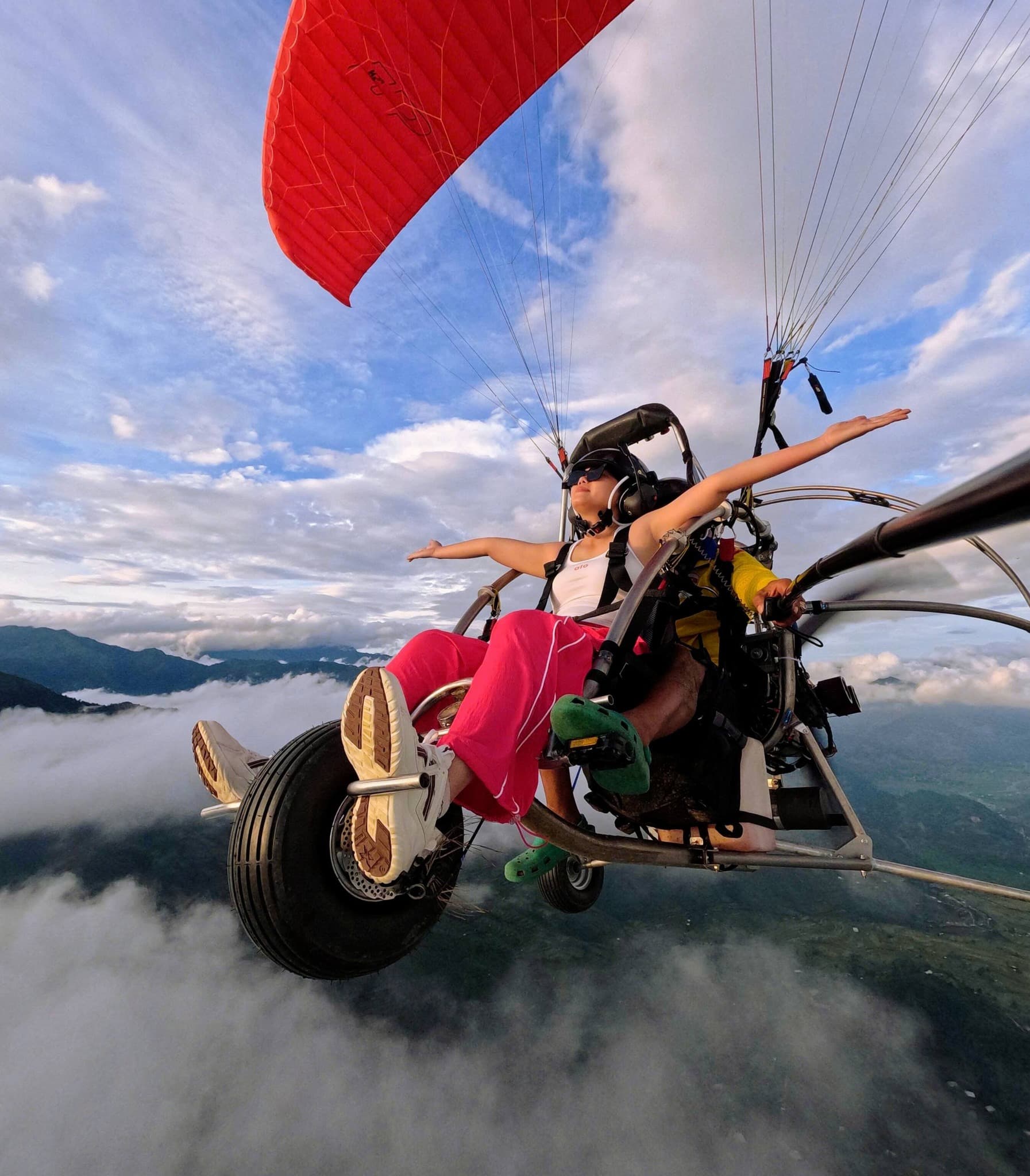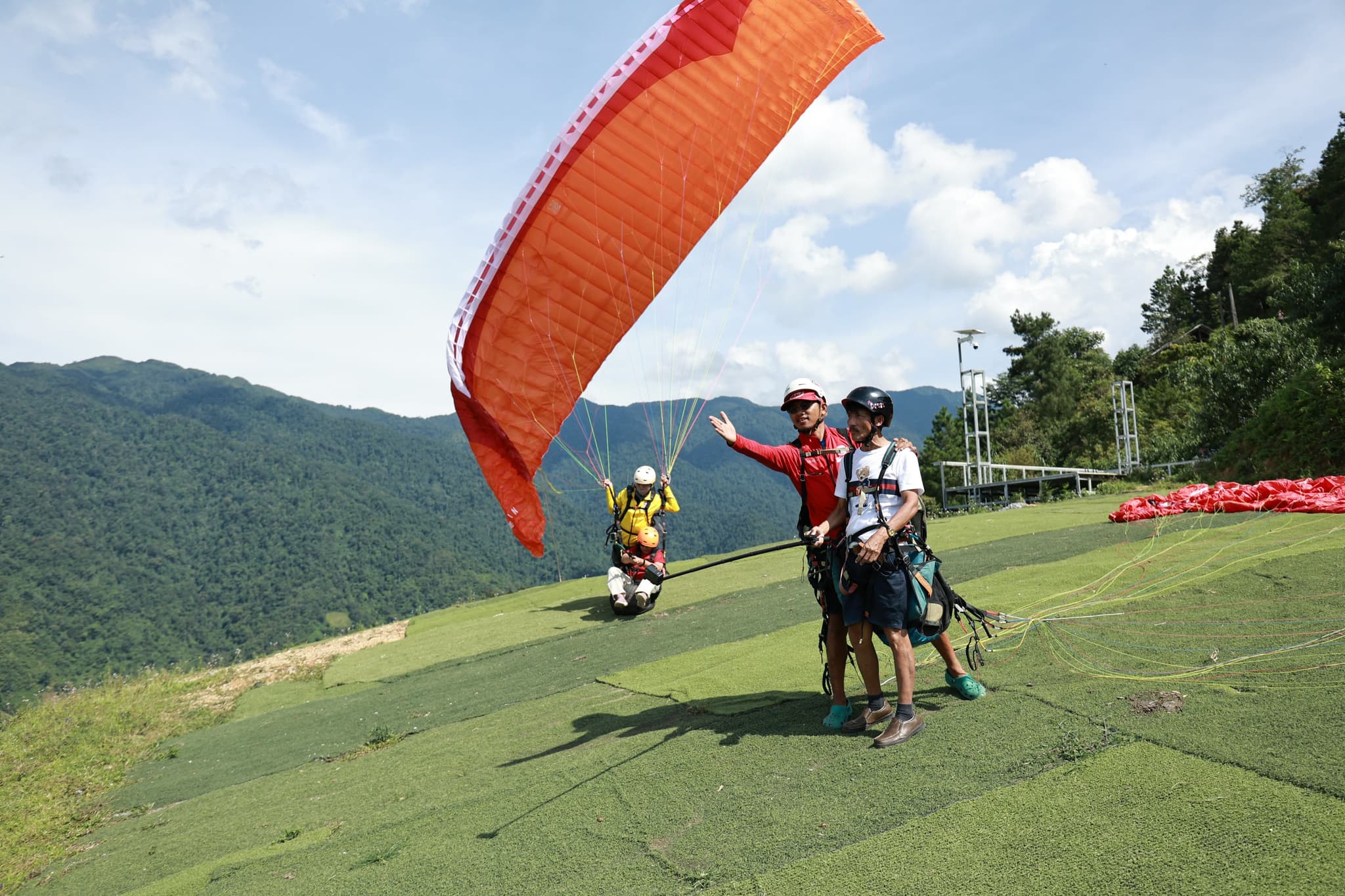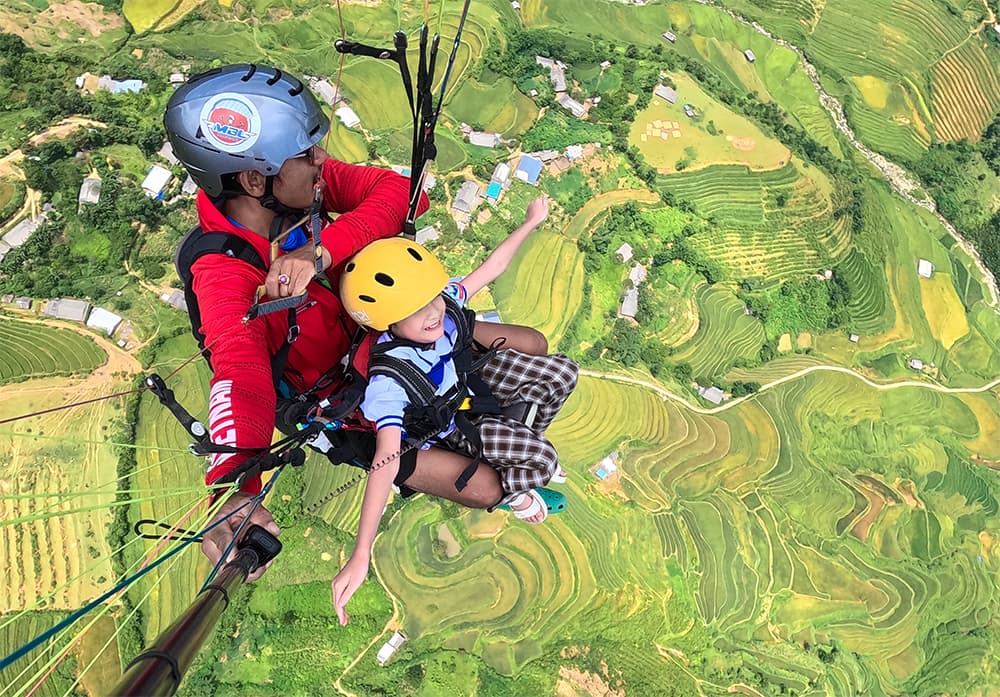
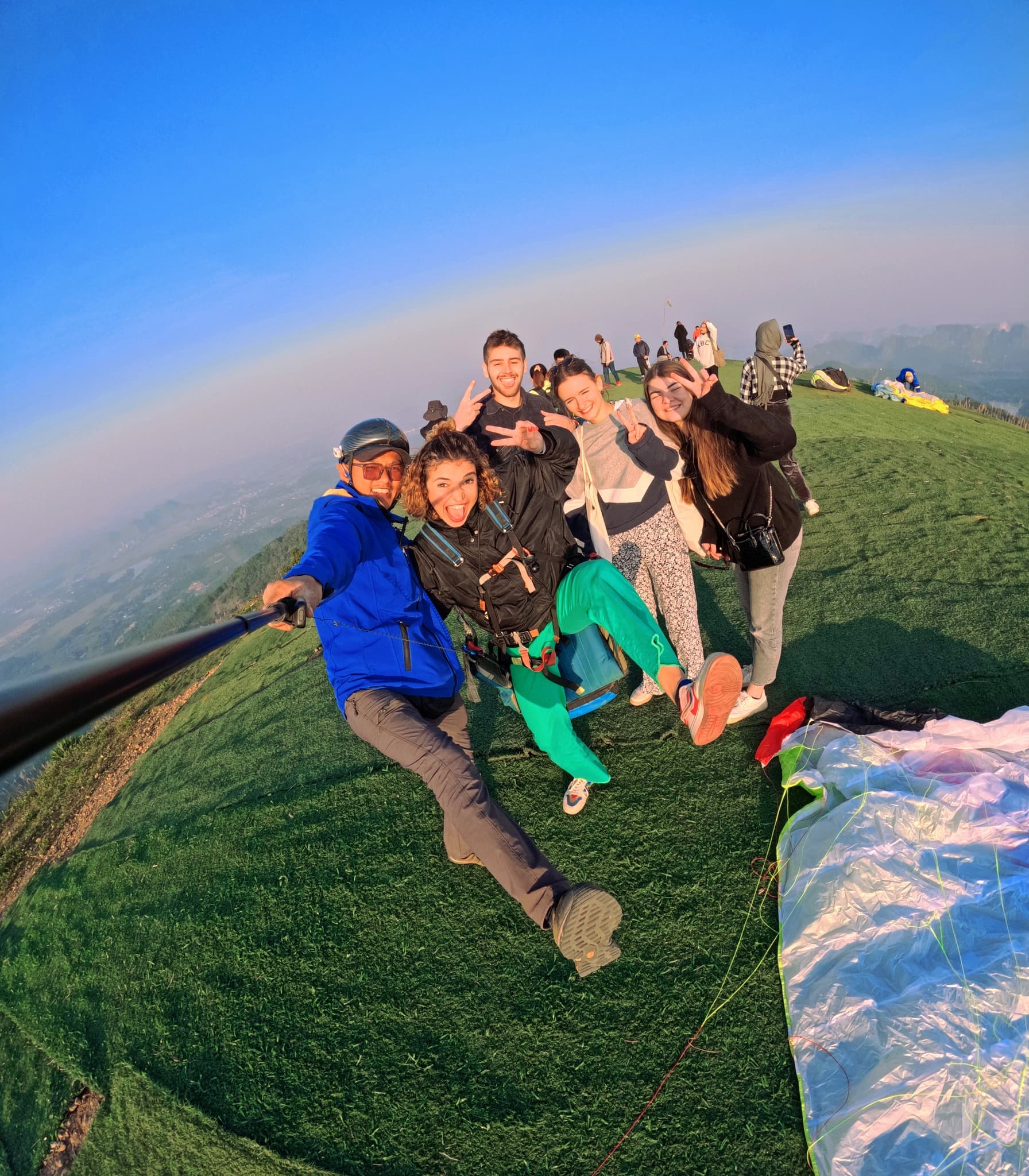
We get this question almost every day. And the answer surprises people: yes — in fact, most guests with a fear of heights tell us the flight felt easier than standing on a high balcony or looking over a cliff edge. It sounds absurd, but there is a real reason for it.
🧠 Why the air feels less scary than the ground
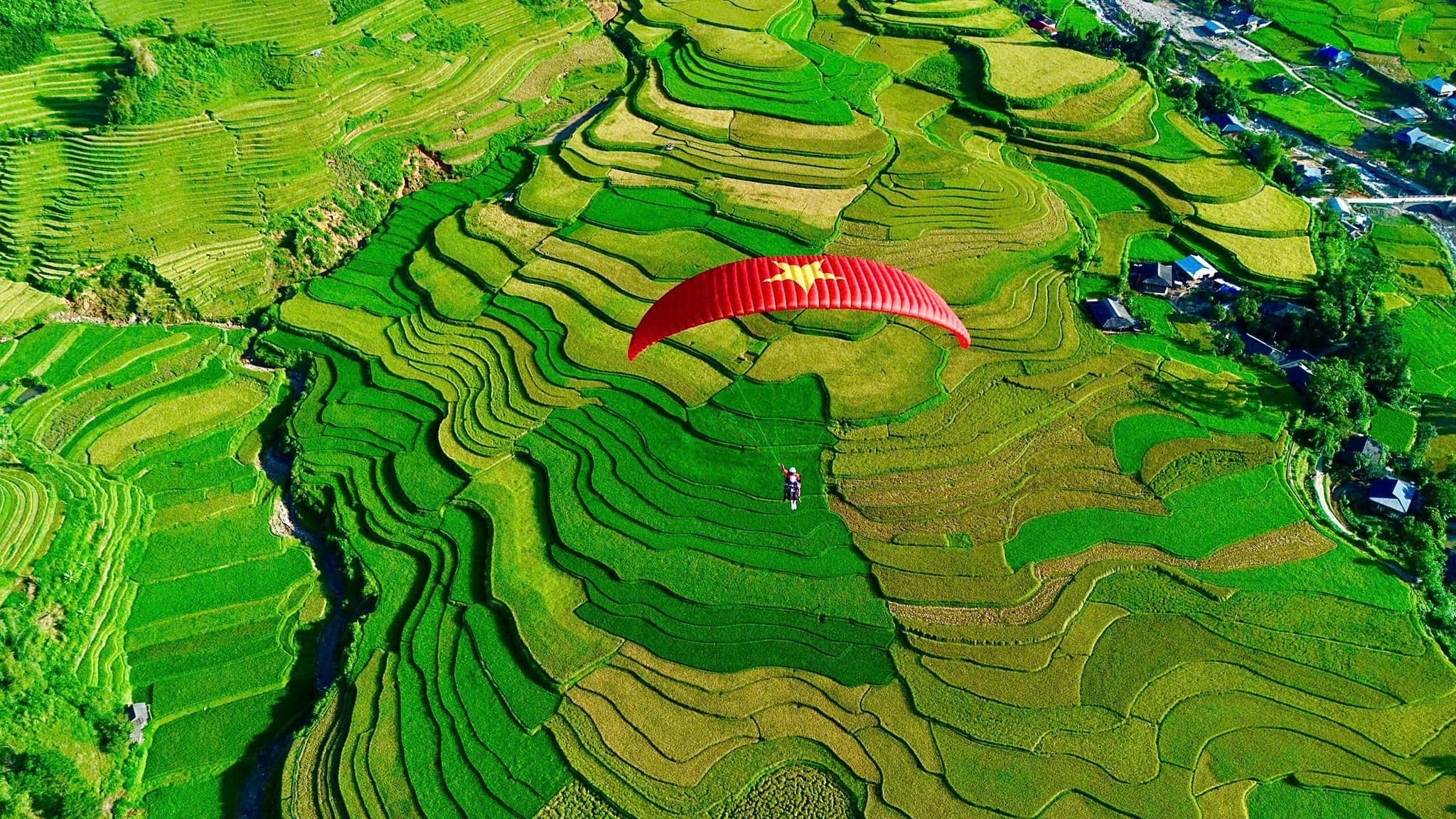
A fear of heights usually fires when your body is still connected to the ground: standing at a cliff edge, leaning on a balcony rail, looking straight down a wall. Your brain keeps measuring the drop and sounding the alarm. In a paraglider, that connection disappears. You float smoothly in open air, there is no edge for your eyes to grip, and the ground drifts by below like the view from an aircraft window. The brain has nothing left to "measure" — and for a great many people, the fear simply never switches on. Which is why some guests are shaking at the launch site, then grinning for the whole flight one minute after take-off.
🔬 What psychology says about the fear of heights
In psychology, a severe fear of heights is called acrophobia — from the Greek ákron, meaning summit. But there is an important distinction: true acrophobia, the kind that triggers panic and disrupts daily life, affects only a small share of the population. A general wariness of heights, on the other hand, is extremely common — most healthy people have it to some degree. If you say "I'm afraid of heights", you most likely belong to the second group. And that group can absolutely fly. 🍼 The fear has evolutionary roots. In the classic "visual cliff" experiment run by psychologists Eleanor Gibson and Richard Walk in 1960, pre-verbal infants refused to crawl across a sheet of clear glass laid over an apparent drop, even with their mothers beckoning from the far side. Wariness of heights is a natural human protective mechanism, not a personal failing. 👁️ As for the mechanism, researchers explain it through sensory conflict. Normally your brain maintains balance by cross-checking three sources: vision, the vestibular system in the inner ear, and feedback from muscles and joints. High up, your eyes lose all nearby reference points, so the visual signal no longer matches the other two. The brain reads that mismatch as danger and produces dizziness, a racing heart, shaky legs. The key point: this conflict requires one condition — that your body is standing and actively holding its own balance. Sitting in a flying harness, balance is no longer your job. The trigger condition disappears, and that is the scientific explanation for what we described above. ⚠️ One serious note: if your fear reaches genuine acrophobia — panic attacks, avoiding stairs or balconies, a pounding heart at the mere thought of height — talk to a mental health professional before booking a flight. This article shares general knowledge and is not a substitute for professional advice.
🛋️ You sit comfortably — you don't dangle
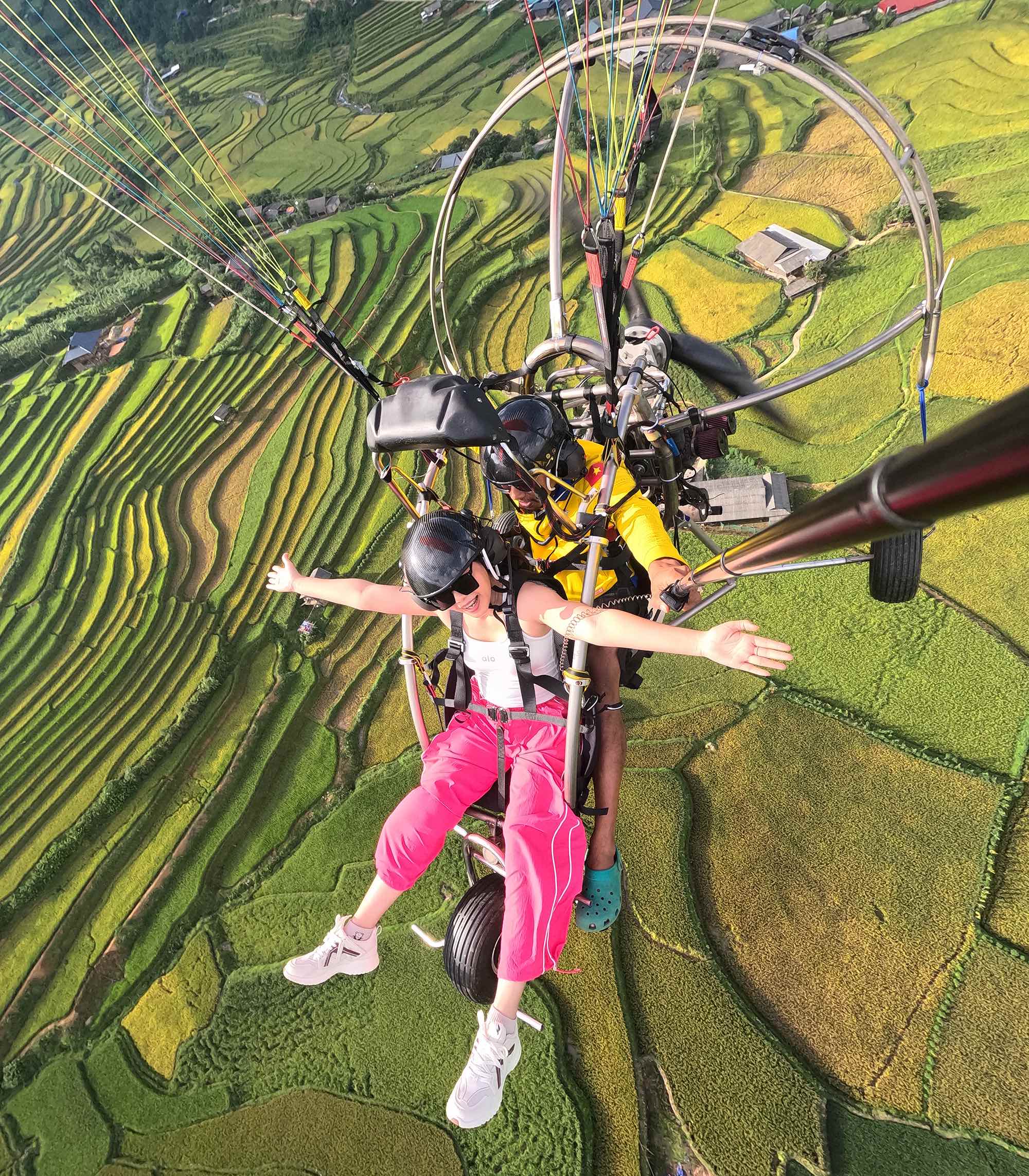
Many people picture themselves dangling in mid-air. In reality, once airborne you settle into the harness like an armchair with a backrest, with the pilot seated right behind you flying the wing. Nor is there any drop at take-off: just a few light running steps down the slope, and your feet leave the ground so gently that many guests don't realise they're already flying.
🗣️ Tell your pilot — the flight adapts to you
Before the flight, just say it: "I'm afraid of heights." Your pilot will fly the gentlest profile — smooth glides, wide turns, nothing aggressive — and keep talking with you through the flight so you always know what's happening. Every flight is one pilot with one passenger, so the pilot's full attention is on you. Want a shorter flight or an early landing? Just say so.
✅ A few tips for your first flight
👀 Look at the horizon rather than straight down at your feet — it feels like sightseeing rather than "being up high". 🌬️ Breathe slowly and deeply for the first minute; that's when the nerves dissolve fastest. 🌅 Pick a calm slot — early morning or late afternoon, when the air is soft; let Mebayluon suggest the best window for each day's weather. 📋 Read the safety routine beforehand so you know exactly what each step will be — preparation is the best reassurance there is. And if you arrive and still aren't ready? Every Mebayluon flight can be rescheduled, refunded or cancelled free of charge. No pressure at all — the sky will still be there waiting.
🛡️ The pre-flight safety routine