Paramotor flying suits older guests, anyone who would rather not climb, and those who want an active or longer flight — no mountain hike required.
👴 A better fit for older guests
A traditional paragliding flight typically begins from a mountainside. Depending on the takeoff location, pilots may have to walk, climb slopes, or navigate uneven terrain to reach launch.
For younger people, this is usually not a major problem. But for those over 50, with weak knees or declining physical fitness, climbing slopes or navigating hilly terrain can become a barrier.
Paramotors overcome most of these limitations. Pilots can take off from grassy areas, fields, or flat ground. There's no need to climb mountaintops or navigate long, steep slopes; approaching the flight becomes much easier.
Therefore, in many countries, the paramotor community has a significant number of members in their 50s, 60s, or even older.
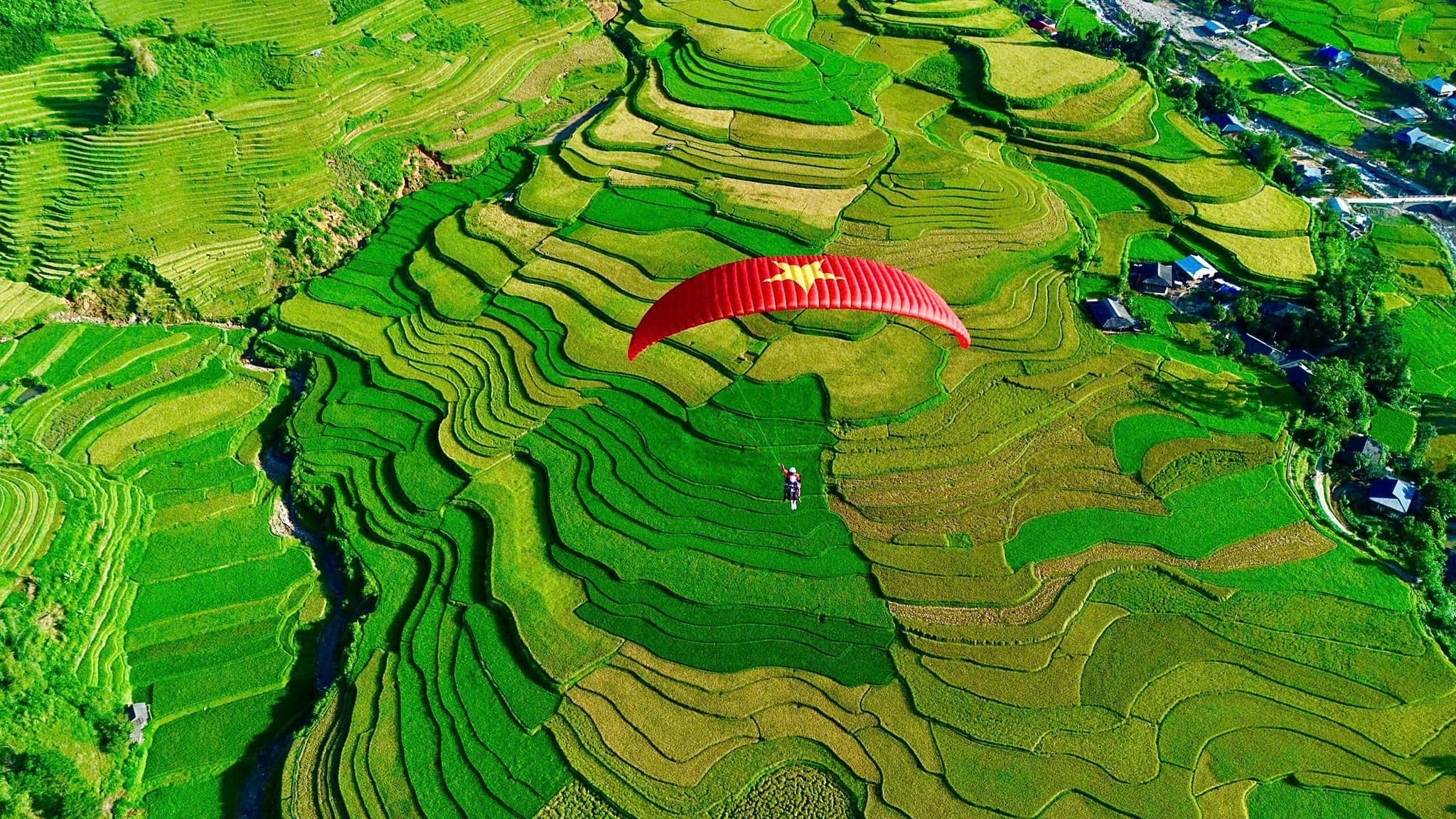
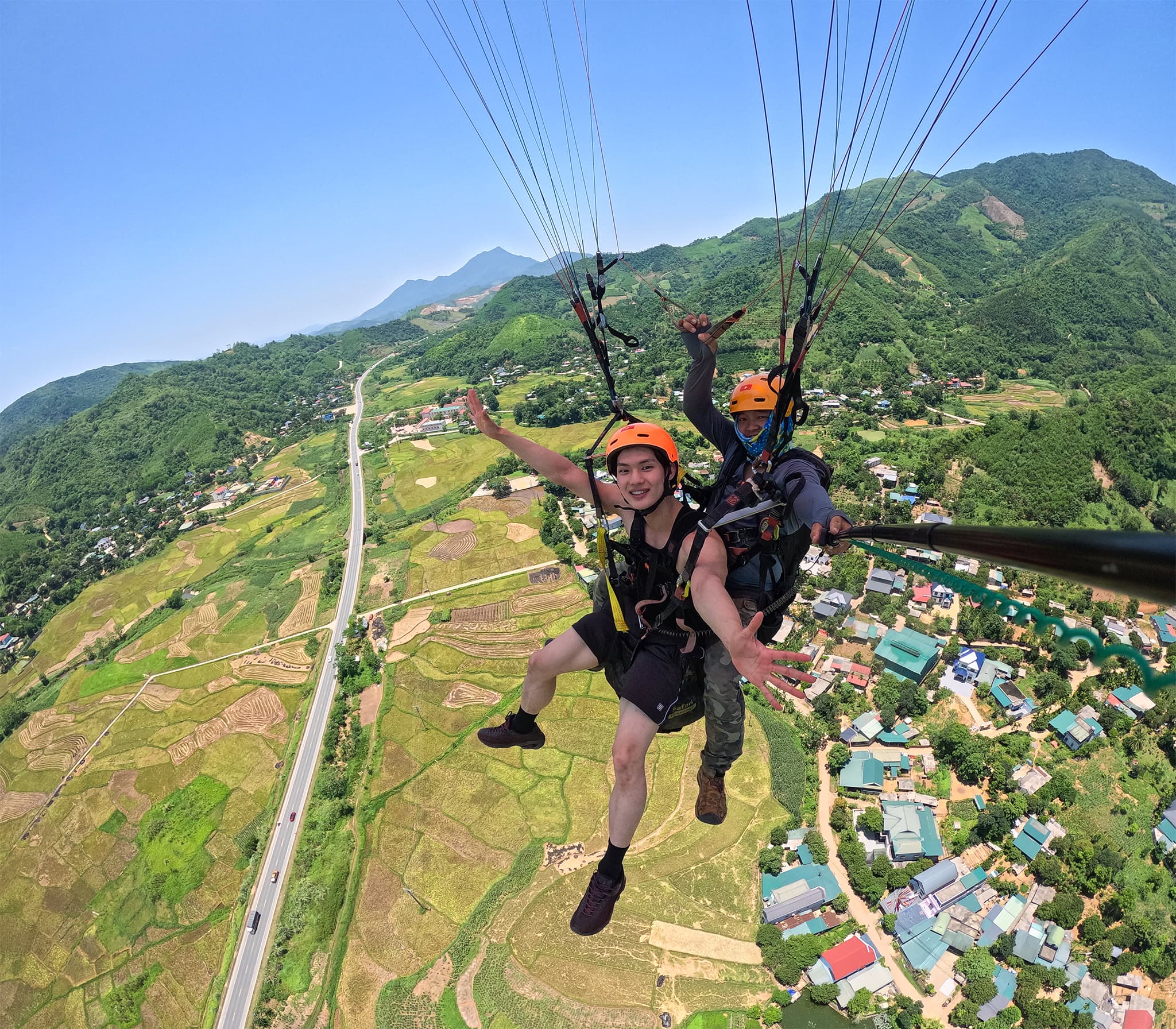
A guest seated comfortably on the trike, flying over the Mu Cang Chai rice terraces
🦵 For anyone who would rather not exert themselves
Traditional paragliding typically requires a run-up on a mountainside for takeoff. Depending on wind conditions, pilots sometimes have to run decisively to stabilize the paraglider and lift their bodies into the air.
For those with weak knees, previous leg injuries, or simply unwilling to engage in strenuous activities, this can be a daunting prospect.
Paramotors are a popular choice due to their active engine. In many flight conditions, takeoff can be smoother and less dependent on steep terrain than traditional paragliding.
That's why many middle-aged people starting to explore flying sports often consider paramotors first.
🚗 For those who would rather skip the climb
One major difference between the two disciplines lies in the takeoff location.
Traditional paragliding thrives in mountainous and high-altitude areas, whereas paramotors take off from the ground and you don't need to travel up a mountain to get airborne.
Some people take up flying because they love the thrill of exploring the sky, rather than being overly concerned with working lift or the techniques of exploiting the weather.
For them, the important thing is to take off, fly, admire the scenery, and enjoy the vast space below.
Paramotors are suitable for this group because the engine allows the pilot to actively maintain altitude and flight path. Instead of being completely dependent on natural conditions like traditional paragliding, pilots have more flexibility in choosing their flight direction and duration.
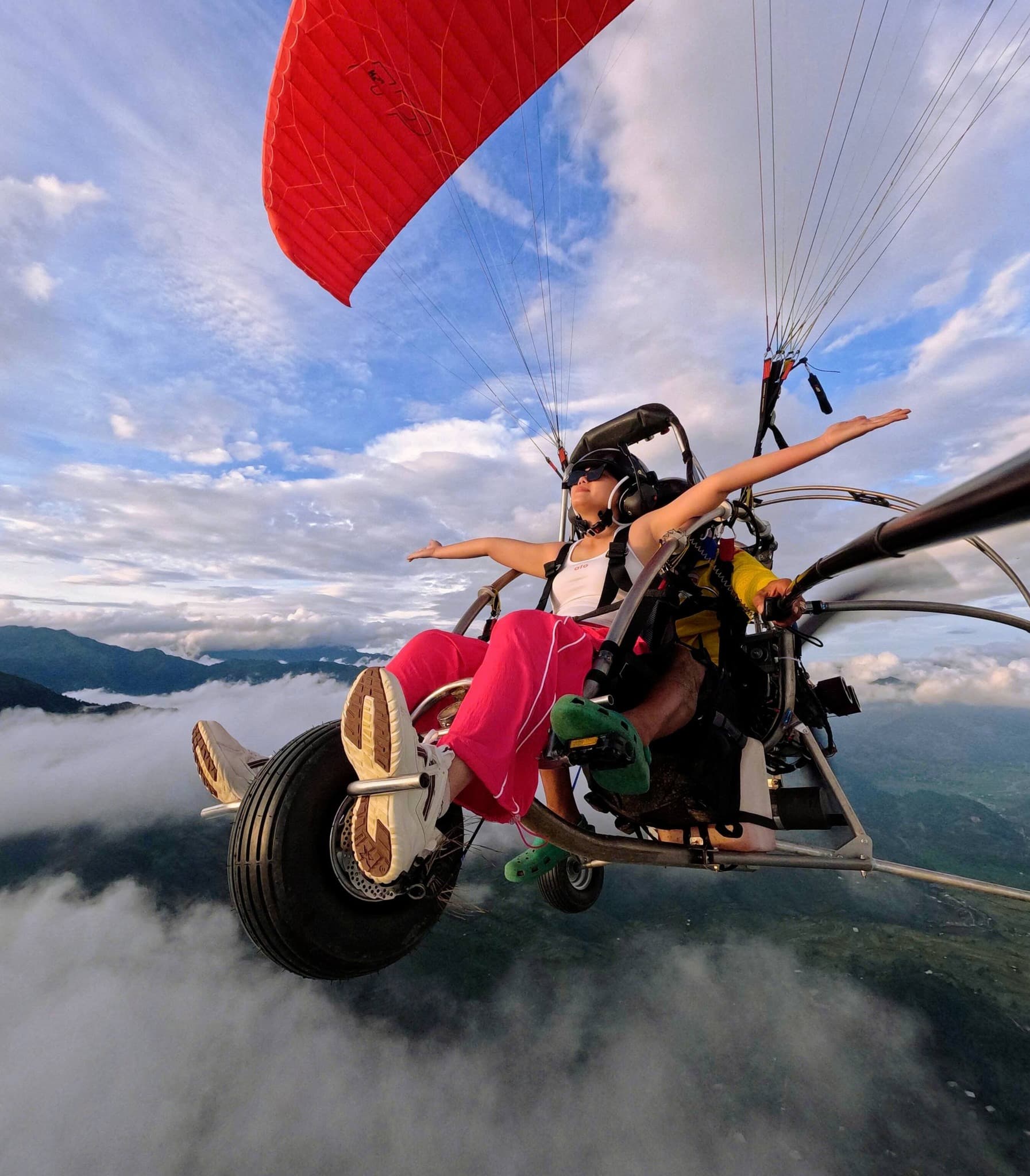
Active flying on the PPG Trike: the pilot holds altitude, you just enjoy the view (360 camera shot)
🗺️ For those who want distance and exploration
While traditional paragliding is more like an art of harnessing wind and lift, paramotoring is more like a means of exploring the skies.
Many paramotor pilots take flights along coastlines, rivers, or across vast fields for hours at a time.
This is a suitable option for those who enjoy travel, love nature, and want to experience the feeling of viewing the world from a different perspective.
With an engine, the pilot is not confined to areas with rising air. You can fly along valleys, follow the rice terraces, circle over villages and streams, and reach corners that traditional paragliders simply cannot. Every flight becomes a journey of discovery, not just a loop in the sky.
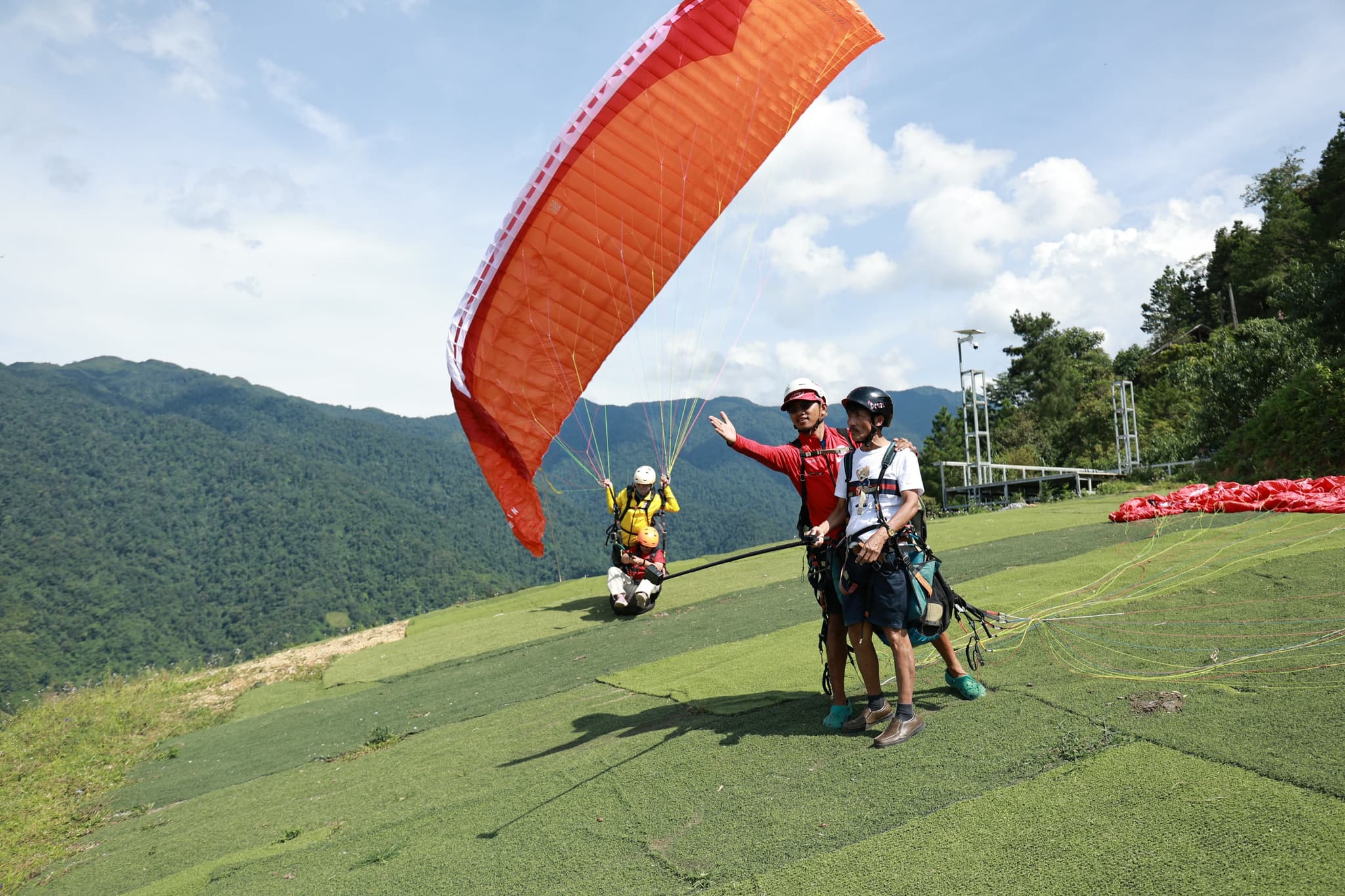
Looking up: the red wing and the trike in the Mu Cang Chai sky
🧠 Why do so many people still have prejudices about paramotors?
When advising guests, we often meet people who say "no" to a paramotor before ever trying one. Psychology calls these very natural human biases:
Fear of the unknown: traditional paragliding is familiar from films and social media; "a machine with a propeller on your back" sounds unfamiliar, so the brain links it to risk by default.
Availability bias: one accident video is remembered and shared far more than thousands of smooth flights, so the sense of "danger" is exaggerated compared with reality.
The "not real flying" prejudice: some think an engine is "cheating". In fact only the way you climb differs; the wing, the sky and the feeling of flight are the same.
Here are the 5 most common myths and the truth behind them.
❌ Myth 1: "An engine makes it more dangerous than a paraglider"
The truth: both use the same wing and flight principles, the same certified pilots, the same reserve parachute and radio. A statistic from the US PPG community (FootFlyer) even shows a lower accident rate for paramotors than for free-flight paragliding, roughly 0.5 versus 0.7 per 1,000 flyers per year, because a paramotor does not have to hug the ridge to "hunt" thermals.
Most PPG accidents worldwide involve undertrained solo pilots flying low near power lines or water. A tandem flight on the trike at Mebayluon is the opposite: you stay seated, take off and land on wheels on flat ground, with no running and no landing on foot.
❌ Myth 2: "It is noisy the whole flight and ruins the feeling"
The truth: the engine only runs during takeoff and the climb, about half of the flight. Once high enough, the pilot switches it off and glides silently like a paraglider: just the wind, the birds and the whole valley beneath you. Many guests are surprised by "how quiet the second half of the flight was".
❌ Myth 3: "A paramotor only flies low, it is not exciting"
The truth: it is the opposite. With an engine the pilot climbs on demand, without waiting for thermals or ridge lift, and can reach very high altitudes, far beyond a typical free flight. From up there you see the whole Khau Pha pass, the rice terraces and villages like a miniature model.
Not only high, a paramotor also flies far and into every corner: along the valley, over the terraces, around rivers and streams, reaching places a free-flight paraglider, tied to rising air, cannot.
Flying above the clouds on the PPG Trike: a paramotor does not "only fly low"
❌ Myth 4: "An engine is cheating, it is not real flying"
The truth: the wing above you is still a paraglider wing, still riding the wind and the air. The engine simply replaces the "mountain" to get you up, like a lift instead of the stairs. In many countries paramotoring is an aviation sport in its own right, with a large community including many members in their 50s, 60s and beyond. For anyone who wants the sky without a climb or a running takeoff, it is the most accessible way to "really fly".
❌ Myth 5: "It is only for lazy or old people"
The truth: a paramotor is indeed friendly to older guests and those who prefer less exertion, but it is also the choice of many young travellers, photographers and explorers, because it lets you fly high, fly far, chase sunsets and clouds on your own terms rather than the weather's. The stable seated position on the trike also lets you hold a camera steadily, for panoramic footage that is hard to get on a free-flight paraglider.
👉 Our advice: decide by experience, not by prejudice. Many guests who "only wanted a normal paraglider" came back for a second paramotor flight after trying one.
🪂 Flying a paramotor at Mu Cang Chai with Mebayluon
Paramotor flying is currently the only service of its kind in northern Vietnam, priced from 2,390,000 VND per flight.
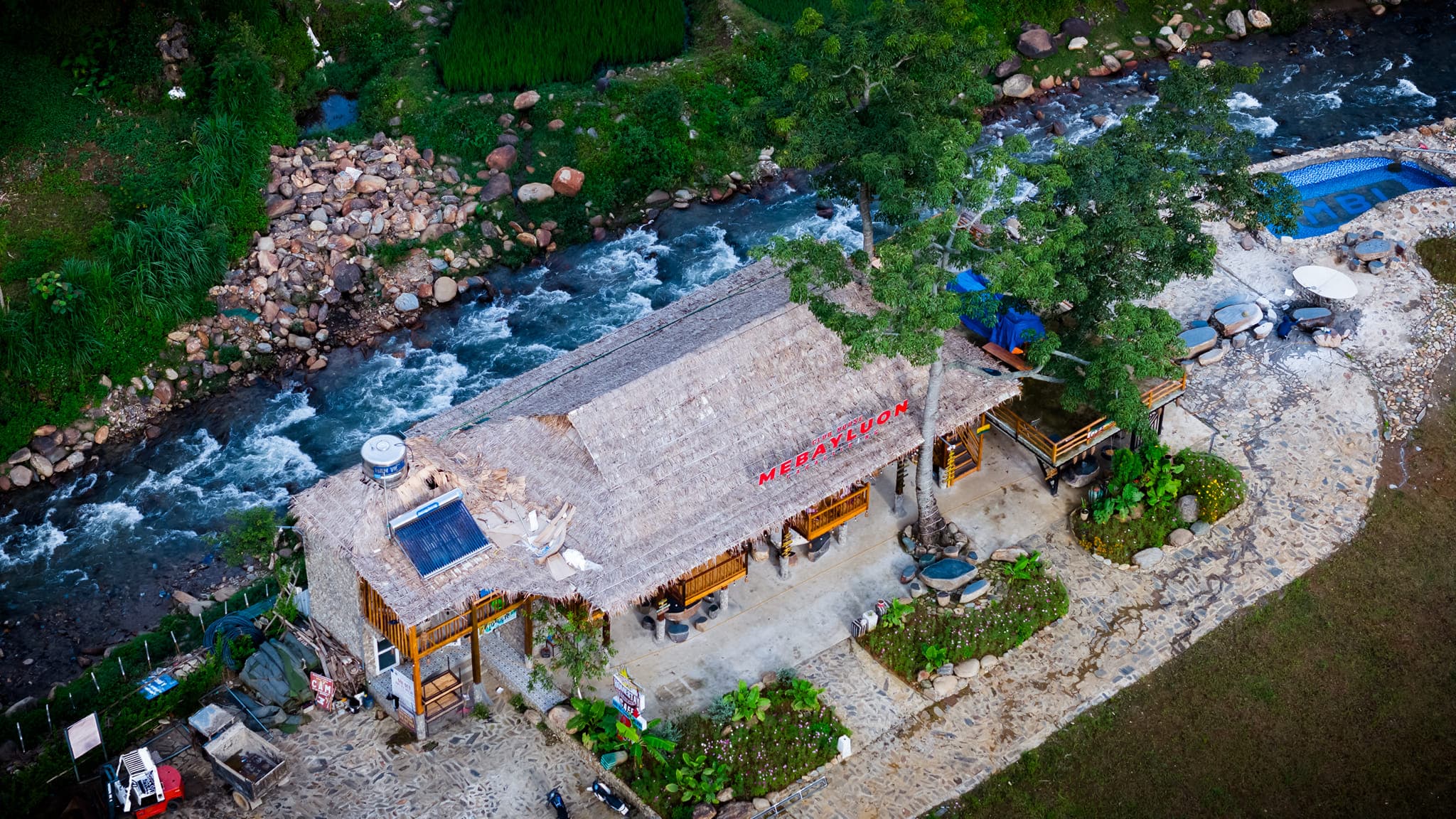
In Mu Cang Chai, our paramotor takes off from the paragliding landing field right in front of our homestay, making it incredibly convenient for guests staying at the homestay who want to fly without having to travel up to the flying site.
From the air, visitors have the opportunity to admire the panoramic views of Mu Cang Chai's terraced rice fields, highland villages, green valleys, and the majestic Northwest mountains from a completely different perspective. This is also a popular choice for families, couples, and foreign tourists seeking a unique paragliding experience in Vietnam.
Where can you fly a powered paraglider? Everything about the Khau Pha package — 2026 prices, the 10 – 25 minute options, the 2,000m ceiling, cloud chasing and sunset flights — is in powered paragliding in Mu Cang Chai.