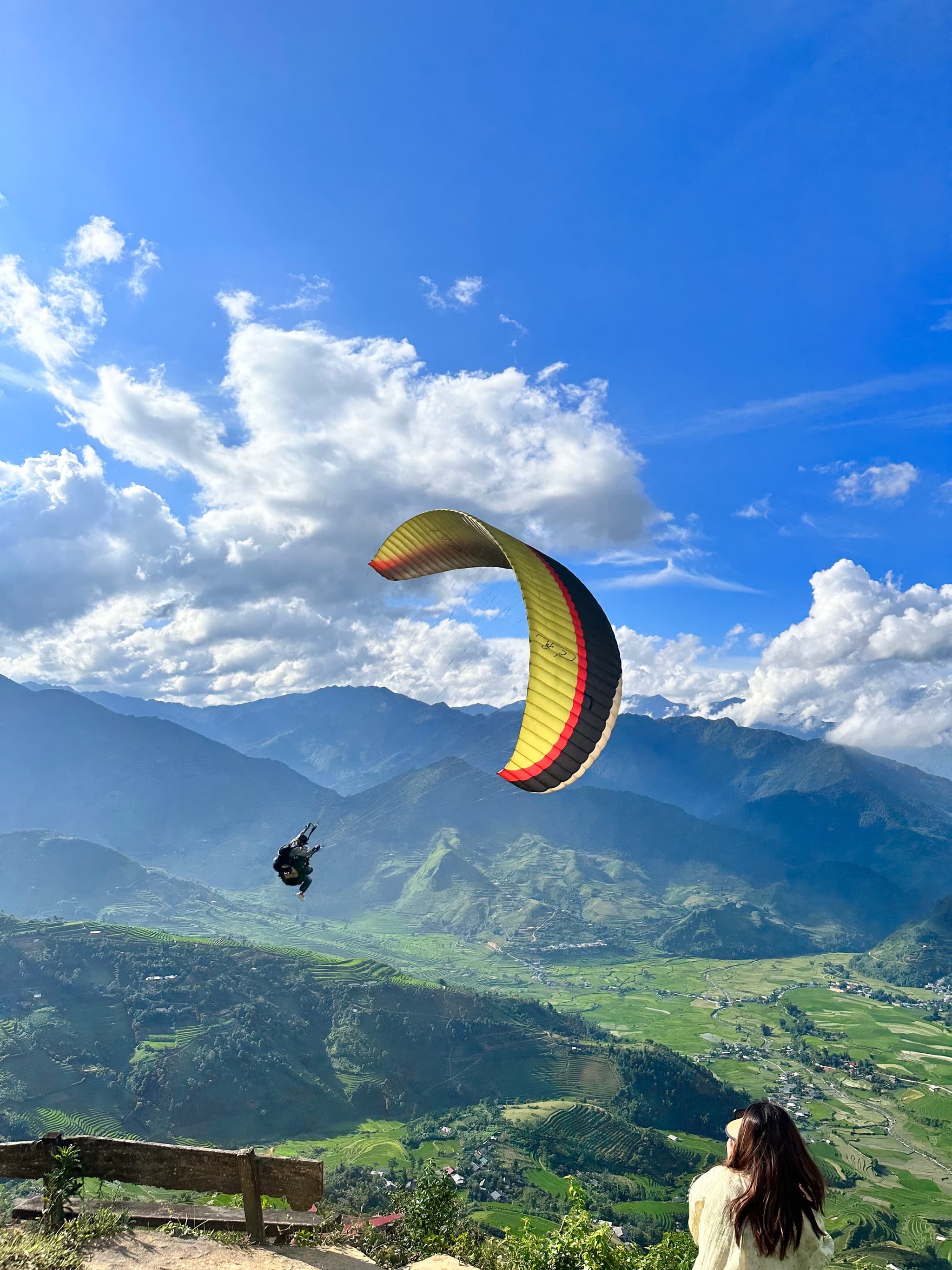
Mechanical turbulence, terrain effects and traps, wind shear and thermal turbulence — plus safety tips for newly qualified pilots.
🌪️ What turbulence is
When an isolated airflow moves slowly, there is no exchange within its layers and we call it laminar flow. However, if its speed is increased, beyond certain value, the flow becomes turbulent by itself. Turbulent flow means chaotic movements of air particles in random directions. The switch from laminar to turbulent depends on the flow properties (dimensions, viscosity) and roughness of neighboring surfaces. The rising (cigarette) smoke starts laminar, accelerates upward and once reaches a critical speed for the given conditions, it becomes turbulent by itself.
Practically, winds of more than 5-6 m/s are considered to be turbulent and the intensity of turbulence increases with the square of the wind speed (V²) (this means that if wind speed doubles intensity will quadruple i.e. instead of 2 broken limbs you’ll have 4).
Flying in turbulence is dangerous because wing stops working like a wing if there is no smooth airflow around it. Flying the soft paragliders in turbulence means experiencing stalls, spins, collapses, sudden lift/sink/turn, not reaching a safe landing because of extra height loss. It’s unpleasant even for experienced pilots. Even birds lose their elegant style in turbulence.
Turbulent zone behind an obstacle - side viewTurbulent zone behind an obstacle - view from above
🏗️ Mechanical turbulence and obstacles
Despite its chaotic nature in the invisible air, turbulence can be indirectly observed, studied, predicted and avoided.
🌀 1. Vortexes and Rotors
The classic case is the mechanical turbulence caused by wind’s interaction with solid objects (trees, buildings, terrain). The smoother shaped and smaller size objects create less turbulence. Objects which block wind well create bigger turbulence behind.
The acceleration of the flow around the turbulence source creates suction zones which promote the creation of big vortexes. Their shape, dimensions and intensity depend on the object shape (profile), wind strength and airmass properties. Circular motion conserves the flow energy and we can say that vortexes live their own life. In steady winds and stable air, some object profiles can create “attached” to them long lasting vortexes behind them, called rotors. If wind drops, vortex loses momentum. If wind increases, the gust can literally push the vortex downwind where it dissipates into promoting and suppressing each other smaller and smaller vortexes. Still isolated vortexes can travel surprisingly far, since their initial circular motion helps preserve momentum.
Both stationary (rotors) and travelling vortexes initiate smaller rotations next to them and the newly formed free air vortexes initiate more neighboring rotations. As a result, the turbulence zone is expanding behind the obstacle but its intensity decreases further away from the turbulent source.
📏 2. The Rule of Thumb
As a rule of thumb, the turbulent zone extends 7 times the height of the obstacle (it’s unsafe to land within 700 meters behind a 100 meter high hill), but again it all depends on object’s shape, airmass properties and wind speed.
📐 1. Sharp Edges and Plateaus
Exposed to wind sharp edges require special attention as they initiate vortexes. Even slight change of wind direction can activate one edge and deactivate another.
A classic case is the rotor and turbulence behind the edge of a plateau or a terrace. There are many launches at the edge of a plateau where pilots have problems inflating their wing inside the rotor and raise it into the undisturbed flow above. Top landings there should be far behind the edge. The terrain behind can increase or decrease the “edge effect”.
Turbulence and rotors corresponding to various landforms
🛑 2. Vertical Slopes and Terraces
A high and well blocking the wind vertical slope can even create rotor and turbulence in front of them. It’s not so energetic like the turbulence behind the edges and pilots sometimes call it “dead air” because they may fall in parachutal stall, but collapses and surprising back wind may also occur. Multiple terraces (edges) create multiple turbulent zones which disturb the next one downwind because even slight change of wind strength and direction decide the role of the next edge and resultant intensity of its turbulent zone. Often experienced pilots fly safe close to the terrain, but unlike beginners they “read” well the terrain irregularities, resultant turbulent zones and possible variations.
Each terrain type can create its own turbulence zone. Sometimes flying close to the terrain is safe, but at other times, it puts you right into the turbulence.
🌳 3. Objects and Tree Lines
Airflow goes well around tiny single objects and doesn’t make strong turbulence behind.
A dense group of objects or a single wide object which block wind well, create strong and big zone of turbulence behind.
A group of similar size objects with openings between them (resembling mesh grid) slow down the wind without creating strong turbulence behind.
Tree lines are broadly used to protect fields and roads from strong winds which dry the soil, pile snow or cause icing. Solid walls are not so good because their vortex patterns behind, concentrate zones of strong wind streams hitting the ground. The efficient uniform decrease of wind speed behind tree lines causes pronounced vertical wind gradient, which may cause sudden stalls or increase of groundspeed behind them.
Turbulence behind an obstacle decreases and disappears as more airflow brings "order" into the chaos and restores the original wind speed and direction – like combing tangled hair.
Turbulence generated by terrain.
🪤 Terrain traps
When you “read“ the terrain for possible turbulence, keep in mind the so called traps of the terrain. These are zones which can restrict your freedom of movement due to strong sink or wind against the direction you want to go.
🏎️ 1. Venturi Effect
Normally, we fly in light and moderate winds, but convex shapes like the top of the hill or a rib from the slope compress and accelerate the nearby flow more than the average winds around. It’s called a venturi effect. A classic accident is taking off in strong wind, being lifted up into the venturi zone and then blown back behind the hill into the lee side.
Terrain trap
📉 2. Concave Shapes
Apart from flow acceleration around convex shapes (venturi effect), the concave shapes can also be a trap of the terrain. They can concentrate the flow in a narrow sections and increase its speed beyond the paraglider max airspeed. Also, big concave shapes like mountain valleys, ravines and gullies tend to concentrate the nearby sinking flow, which can quickly land the pilot in an unsuitable place.
Regularly watching water flowing around river rocks, smoke and other wind indicators helps you understand the different interactions with terrain. Try to explain every significant change in flow direction and speed. Look for "suction zones", recirculation zones and flow-through channels, and for the formation and dissipation of vortices. Don't memorise the details — remember the principles of how the flow behaves. It may save your life one day.
Turbulence generated by terrain.
⚡ Wind shear and thermal turbulence
✂️ 1. Shear Turbulence
When an air mass layer is moving in relative to another neighboring layer, then shear turbulence occurs around the bordering surfaces. The shear turbulence intensity depends on the relative movement and different properties of air masses (density, viscosity, temperature…). Classic example is when cool sea breeze wind enters inland under warmer air above. Frontal surfaces also have shear turbulence. Even thermals’ surfaces create shear turbulence when rising through the surrounding cooler air.
Shear turbulence between 2 layers moving with different speeds and directions
🌡️ 2. Thermal Turbulence
Early in the morning, later in the evening, in autumn or in winter and at sea coast we may experience mainly mechanical and shear turbulence. In the middle of the day, especially in summer and in mountains, the sun’s heated surfaces create warm light volumes of air which rise throughout cooler and more dense surrounding air. These are the so called thermals, which birds and gliding pilots soar to get high and fly far.
Thermals can raise us to heaven, but can also throw us to hell. Apart from the shear turbulence at the edges of rising thermals, thermals themselves are source of thermal turbulence because these thousands of tons of air interact with surrounding air and cause chaotic vortexes and turbulence inside and outside them. Thermals are part of the invisible air and their effect can surprise us everywhere – on take off, higher up or near the clouds they feed. Launching in strong thermal conditions is the most common reason for accidents (collapses and stalls close to the ground).
Experienced pilots who use thermals to fly high and far are always ready to deal with turbulence at any height. Beginners should not envy others' climbs; they should first learn to fly actively and safely in turbulent conditions before trying to thermal.
Turbulence generated by terrain.
🌩️ Atmospheric stability and clouds
When listening to other pilots, mind that unstable might have opposite meanings – good conditions for flying because there are thermals for soaring high and far or dangerous conditions because there is a possibility for thunderstorm development. Stable doesn’t always mean lack of turbulence, because local thermal bubbles might get quite deformed and turbulent when rise, hit and squeeze through a stable layer (inversion). Some thrill-seeking pilots may look for dynamic conditions, while others prefer more relaxed ones; whether conditions are good or bad is a personal matter. It is best to ask experienced pilots specific questions such as: "When are thunderstorms expected to overdevelop?", "Are the thermals turbulent?", "Is the wind strong near cloud base?". Gather information independently and then make your own decision.
Cumulonimbus (thunderstorm) clouds have powerful vertical development and are extreme form of thermal turbulence, where apart from uncomfortable flying there are dangers of cloudsuck, getting wet (easier stalls), icing (can tear the canopy), deadly electricity and sharp increase of wind (gust front, squall).
Learn more about clouds for cross-country (XC) flying
🚩 Signs of thermal turbulence
Gusty and variable wind on the ground. Especially when min and max winds are more than 50% from the average wind speed.
It’s more difficult to inflate and control your glider on take off in turbulent conditions. If you fail to take off 2-3 times, consider it a warning sign and stop flying. Go and do some ground handling on flat terrain, and choose calmer conditions to fly.
Signs of thermal activity like: high soaring birds and gliders; dry leaves, grass or light rubbish lifted up by thermals; presence of fed by thermals cumulus clouds.
Energetic pitch, roll, course change, collapses and stalls of paragliders in the air. Even birds lose their graceful flying style.
Dust devils and other wind indicators (tree leaves, flags, smoke, water surface) visualizing vortexes.
🛡️ Safety tips for beginners
🕒 1. For less turbulent experience:
❌ Avoid flying between 11 am and 4 pm in spring and summer, when sunshine and thermal turbulence are strongest.
❌ Avoid flying in more than 6 m/s average winds, especially if gusty and variable.
✅ Fast moving clouds and stationary clouds like lenticularis indicate strong winds.
✅ Fly when ground is cool (overcasted, green, or wet).
✅ Sea coast soaring is usually very relaxing due to laminar wind.
✅ Mountain terrain is more turbulent than flatland.
✅ Humid air is less turbulent than dry air.
✅ In thermal conditions it is usually more turbulent higher up, where thermals accelerate. However, turbulence close to the ground is the most dangerous, because there is not enough time and height for the wing to recover or to throw the reserve (the higher, the safer).
🆘 2. If you enter turbulent zone:
☝️Trust your harness and wing: They are designed for self-recovery and high loads (up to 16 G).
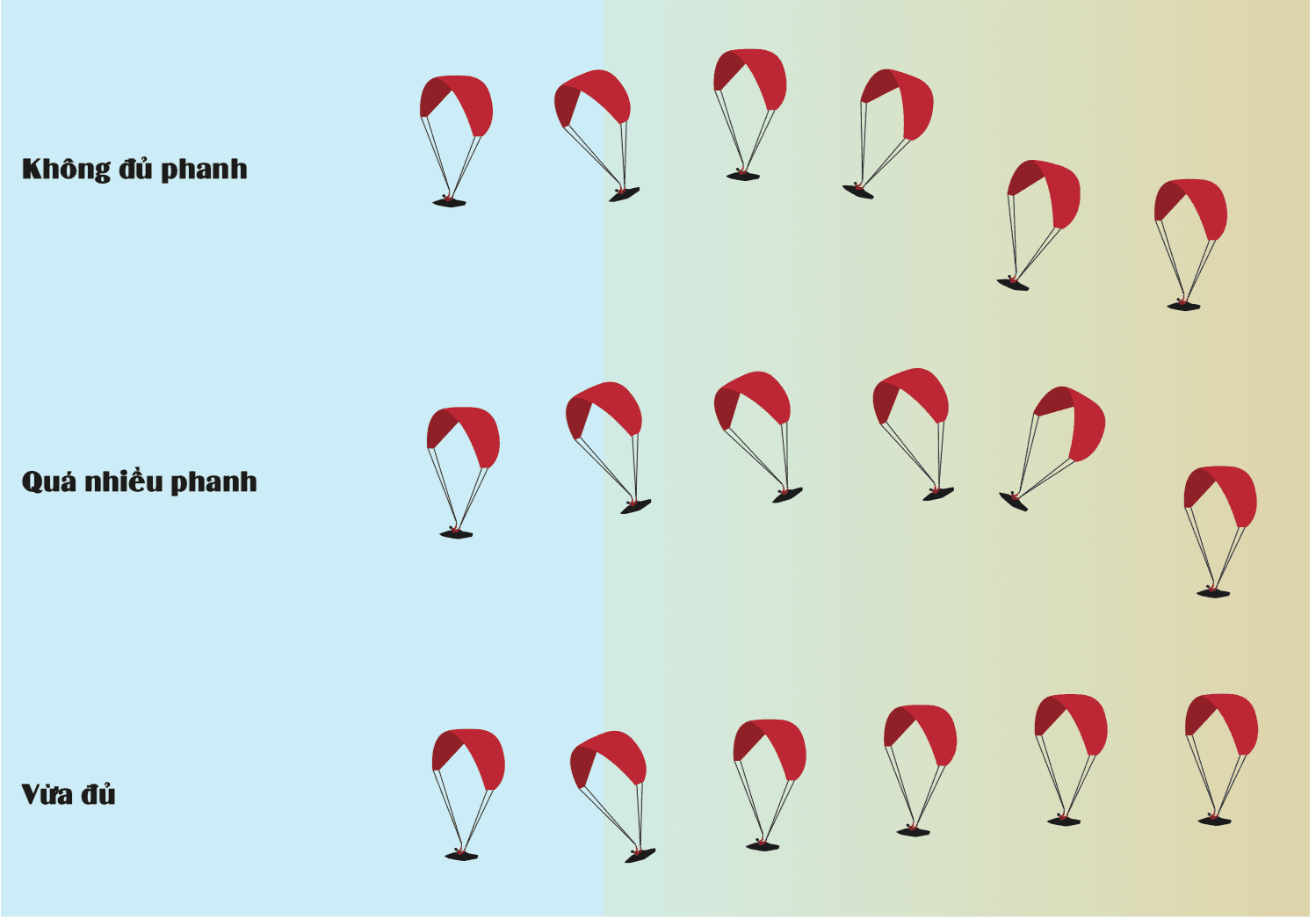
☝️Active flying: Keep the wing above your head. Hands up if pushed back; brake quickly to stop surges, then release quickly so the wing regains speed. Weight shift away from the side that softens. Pull your legs up so your body follows the wing's sharp turns. Don't grab the risers in panic — work with your arms and body.
☝️Escape strategy: Find the turbulent source and exit the shortest way plus slightly downwind (this improves your glide ratio). If possible, choose a direction that gains height above the terrain.
☝️Maintain airspeed: Airspeed is more important than course (don't over-brake). High pressure inside the canopy resists collapses.
☝️Landing: If turbulence is everywhere, choose the biggest and cleanest landing fields. Low dense forest can provide a soft landing if things go out of control (and you have thrown your reserve).