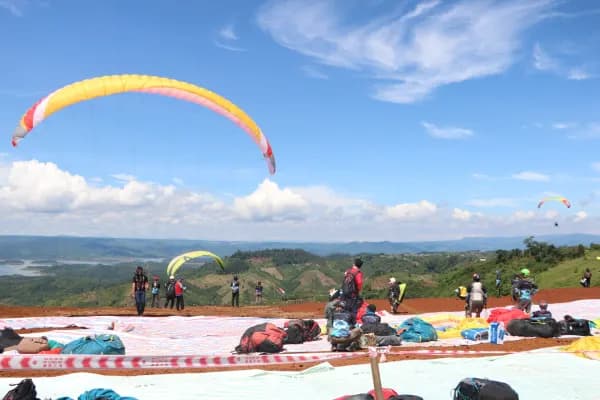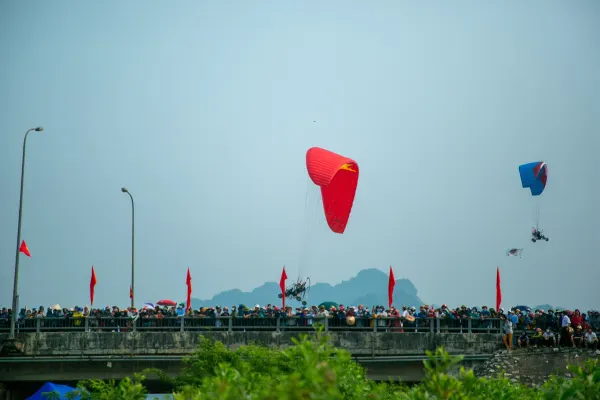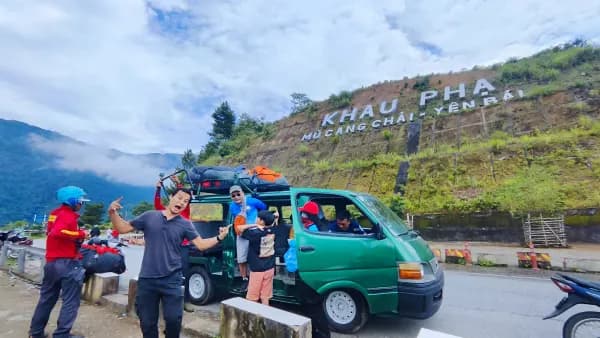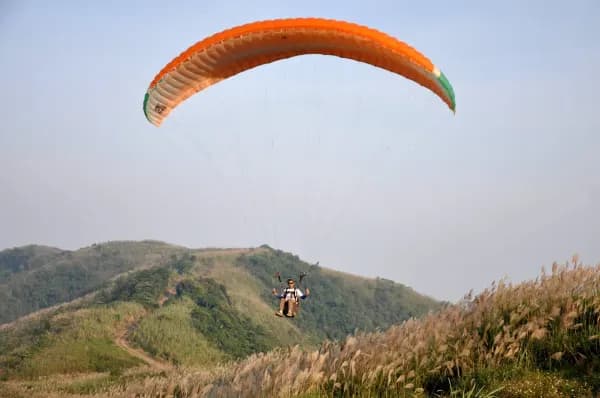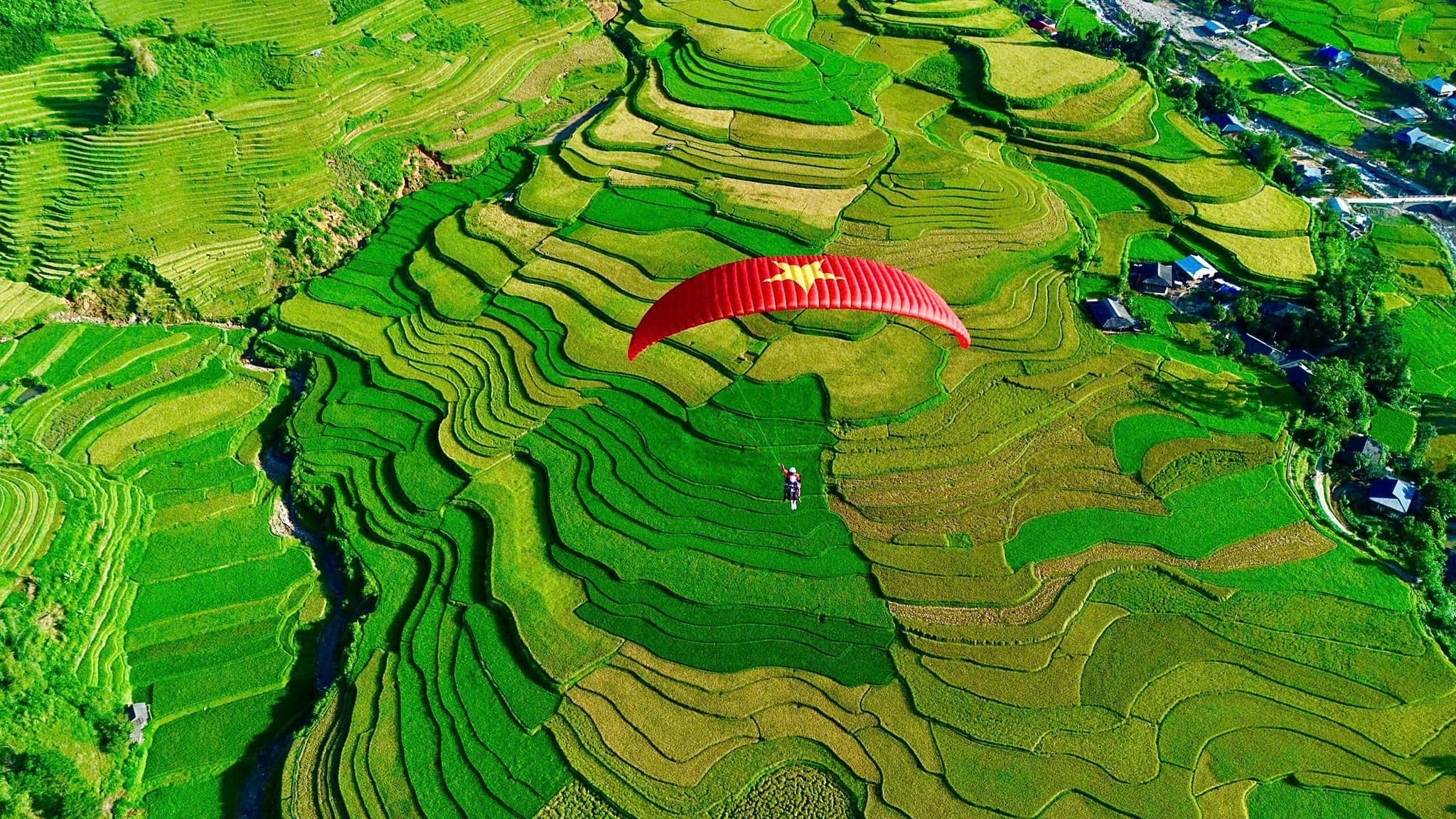
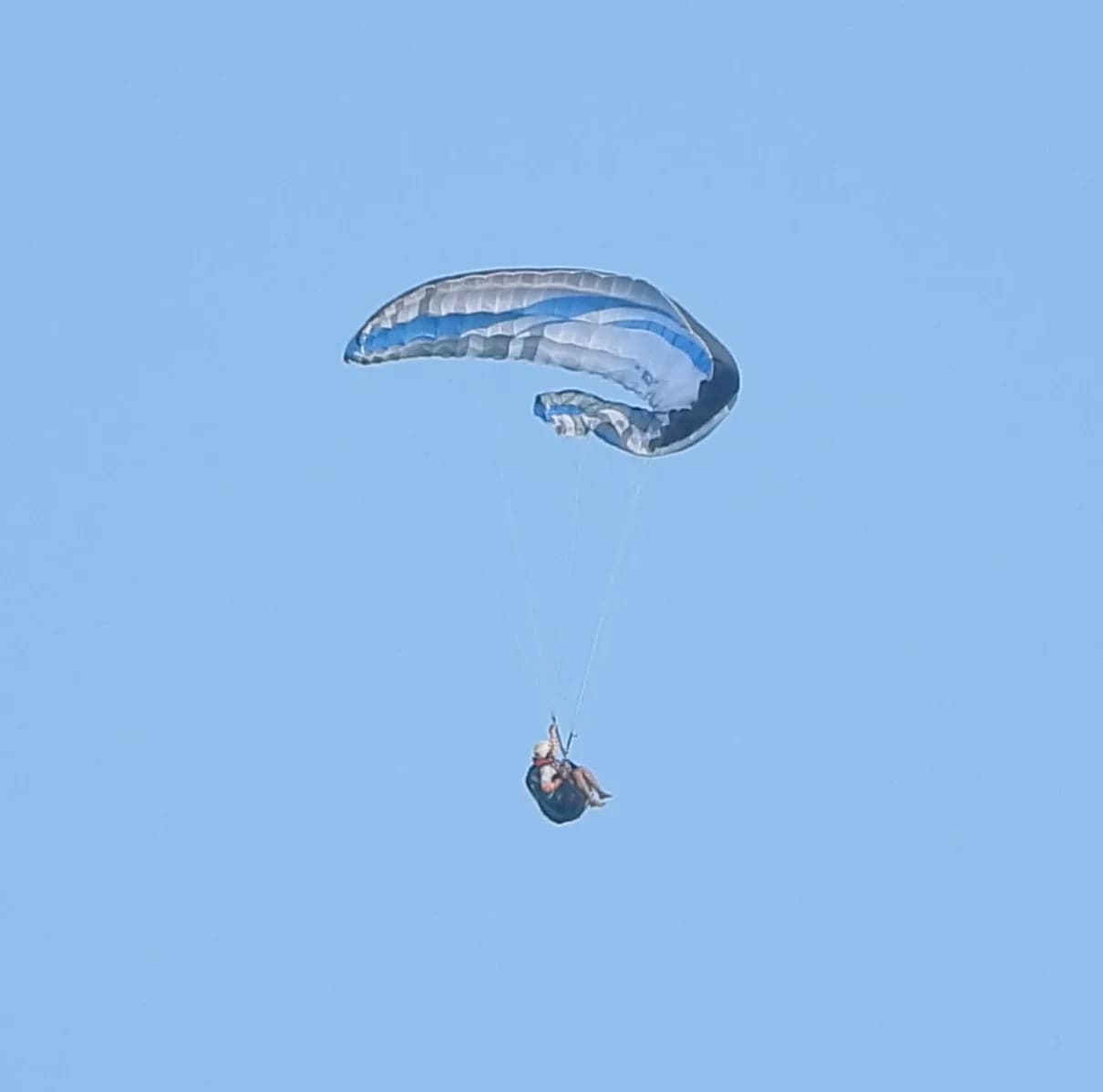
SIV — Simulation d'Incident en Vol, the simulation of in-flight incidents — is the course where a pilot deliberately puts the wing into the very states they fear most, in order to learn how to bring it back. Collapses, line twists, full stalls, locked spirals: things that on a mountain you only need to meet once to pay for, are here repeated under control, over water, with an instructor guiding by radio. Following the success of the first SIV course held in November 2022, Mebayluon Paragliding ran a second edition in June 2023 at Nui Coc Lake, Thai Nguyen, together with ISKY Flying School.
Why SIV must be flown over water
Every SIV manoeuvre has one thing in common: the wing stops flying for a few seconds and the pilot loses height fast. Over mountain terrain, a developed full stall or a locked spiral at low altitude is an accident. Over a lake, the same situation is a water landing. The requirements are therefore strict: the working area sits entirely over water, a rescue boat stands by, pilots wear life jackets, and every exercise has a minimum altitude — below it, no manoeuvre is flown and the pilot heads straight for the shore.
Two Nepali instructors
This edition was taught by two instructors: Alish Thapa and Subash Thapa. Having two allows the roles to be split — one runs the exercise by radio with the pilot in the air, the other watches the whole working area, tracking the position and altitude of the other pilots and ready to stop the session if conditions change. That is also what separates a properly run SIV course from a pilot "trying" manoeuvres alone: the person on the radio must see the wing at all times, know in advance where the pilot will react late, and end the exercise before the situation outruns them.
Winch-towed from the lake
All participants were taken to altitude by winch tow from the lake surface, operated by Finnish pilot Boris Laambonen. This brings three advantages a mountain launch cannot: the pilot arrives exactly where they should be over the water; release altitude is controlled precisely to suit the exercise; and the number of flights per day rises sharply, with no travel back to launch. In exchange, hook-up procedure, signals and release technique are a skill of their own, briefed before flying.
Course content: from basic to advanced SIV
The theory covers three foundations: knowledge of the aircraft (canopy, lines, risers, trimmers, harness, speed system, rescue system), aerodynamics (lift, drag, angle of attack, pendulum stability, stall, spin, porosity) and flight procedures. Basic SIV — building the reflexes: pitch and roll control; big ears, and big ears with the speed bar; frontal collapse; asymmetric collapse while holding a straight course; spiral dive and controlled exit; B-line stall. Advanced SIV — for pilots with a solid base: full stall, tail slide (back fly) and exit; spin 360 and spin with flyback; wingover; exit from autorotation; and reserve deployment. Alongside these, participants learn to recognise and manage the dangerous situations: asymmetric collapse, frontal collapse, cravat, line and riser twist, locked spiral, and line or canopy contact. Each is broken down in four layers — description, causes, effects, management — rather than reduced to a single trick.
Reserve deployment: the procedure nobody wants to use and everybody must know
What marks a serious SIV course is that pilots practise the decision to throw the reserve, not just hear about it. The procedure is taught as clear steps: decide — assess the situation — throw — help the canopy open — disable the main glider — prepare to land on your feet — signal the others. Three cases require a throw: permanent loss of control (twisted locked spiral, a cravat that will not clear, line or canopy contact); temporary loss of control without enough height to recover; and panic severe enough that the pilot can no longer fly the wing. The rule running through all of it: always check your height in an emergency — look down periodically, because that is the first thing a stressed pilot forgets.
Some pilots ended up in the water — and that is normal
During the course, several pilots landed in the water while working through manoeuvres. This is not an unplanned incident; it is precisely why an SIV course is run over a lake. Water landing has its own lesson: hold your position, do not thrash, do not rush to get out of the harness before you are stable, and wait for the boat. Lines in water are the real danger — the more you move, the easier it is to become entangled. Rule number one remains: do not panic.
What pilots take home
Not a set of display manoeuvres. What stays is the reflex: reading what the wing is doing through the brakes and the harness, knowing how much height is left, and knowing when to stop saving the main glider and throw the reserve. For the Vietnamese flying community, every properly run SIV course lifts the shared safety baseline — because each pilot carries that standard back to their own site.
Who taught this SIV course? Alish Thapa and Subash Thapa — two Nepali APPI/SIV instructors who have run four SIV and acro clinics in Vietnam between 2022 and 2024. Their full profiles, and the rest of the team, are in Khau Pha paragliding pilots.